Deborah Prentice overtaken as highest-paid Russell Group VC
Last year, Prentice had the second highest base salary and fourth highest overall pay in the Russell Group
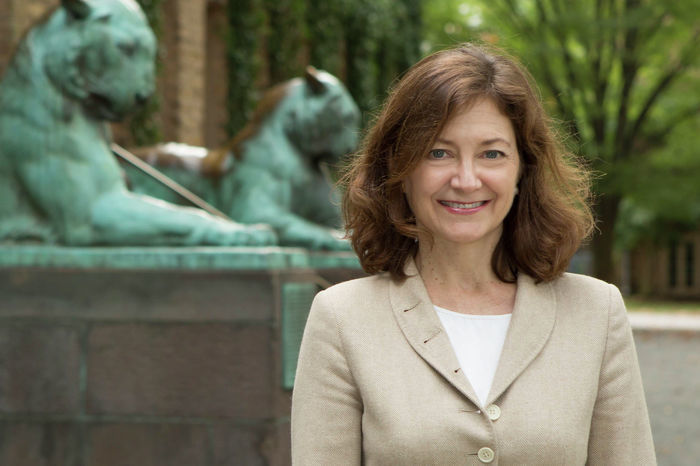
Cambridge vice-chancellor Deborah Prentice earned the second highest base salary of all Russell Group vice-chancellors last year, but only has the fourth highest overall pay package, according to Times Higher Education (THE).
Prentice’s base salary increased from £409,000 in 2023-24 to £414,000 in 2023-25. However, her overall pay (including bonuses and expenses) decreased from £577,000 to £507,000.
This is likely because 2023-24 was Prentice’s first year as vice-chancellor, and her remuneration included initial bonuses such as a £42,000 relocation payment.
Prentice is therefore no longer the highest-paid Russel Group vice-chancellor. That title has been taken by Irene Tracey at Oxford, who had both the highest base salary at £427,000, and the highest overall pay at £666,000.
Fourth highest among the Russell Group, Prentice’s overall remuneration last year also fell below that of the University College London and LSE vice-chancellors.
Overall, the median total pay package of Russell Group vice-chancellors fell from £401,000 to £397,000 in the past fiscal year, partly due to changes in pension contributions and fewer large payouts.
However, the median base salary increased 5% from £334,000 in 2023-24 to £350,000 last year. This is compared to £314,000 in 2021-22.
THE reported that in a year when 20 Russell Group universities spent a combined £8.3 million on vice-chancellor remuneration, they also collectively laid off 7,000 staff.
This has led to union backlash against perceived hypocrisy. Mike Short, head of education at Unison, said: “Vice-chancellors seem perfectly happy to take inflated sums for themselves, yet plead poverty when it comes to staff pay.
“With record numbers of higher education jobs under threat, it’s staggering university bosses continue to think their wage hikes should be way above the paltry 1.4 per cent rise they offered the people who keep their institutions running.”
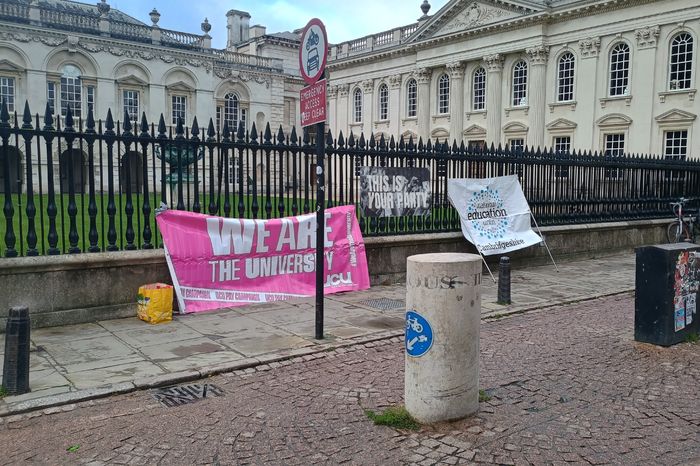
This comes after Cambridge staff unions failed to reach the required turnout for strike action in their recent ballots. They are considering further action over redundancies at the MRC Epidemiology Unit.
In its annual financial report, the University expressed concerns about attracting and retaining “the best academics and professional staff,” citing “escalating international reward levels, growth in the University’s complexity and scale, and high costs of living” as obstacles in this regard.
Plans to directly address some of these obstacles were established in the University’s 2024-27 ‘People Strategy’ report, which included commitments to “talent attraction” and “reward and recognition”. The report committed to a “review of […] current pay structure and pay policies,” as well as taking “proactive action to further reduce our pay gaps”.
Over the past year, the University’s staffing costs have increased by 8%.
The Russell-group wide salary increases come amid increasing financial strain on higher education. Jo Grady, general secretary of the University and College Union (UCU) accused vice-chancellors of “accepting salary bumps and massive bonuses for themselves as the sector goes up in smoke”.
The University’s Chief Financial Officer, Anthony Odgers, acknowledged these difficulties in the last financial report, saying: “the University is not immune to the financial pressures affecting the UK higher education system.”
Official figures show that in 2024-25, the University experienced an adjusted deficit of £8 million. This is despite a steady rise in international tuition fees and research grants, and is primarily driven by a 28% drop in donations and endowments from the previous year.
While the University has halved its deficit from the year before, it remains significant.
Nevertheless, both Odgers and THE state that the University of Cambridge remains in a privileged financial position compared to other top universities.
The consolidated statement of comprehensive income in the University’s latest financial report shows an increase from £1.040 billion to £1.121 billion in 2024-25, significantly above inflation in the same period.
As Odgers noted in his remarks: “The financial year 2024-25 has demonstrated again the value of the University of Cambridge’s well-diversified sources of revenue and strong balance sheet.”
A University spokesperson said: “The Vice-Chancellor’s salary is determined by the University Council and informed by careful analysis of pay in a highly competitive sector. As one of the top universities in the world, we need to attract and retain high-performing leaders.”
 Comment / The Cambridge drift1 June 2026
 News / Cambridge psychologist warns against blanket social media ban for under-16s1 June 2026
 News / News in Brief: Corpus climbing, climate cash, and commendable contributions1 June 2026
 Theatre / CUMT’s The Wind in the Willows brings a classic to life 31 May 2026
 News / Venue cancels Cambridge talk by right-wing commentator Matt Goodwin after backlash28 May 2026
 Music / We need to talk about Kendrick2 June 2026
 News / University support staff strikes end after month of action2 June 2026
 Arts / To the letter2 June 2026
- News / Cambridge psychologist warns against blanket social media ban for under-16s1 June 2026
 Sport / Caius beat Magdalene in last-minute thriller to clinch mixed netball Cuppers final1 June 2026