A stage of our own
Eleanor Baldwin explores the importance of often non-conventional theatrical spaces for queer communities
Theatre has always been a crucial platform for queer visibility; offering a space to explore identity, challenge norms, and tell stories often overlooked by mainstream culture. But some of the most dynamic queer storytelling today isn’t happening on the traditional stage. From classic cabaret to modern queer arts nights and grassroots performance spaces, these stages create an atmosphere of celebration and belonging. By blurring the boundaries between audience and performers, they foster collaboration and a shared sense of community.
“Some of the most dynamic queer storytelling today isn’t happening on the traditional stage”
Queer cabarets have long thrived as spaces of expression and resilience. From Paris to Berlin, cabaret venues are intertwined with the history of LGBTQ+ resistance, serving as powerful symbols of liberation. Following the 1969 Stonewall Riots, these spaces took on renewed political significance, where art, protest, and community merged. Once pushed to society’s margins, queer performance spaces have gradually shifted into the spotlight, embraced by a growing appreciation for the art and spectacle of queer creativity. The musical Cabaret, which debuted on Broadway in 1966, draws directly from aesthetics of European cabaret culture. Set in the decadent Kit Kat Klub of 1930s Berlin, its metaphoric numbers follow the rise of fascism in contemporary Germany. Director Jonathan Seinen staged his production of Cabaret through the lens of a queer utopia, reconfiguring the cabaret setting “as a real space of LGBTQ+ community and resistance”. This revival highlights cabarets as spaces for exploring fringe identities, where performance and community intertwine.
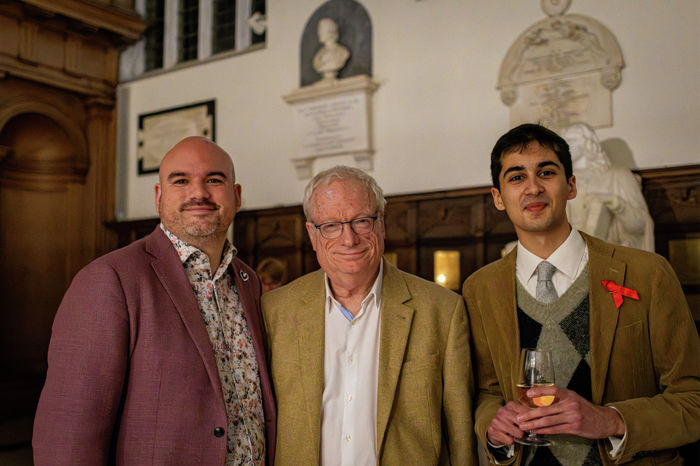
Modern queer arts nights inherit this legacy, continuing to challenge social stigmas and cultivate inclusivity. Although homosexuality was decriminalised in England and Wales in 1967, queer artists still navigate prejudice, making safe, creative spaces essential. Across Cambridge, events like the Trinity LGBTQ+ History Month Arts Night, hosted by the TCSU and the Dryden Society, exemplify this ethos. Now in its third year, this evening of spoken and sung performance showcased a community of creatives from across Cambridge. Brought together in the stunning setting of Trinity Chapel, the enthusiasm of those working on it was palpable. Jaysol Doy, director and founder of this event, described it an “utter privilege” to be part of such a night, working alongside a community of talented individuals, one he hopes will only continue to evolve. He describes the bittersweet tone of this being his final year, looking back on the way the event has held him, moved him, and uplifted him throughout his three years. More than just creative showcases, queer arts nights actively cultivate community, creating spaces for visibility, expression, and belonging.
“Queer performance thrives wherever people gather to express identity, creativity, and belonging”
Queer theatre stages perspectives that look beyond normative narratives, celebrating the multifaceted nature of human identity. At the soul of this is drag, a performance tradition that challenges fixed notions of gender while creating sanctuaries of celebration. Drag has existed throughout history and across the world; in the UK, we can trace its origins to the Elizabethan Era. From its earliest stages, it has entertained audiences while playing with societal expectations of masculinity and femininity. Back at the beginning of February, the Cambridge-based touring drag troupe, Dragtime! , celebrated its tenth anniversary with a dazzling cabaret featuring live singing, lip syncing, and burlesque. Back in 2017, a Varsity reviewer described the show as an “utterly bizarre, brilliant and quite transformative experience”. Almost a decade later, these words still resonate. Sitting in the audience at shows like this, it’s impossible not to feel part of a larger legacy. These artistic performances honour those who came before us while shaping a vibrant, inclusive future. Looking ahead, this Saturday, the 14th of March, East Anglia’s biggest drag cabaret returns to Cambridge Junction, with their show: Now That’s What I Call…Drag!. This event promises an evening of chaos, from camp comedy to electrifying live vocals.
Queer performance thrives wherever people gather to express identity, creativity, and belonging. Whether through cabaret, arts nights, or drag shows, queer theatre stages perspectives that foster community and ensure the stories at the margins continue to be seen. In doing so, these shows remind us that theatre is not confined to traditional stages or to conventional stories. Theatre belongs to all of us.
 Interviews / ‘You have to take it as it comes’: discussing content creation with Auden Barnes17 May 2026
 News / Science Park to ‘triple’ in size with £3bn investment21 May 2026
 News / Sons of imprisoned Saudi scholars urge Cambridge to call off deal with Saudi defence ministry22 May 2026
 Science / Forked over: dish-parity between college cafeterias17 May 2026
 Theatre / Crossing Points devastates the Corpus Playroom20 May 2026
 Sport / Fitzwilliam narrowly regain Cuppers trophy in tight affair with Selwyn22 May 2026
 Comment / The personal cost of reporting sexual violence at Cambridge22 May 2026
- News / Sons of imprisoned Saudi scholars urge Cambridge to call off deal with Saudi defence ministry22 May 2026
 Science / CamGraPhIC’s crusade to curb the AI energy crisis22 May 2026
 Film & TV / Hokum and the horror of guilt21 May 2026