Cultural Transfusion in The Secret Agent
Dylan Ingram comes to terms with the Brazilian Best Picture nominee

Carnival season, 1977, Recife, Brazil: “A time of great mischief”. This is how The Secret Agent opens. The first thing we see is a dead body decaying under a piece of cardboard at a petrol station. The guy running the shop is unbothered. No-one has come to take the body away. If he leaves, he’ll lose his job. Later in the movie, a newspaper reads “91 Dead in Carnival”. Mischief, I started to realise, might mean something slightly different in this time and place. This gap in translation and expectation defined my experience with the film. However, I hope I am right to say that The Secret Agent is as much for me, the outsider, as it is for the people of Recife and my grandparent’s generation.
The film takes place over the course of about a week, as a man (Wagner Moura), whose name is Marcelo or maybe Armando, goes into hiding, from … something. He’s maybe a refugee, he’s maybe a spy. Is he undercover? Is he The Secret Agent?
These are good questions to ask. They’re questions I was asking. The film doesn’t rush to answer them. It doesn’t really rush to do anything, sprawling across a titanic 160-minute runtime. A fun moment in the film sees two hit men, who we know should be hunting our protagonist, sitting at a bar eating coxinha, deep fried croquettes. We cut back to them, 20 minutes, multiple scenes, later, and they’re still there, still eating croquettes. When the lead hitman sends a guy to kill the protagonist, he gives the order to shoot from the beach, in swimming trunks! He makes sure to finish off his drink before making the call, of course.
Just as the plot starts to get going, director Kleber Mendonça Filho adds more characters, more distractions. This pace might make you hate the film: it wastes your time, it’s telling you to chill out while armed thugs break down the door. Get to the point, get to the plot, tell me what is going on.
“How had this unhelpful, drawn out, walk-on-the-beach movie resonated so strongly with me?”
These moments distracted me from the central emotional conflicts of the film. I couldn’t grasp what it was about, what it was trying to do, so I struggled to become absorbed. I was scratching my head rather than holding my breath. Despite this, about ten minutes from the film’s end, I found myself wanting to cry. How had this unhelpful, drawn out, walk-on-the-beach movie resonated so strongly with me? I was sitting in my screening next to an older Brazilian couple, who I could tell had loved the film. After it had ended, I asked them what they thought. The husband told me that he was there in the 70s and the film portrayed the period exactly as it was.
This was when the film came together for me, why I wanted to cry. These digressions through the streets of Recife are ‘the point’. The film is constantly constructing a city which is alive and swarming with activity. The production is meticulous in its attention to detail. Shot on location, the camera is always lingering on people in the background, living their lives. The flood of inconsequential characters, at first so confusing and overwhelming, all serve to build this place into something real: as rich, diverse, and inconvenient as an actual city, as Recife. To make a very grand comparison, the work which this film reminded me of most was Ulysses: a vast, diversionary, super-real attack of detail, throwing you down the alleys and gutters of a city built from people as much as bricks.
“As rich, diverse, and inconvenient as an actual city”
This is a portrait which is importantly incomplete. So many questions are left unanswered, which makes sense when, [SPOILERS] it is revealed that the film is really about two students going through archival material in 2025. The film is, unlike Ulysses, a work of archeology, not representing Recife but reconstructing it. These tapes and newspapers are incomplete, and so is the story.
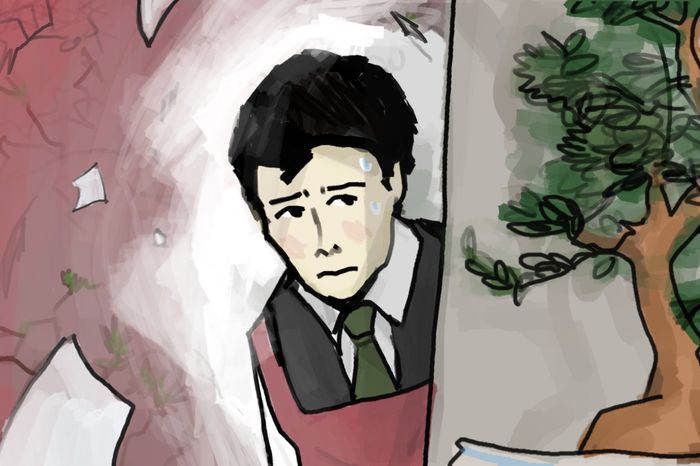
So here is the film’s emotional core: the past and present, co-existing with an irreducible gap between the two. Armando’s father-in-law was a projectionist at a cinema. This cinema was a crucial institution in 1977, but in 2025 it has been converted into a blood bank. The Regal, above which the Arts Picturehouse is located, was once a cinema too. The film, rather than pulling you into the past, projects the past into the present. This left me, a student who has only ever experienced the 70s on film, sitting in the cinema next to a man who lived through them, brought together by the film. The cinema is a site of blood transfusion, where the past is donated to the present. It’s really a generous thing. I can’t describe the experience of watching this film for that Brazilian couple, and I think that so much of The Secret Agent will never make sense to me – but it is nonetheless a film for me as well as for them.
 Comment / Top of the slops: the competitiveness of college dining4 June 2026
 Interviews / What’s the story behind Pages coffee house?8 June 2026
 News / News in Brief: Cambridge crowns, council confirmations, and competitive cricket8 June 2026
 Comment / The Cambridge drift1 June 2026
 News / Cambridge researchers produce ‘world-first’ AI vaccine6 June 2026
 Arts / Don’t rush me – I’m reading!9 June 2026
 Lifestyle / Don’t Cry at Me, Argentina – a next-year abroad story8 June 2026
- News / News in Brief: Cambridge crowns, council confirmations, and competitive cricket8 June 2026
 Science / Failure is the foundation of science8 June 2026
 Fashion / The hidden gems of formal fashion8 June 2026