Staff unions will not strike this month after pay dispute
Staff unions failed to reach the required turnout in their recent strike ballots
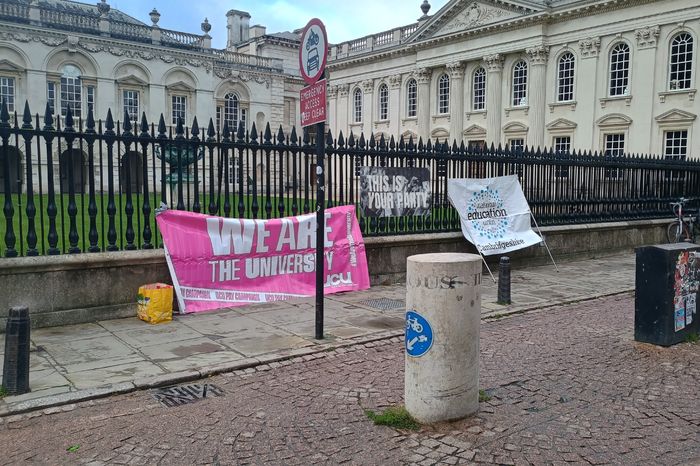
Staff unions in Cambridge will not go on strike this January over pay after their national ballots failed to reach the required turnout.
The three trade unions representing academic and support staff at the University – the University and Colleges Union (UCU), Unison, and Unite – balloted for joint strike action in November.
The unions declared their intention to obtain a six-month mandate for strike action after the Universities and Colleges Employers Association (UCEA) offered them a 1.4% pay rise in May.
After a six-week ballot, the UCU revealed on 5 December that turnout had failed to reach the legal threshold of 50% for strike action. In the end, only 39% of members participated in the vote.
Of those who did participate, 70% said they supported strike action, while 83% backed action other than strikes.
The Unison ballot also failed to reach the required turnout. A spokesperson told Varsity that “despite over three-quarters of UNISON members who voted at Cambridge backing strike action,” they would therefore not “be taking strike action at this stage”.
Unite did not respond to Varsity’s requests for comment. However, no strike dates have been announced.
Responding to the news, Jo Grady, the UCU’s general secretary, told members: “Our immediate next steps must be to understand why more members did not engage with the ballot. While it is true that the 50% turnout is a legal threshold imposed upon us, we must aim for significantly higher in ballots if we want to create the leverage required to win.”
A spokesperson for the UCU added: “A strong majority of our members backed strike action in response to unfair pay, worsening conditions, and widespread threats to jobs across the sector. It will be particularly disappointing for those who voted for action that, despite this clear mandate, we are not able to proceed.
“Across the country, our members are working tirelessly to defend their jobs and protect their universities from damaging cuts. It is past time for both politicians and employers to stop undermining our higher education sector and start working with us to safeguard its future.”
Raj Jethwa, the UCEA’s Chief Executive, commented: “UCEA had signalled our willingness to work with the unions on key areas had they not balloted for industrial action. The failure to meet the threshold, as well as the fact that nearly a third of UCU members did not support strike action, will no doubt be a point for reflection.”
Employers and unions must work together, Jethwa said, “rather than finger pointing or attempting industrial action to create disruption and suffering for students, especially when their members do not back this approach”.
In September, the UCU issued a joint statement alongside other higher education unions describing the UCEA’s pay offer as “insulting” and recommending members vote ‘yes’ to strikes.
The statement continued: “Higher education workers cannot continue to pay the heavy price of a failed market system through the continued erosion of their pay, their employment conditions, and threats to their jobs.”
While acknowledging that “the pay uplift clearly does not reflect the true value employers place on staff,” Jethwa described the offer as “the only prudent option” given the pressures facing the higher education sector.
The campaign reached Cambridge in November, when around 40 activists gathered outside Great St Mary’s Church to urge staff to support strike action.
Some UCU leaders have criticised the decision to organise a national ballot as distracting from local disputes over job cuts, which have produced record turnouts. The UCU Left bloc has instead argued that “the central problem” is that union members “don’t believe that our leadership is willing to lead a serious fight”.
The results of the UCU ballot mirror its online consultation in August, in which 61% of members supported strike action, but the turnout was only 32%.
The last time the UCU went on strike in Cambridge was in February 2023, when they also launched a Marking and Assessment Boycott. A re-ballot in November achieved a turnout of only 43%, preventing strikes from continuing into 2024.
However, non-academic staff represented by Unite engaged in industrial action several times in early 2024. Cambridge supervisors also won a 15% pay rise that June after threatening a supervision boycott.
A new round of pay negotiations is set to start in spring. Cathy Yearsley, the secretary of Cambridge’s Unison branch, told Varsity: “Cambridge and the other employers need to get back round the negotiating table and make a decent offer to staff.”
While the three staff unions in Cambridge currently have no plans for strike action, they are leading a campaign to ‘Save the Vet School’ after the School of the Biological Sciences recommended ceasing the veterinary medicine course in December.
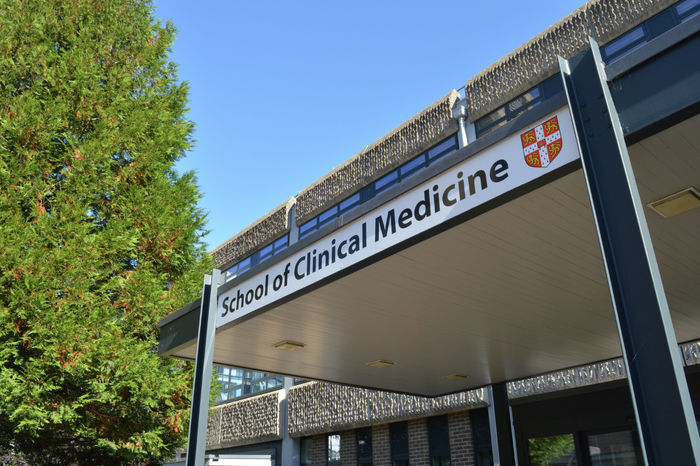
They are also deciding whether to take further action over the handling of redundancies at the MRC Epidemiology Unit, part of Cambridge’s School of Clinical Medicine.
 Comment / The Cambridge drift1 June 2026
 News / Cambridge psychologist warns against blanket social media ban for under-16s1 June 2026
 News / News in Brief: Corpus climbing, climate cash, and commendable contributions1 June 2026
 Theatre / CUMT’s The Wind in the Willows brings a classic to life 31 May 2026
 News / Venue cancels Cambridge talk by right-wing commentator Matt Goodwin after backlash28 May 2026
 Music / We need to talk about Kendrick2 June 2026
 News / University support staff strikes end after month of action2 June 2026
 Arts / To the letter2 June 2026
- News / Cambridge psychologist warns against blanket social media ban for under-16s1 June 2026
 Sport / Caius beat Magdalene in last-minute thriller to clinch mixed netball Cuppers final1 June 2026