The Other Bennet Sister: A revived take on the regency romance drama
Heidi Lewis evaluates BBC’s new interpretation of Pride and Prejudice
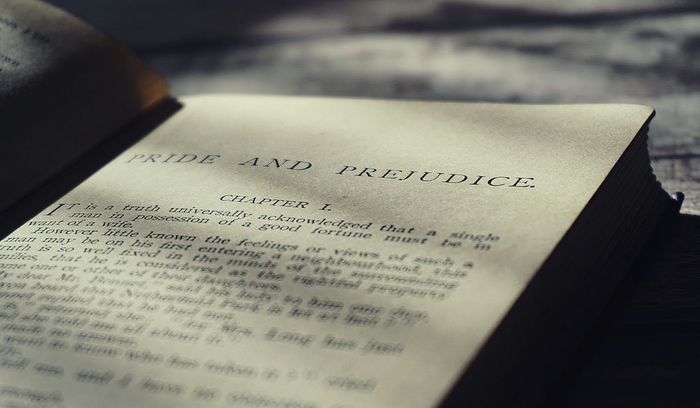
Pride and Prejudice holds such a special place in English literature and the hearts of all that study it. Whether it gave you a glimmer of hope throughout the long 18th century paper, or it’s the book you always return to after a reading slump, Elizabeth Bennet and her antics are a huge source of joy and comfort. BBC iPlayer’s newest period drama to hit the screens is an adaptation of Janice Hadlow’s spin-off novel that explores the life of the outcast sister, Mary Bennet. Initially, I was somewhat cautious – the genre is rather oversaturated, and there are only so many times I can sit through the same period drama romance story. However, I was pleasantly surprised by how fresh the story felt.
It is, somewhat unusually, a beautifully colourful world – I tip my proverbial hat to Siân Jenkins, the costume designer, for her excellent use of bright fabric and unique patterns. The regency world was not dull and void of colour, but rather the opposite, and I am grateful this is reflected in the show. Goodbye to the multiple shades of white, cream, beige, and hello to bold reds, pale pinks and deep blues. Mary Bennet certainly does not shy away from vibrancy, and her inclination towards spring green attire brightens up every room. While tight historical accuracy is not something that usually bothers me, I did breathe a sigh of relief at seeing the square necklines, high waists and straight skirts, especially after recently sitting through Season 4 of Bridgerton that had no shortage of questionable ‘Regency’ fashion.
“The limitations of freedom put in place by the historical setting are not pushed back by the writers, but embraced”
On the surface, the plot is simple. Shy girl ends up in a love triangle with the bolder, brash guy and the sweet, genuine one. Obviously, she chooses the sweeter one. There is turmoil along the way, but there’s an eventual happy ending. Teen romance coming-of-age meets period drama. However, the discussion of marriage and being a woman within this time period has more nuance than it typically does. Mary Bennet, despite fitting into the archetype of the shyer girl that would usually reject romance or marriage before suddenly falling in love, recognises the importance of marriage in society. She desperately markets herself to several candidates because she understands how their world functions. Through marriage, she could secure a home away from her suffocating family and have a form of protection from society’s scrutiny, even if it’s not what she really wants. Only after this original plan fails does she embrace being a governess.
Often, the concept of marriage is straightforward in many regency dramas. Either, the character desperately wants to marry their true love, or they refuse marriage completely – marriage for love is presented as the only valid, respected option from a writer’s perspective. And sure, she eventually marries for love. But the fact that Mary truly considers marrying as just a practical decision, sacrificing her happiness to protect her family highlights her strength of character. As soon as her family is mostly secured and her family can no longer be truly damaged by her decisions, only then does she let herself pick her own future. Just like Elizabeth, she lets marriage become her own choice and rejects potential love interest Mr Ryder because he is not who she wants. The limitations of freedom put in place by the historical setting are not pushed back by the writers, but embraced, in order to craft a different perspective on what it means to have power.
“Mary Bennet was always the real outcast of the family”
Mary Bennet is a fascinatingly unique character, not solely due to her navigation through society. The original novel’s attempt to push Elizabeth Bennet as an outcast or underdog due to her intelligence and wit, and her ordinary looks, never really added up to me. Lizzie has always been adored for these characteristics, both by the audience but also by many characters in the novel. She isn’t different from society in our eyes because we see her as different, but because we see her as cool. She is who we want to be – the epitome of female strength in the sharpness of her tongue and her entrancing eyes. This show is excellent at emphasising that while Lizzie may have felt different to her family, she still fits in easily.
Mary Bennet was always the real outcast of the family. Her mother outright scorns her. Her father doesn’t care about her. Her sisters barely spend time with her. Her new glasses given to her by Mr Sparrow, the kind optician, allow her to see the world clearly, but it just means the looks of disgust directed towards her are more obvious. While she recognises that she doesn’t belong, she doesn’t hate the idea of society. Instead, she yearns to belong. She craves acceptance, which is an honest insight into an insecurity that crosses generations, a uniting feeling of displacement and self-doubt.

The Other Bennet Sister takes on the task of bringing new light to a deeply beloved, established work and does it well. It also greatly succeeds at bringing a fresh take to the somewhat tired, overdone genre. Characters are actually fleshed out in ways that make sense in relation to their original personality, and Mary Bennet, a mysteriously lingering background figure, finally becomes someone. Enjoyable, romantic and a little bright light on BBC iPlayer’s homepage.
 News / C4P vandalises University offices over divestment10 June 2026
 Lifestyle / A town with a view11 June 2026
 Comment / Top of the slops: the competitiveness of college dining4 June 2026
 Sport / The imperfect privilege of Cambridge sport12 June 2026
 Comment / ‘On the Poverty of Student Life’: sixty years on10 June 2026
 Lifestyle / Confessions of a May Ball crasher12 June 2026
 Lifestyle / May Week horoscopes12 June 2026
 Lifestyle / The finalist’s bucket list12 June 2026
 Theatre / All of Cambridge is a stage12 June 2026
 Music / ‘It’s feminine intuition’: predictions for OR312 June 2026