Interviewing the interviewer
is one of the most influential documentary filmmakers of all time. talks to him about his latest masterpiece, Battle for Haditha
Nick Broomfield’s voice is distinctive. As the documentary maker who popularised the director-as-subject style, it’s immediately familiar to anyone who’s seen his earlier films. His influence on documentaries continues to be writ large. The Louis Theroux/Michael Moore school of jumping around in front of the camera is vintage Broomfield. His signature style was the hand-held camera and boom as he pursued his subjects, by turns cajoling or bullying figures from Courtney Love to Aileen Wuornos into compelling film moments.
 He talks in a cynical, laconic drawl and seems distracted in a friendly, busy kind of way – until he decides to zone in on a question, when he’s entirely sharp. This is a man who’s spent his career interviewing and being interviewed.
Broomfield is one of the most maverick documentary makers around. His oeuvre has spanned a large variety of subjects – everything from his Kurt & Courtney documentary, through to interviewing prostitutes on Sunset Boulevard, to more overtly ‘political’ pieces on slum clearance. As he puts it, “documentary is incredibly important for our knowledge of the world.” He always tries “to deal with subjects related to my country or my culture in a country where I can speak the language.”
Right now there are two subjects that Broomfield sees as the ‘big issues’ of the world around us today. One is “slave labour and mass migration” – the subject-matter of his last film, Ghosts, which recreated events surrounding the deaths of Chinese illegal immigrants trying to earn money by cockle-picking in Morecambe Bay. The other is “the whole situation in the Middle East, the issue of sovereignty”, the question of “what we’re doing there”. And it’s this topic he’s picked up in The Battle for Haditha, his latest film, currently showing at the Cambridge Arts Picturehouse. 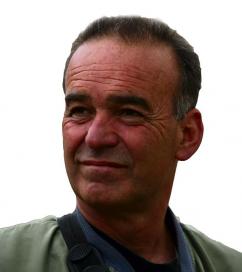
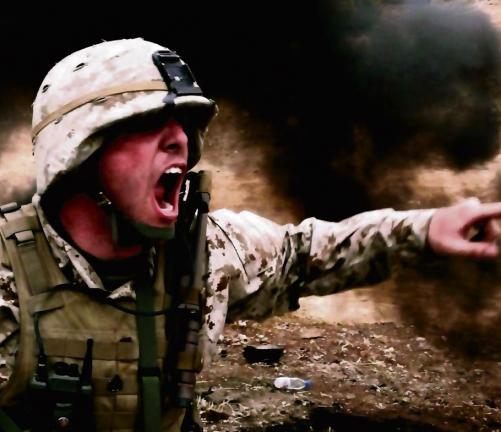
The Times has already hailed The Battle for Haditha as “Iraq’s Apocalypse Now” and – for once – this comparison doesn’t feel like pure hype. Perhaps a better comparison to the film itself would be Pontecorvo’s The Battle of Algiers, which inspired Broomfield. Both films focus on small groups of people trapped on opposing sides of a messy and ideologically bankrupt war. Broomfield’s is based on the events in Haditha, a name that has gained infamy in America. In November 2005 a roadside bomb blew up an American humvee, killing a Marine and injuring two. The Marines responded by killing 24 Iraqi civilians. The resulting cover-up was reported in Time magazine, where Broomfield first came across it. So politically charged is the story that the film can’t find a distributor in America: Broomfield’s keen to stress that “it’s just being very difficult, but I’m sure we will get it.” The end product is an anti-war film that just leaves you with an overwhelming sense of Iraq as a hell-hole. In telling the story from the perspectives of the Marines, the terrorists and the Iraqis trapped in the middle, The Battle for Haditha captures the suffering on all sides of the conflict.
Part of the film’s power lies in the use of ‘real’ people rather than actors; they “had been affected by the war directly, they weren’t just acting.” Broomfield cheerfully admits that he was expecting that he would really dislike the ex-Marines who took on the American parts, but how affected he was by the war stories of “these seventeen-year-old kids”. When Elliot Ruiz, playing the central Marine in the film, breaks down in a bathroom and smashes up a mirror, it’s clear it’s more than just acting. And the barracks and houses in the film aren’t just sets either – Broomfield got all his cast to live in surroundings similar to those in Iraq throughout the filming. He talks about the filming of the women’s mourning over their massacred friends and family; this was done in one shot, a genuine capturing of their grief.
The only concession to circumstance was making the film in Jordan, trips to Iraq being too dangerous to contemplate. Broomfield tells me about one Iraqi journalist who ventured into Haditha itself “and said he was lucky to survive a cup of tea there.” He talks very honestly about the dangers and difficulties of finding the Iraqi refugees from the war in Jordan: “it was very tricky – one bus of Iraqis coming to be auditioned got caught” and, being illegal, deported back into Iraq.
When I ask him how this squares with being a journalist, and whether there’s a responsibility that goes with telling someone’s story, Broomfield talks about the number of people he’s stayed in contact with throughout his career. He also cites the Morecambe Bay trust fund he set up in the wake of Ghosts, “for the families of the victims who are still paying off their debts. We’ve raised £70,000 to go to China – with no charity charge at all, it goes straight to the families so that was a real commitment.” But in typical Broomfield style, it’s said in a low-key, slightly deprecating way – “that was a very specific thing.”
Broomfield’s got a brilliantly maverick eye and style. And despite being so politically informed, he traces his career back to stills photography: “when I was about sixteen, I went on exchange to France, the guy I was staying with was always working so I went out and did a lot of still photography – you know, I sort of discovered that I was good at it.”
And it’s this odd mixture that makes the films work. On one hand, Broomfield’s a switched-on leftie, condemning the “neoconservative Thatcher world that we live in, where people are so geared to consumerism and celebrity.” At the same time, you get the sense that though his fun is serious, he’s seriously having fun. In Tracking Down Maggie he somehow manages to make lengthy camera shots of someone’s trouser leg compelling as you hear “no, you can’t film here”. So desperate do they get waiting around to speak to her Press Secretary, they’re reduced to filming passing dogs.
In both Ghosts and The Battle for Haditha, Broomfield is moving away from the traditional documentary. But he is clear that his shift in genre is not a judgement on the documentary form itself; he get most animated when talking about the capacity for documentaries to capture the world around us. I suggest YouTube might be crowding out the market, but he worries more that “reality TV has taken over to such an extent, it’s much cheaper to make than documentaries and it’s much easier to control in that it’s generally nothing to do with politics and it’s just superficial and stupid.” But for him it’s far from being a dying art: “things go in pendulums and I’m sure it will change.”
The life of a documentary-maker is, for Broomfield, a life well lived; “one of the pleasures of making these films is you have really intense friendships with these people you would never normally know, you would never normally come across in that cocktail party crowd you might know.”
 News / C4P vandalises University offices over divestment10 June 2026
 Lifestyle / A town with a view11 June 2026
 Comment / Top of the slops: the competitiveness of college dining4 June 2026
 Sport / The imperfect privilege of Cambridge sport12 June 2026
 Comment / ‘On the Poverty of Student Life’: sixty years on10 June 2026
 Lifestyle / Confessions of a May Ball crasher12 June 2026
 Lifestyle / May Week horoscopes12 June 2026
 Lifestyle / The finalist’s bucket list12 June 2026
 Theatre / All of Cambridge is a stage12 June 2026
 Music / ‘It’s feminine intuition’: predictions for OR312 June 2026