The rise and fall of the Lit-girl
Katrina Brigmane argues against the ridiculing of women’s self-fashioning
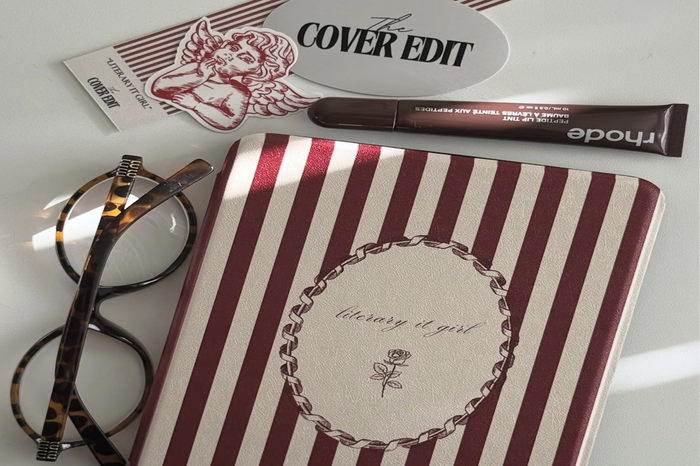
From Substack to Sidgwick, young women’s self-fashioning is often adored and exalted to a resounding level, only to be mocked and discarded with exhausting speed.
I get it. The literary it-girl, or the lit-girl, is easy to ridicule. Her shelves are home to the big three of female confessional literature – Joan Didion, Eve Babitz, and Sylvia Plath. Otessa Moshfegh and Anaïs Nin might make brief appearances on her sprawling writing table, next to her coffee and handmade trinket dish she uses for falling cigarette ash, or inside her sloganed tote bag. She writes confessional essays, and at some point has quoted the fig tree analogy from The Bell Jar via Substack notes. Sophia June identifies the standard markers of the Lit-girl as “beautiful, stylish, and social, with a certain je ne sais quoi.” She then goes on to differentiate the Lit-girl from the It-girl as possessing “creative ways [to] stage and elevate [her] work – both on the page and in persona.”
For some, she represents everything that has gone wrong with contemporary reading culture: overcommercialised, over-aestheticised, too concerned with the image of being well-read.
“The appeal of the sad girl, mad girl, literary girl, was that she could be vain, cruel, disgusting, self-obsessed”
Cambridge has its own version of her. She is likely found somewhere between the English Faculty, the ARC Cafe, or a seminar she has half-prepared for, clad in a skinny scarf and patterned tights. She is hedonistic, bohemian, messy yet curated. We have called her the Sidge-girl. You have likely noticed the process of her social decline taking place in the last year, but this did not occur without a mandatory period of veneration and subsequent contempt.
Sarah Grace Acker notes that the Lit-girl, and her cousins like our very own Sidge-girl, were not overnight sensations. Rather, they are “byproducts” of a “decade’s worth of internet-born movements” surrounding book aesthetics, platformed by Tumblr and fandoms like Twilight, The Hunger Games and others.
What optimised and transformed her was BookTok. The rising enticement with sad or mad girl literature throughout the early 2020s up until now generated a variety of subtropes of the mentally ill, unapologetically unlikeable female character, dissatisfied with her place in the world, which many contemporary authors leveraged. It makes sense, given that previously, female readers had so often been offered palatable heroines. The appeal of the sad girl, mad girl, literary girl, was that she could be vain, cruel, disgusting, self-obsessed – traits women often cannot afford. For a moment, it felt liberating.
What had initially appeared as a dispersed mode of female identity was rapidly consolidated into an overused aesthetic category, and aesthetic categories are vulnerable to parody. Suddenly, everyone started pretending that they have abhorred the pomegranate metaphor from the very beginning. Those who still engaged in this mode of branding were shunned as tacky trendoids.
“What the rise and fall of the Lit-girl exposes is our discomfort with female self-identification”
The Sidge-girl of Cambridge had undergone a similar process in that she initially functioned as an affectionate shorthand for the fashionable Humanities students. But as the category became more distinct and more frequently adopted and studied by others, it lost its seriousness and credibility within the cultural climate. Next, the mockery ensued.
Ironically, literary culture has long depended upon performance. Persona and self-marketing has always been an imperative for writers, notes Rowbottom in her discussion with Sophia June for NYLON, referencing Gertrude Stein’s Paris literary salons in the early 20th century.
What the rise and fall of the Lit-girl exposes is our discomfort with female self-identification. The male intellectual has historically been permitted his own theatrics: the nihilist philosophers in black turtlenecks and Windsor glasses, the Beats, the Oxbridge union hacks. Pierre Bourdieu’s work on taste rings resonant here – displays of it are never neutral. They are socially enforced performances through which cultural capital is attained. The difference is that masculine presentations of intellect are usually neutralised, while feminine ones are villanised. Naturally, once a woman becomes identifiable as a type, it becomes much easier to stop treating her as a person.
The Lit-girl, the Sidge-girl, whatever you want to call her, is often blamed for the overcommercialisation of academia, but this feels like a convenient excuse used to scapegoat women. She did not invent the market that treats literature as accessories and products, nor did she invent the publishing industry’s appetite for marketable young women.
The lit-girl might be overdone. She may even be annoying. But before we discard her entirely, we might want to ask ourselves why we needed her in the first place. Why did we copy and sell her? Why do we keep creating girls only to throw them away like dolls?
 News / C4P vandalises University offices over divestment10 June 2026
 Lifestyle / A town with a view11 June 2026
 Comment / Top of the slops: the competitiveness of college dining4 June 2026
 Comment / ‘On the Poverty of Student Life’: sixty years on10 June 2026
 Sport / The imperfect privilege of Cambridge sport12 June 2026
 Lifestyle / Confessions of a May Ball crasher12 June 2026
 Lifestyle / May Week horoscopes12 June 2026
 Lifestyle / The finalist’s bucket list12 June 2026
 Theatre / All of Cambridge is a stage12 June 2026
 Music / ‘It’s feminine intuition’: predictions for OR312 June 2026