Inside the double life of a thespian student
Barney Sayburn explores the difficult realtities of juggling drama and degree, and the dangers of over-commitment
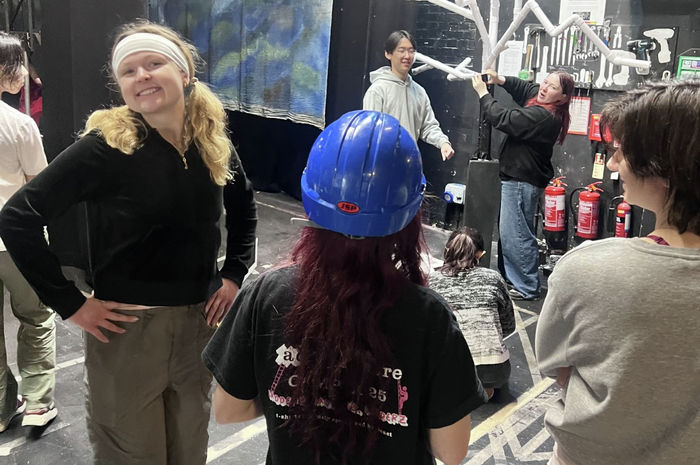
A few weeks ago, I got the chance to witness Stephen Fry speak live, in an interview hosted at Downing College’s Howard Theatre. I forwent the niceties of chatting in the foyer, instead angling myself by the auditorium doors so I could march to the front row and sit within spitting distance of the icon. His Cambridge days have inspired my own path; I applied to this university dazzled by his story of meeting future collaborators in the comedy and drama scenes, forging a creative identity, building the foundations of a formidable entertainment career. I can report that Fry is just as dazzling in person, and I related to his fond anecdotes of time spent in the ADC Theatre.
However, I noted a key point of difference between his experience and my own. A ritual was recalled, of turning up to weekly supervisions without the due essay and being forgiven scott-free, because his admission to Cambridge was considered assurance enough that young Fry would succeed come exam time. I don’t think undergraduates today would be granted the same relaxed provision. I have the freedom, yes, to participate heavily in drama. Yet culture has shifted, and I’m still expected to submit work by the stroke of midnight on a Sunday evening. It made me reflect that the thespian student’s experience of burning the candle at both ends is newer than I’d realised. It begs asking: is the balance between dramatic and academic obligations sustainable anymore?
“The thespian student’s experience of burning the candle at both ends is newer than I’d realised”
Doubtless, everyone that day was engaged by Fry’s tales of being swept away in creative utopia. We were all aware of how student theatre in Cambridge functions as an ecosystem – intense and systemic. Incentives to commit are uniquely strong, perhaps even intoxicating. Let’s say you’re a curious person who admired drama from afar. An abundance of low-responsibility roles are going, so you end up backstage a couple of times as a junior techie at an ADC production. You listen to your betters talking. They seem wiser, happier, as if – in some way you don’t – they belong. They’re giddily discussing their pitching plans for future productions, so you recall times in which you’d casually imagine yourself as a project leader, tantalised again as the thought appears manifest in a role model metres away. You oversee them scrolling through camdram.net, and realise you have a page on there. A little peruse reveals that others’ credit lists look far healthier than yours! Better apply to every script-editor, assistant stage manager, and follow-spot operator gig if you want to be a part of this scene. Suddenly, you’re involved in jobs you can’t manage without stress, and even once the rehearsals finish, you don’t go home to your assignments. Your peers are going to the pub, and if you don’t tag along, maybe you’ll just be some fringe, stickler-type outside of the know. Maybe if you go, someone will let you in on the gossip, or hint at a role for you in their upcoming show! Does this materialise? Not often – but it always could, so you keep responding enthusiastically when texted an invite.
That’s already a riskily busy life. Perhaps in Fry’s era, where one’s education could be put temporarily on hold, it was an exciting, manageable degree of risk. However, we’ve – pardon the pun – degrees of greater concern. It is not uncommon to find yourself exhausted at the end of a show week, facing an imminent assignment deadline you’d neglected, and pulling an all-nighter on wine and coffee to get it done. Of course, we only discuss such trials in jest, as if all come out unscathed. Yet I suspect the toll on mental health is larger than let on. In private, several drama-devoted friends have confided to me that they struggle. One shared that: “It feels like a step backwards not to match or exceed my Camdram credits next term […] despite the fact that I’m already spreading myself too thin and feeling stressed.” I know I struggle sometimes, and I’m only in my first year here. Also, anxieties about overcommitment can come out sideways. ASNACs and Englings often become the butt of jokes about having more time for theatre, despite all of us being on some of the most challenging full-time courses in the world. Perhaps these jibes suggest we’re all feeling the pressure and envy a little relief wherever we think it might reside.
“The most impactful shift we can now enact is a culture of responding to those offers of help”
So, can anything be done? Well, while it would be naïve to suppose that ambitious young people will stop overcommitment provided enough structural change, we ought to ensure it’s not encouraged. The mandatory inclusion of a welfare officer on productions is a step in the right direction, and I’ve been very impressed by their forthrightness in reaching out to cast and crew with friendly support. The most impactful shift we can now enact is a culture of responding to those offers of help. Unfortunately, the instinct of most thespians I’ve met is to bottle conflict and bend to the collective will of achieving the finished product. British politeness strikes once more.
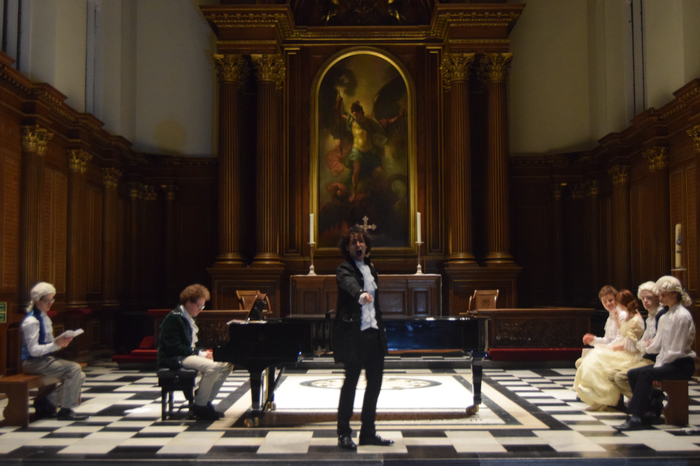
Fry’s Cambridge retains a mythic glow because the heady world he describes – free of consequences – is gone, if it ever did exist. While opportunity and creativity remain lively, we now must accept that looking after ourselves is vital, and how we keep the show on the road.
 Interviews / ‘You have to take it as it comes’: discussing content creation with Auden Barnes17 May 2026
 News / Science Park to ‘triple’ in size with £3bn investment21 May 2026
 News / Sons of imprisoned Saudi scholars urge Cambridge to call off deal with Saudi defence ministry22 May 2026
 Science / Forked over: dish-parity between college cafeterias17 May 2026
 Theatre / Crossing Points devastates the Corpus Playroom20 May 2026
 Sport / Fitzwilliam narrowly regain Cuppers trophy in tight affair with Selwyn22 May 2026
 Comment / The personal cost of reporting sexual violence at Cambridge22 May 2026
- News / Sons of imprisoned Saudi scholars urge Cambridge to call off deal with Saudi defence ministry22 May 2026
 Science / CamGraPhIC’s crusade to curb the AI energy crisis22 May 2026
 Film & TV / Hokum and the horror of guilt21 May 2026