New year, new Shakespeare: a look ahead to Marlowe’s Twelfth Night
Dhyan Ruparel discusses reinterpretation with professional director Michael Oakley and assistant director Sophia Orr
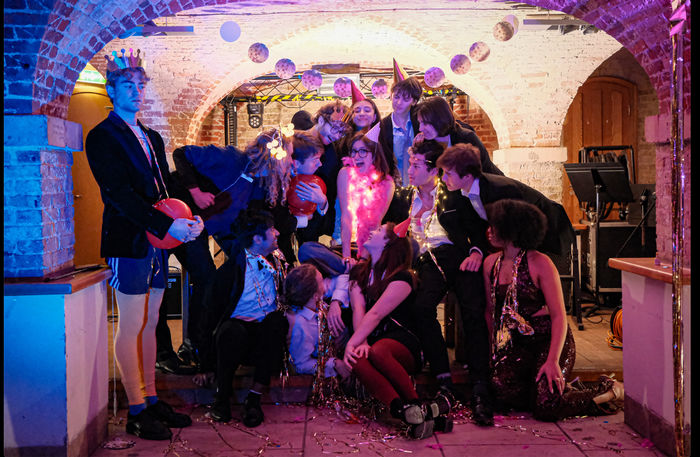
Michael Oakley remembers exactly when he fell in love with theatre: “It was the 13th of October, 1995,” he says, “and I was on a school trip to Stratford Upon Avon. I was watching Richard III at the Royal Shakespeare Theatre, and there was a show stop, so the company manager had to come on-stage - and it would happen, wouldn’t it, on Friday the 13th. That’s the only reason why I can remember that it was the 13th.”
From that first production, Oakley was “hooked,” beginning a long fascination with the classics. An internship at Shakespeare’s Globe and a performance degree at York then led him towards directing, and he began assisting under heavy-weights of the London stage: Richard Eyre, Trevor Nunn, and Jonathan Kent, amongst others. His directing portfolio spans the Western canon, and he admits to having seen every Shakespeare play at least three times – “even including King John.”
“From that first production, Oakley was hooked”
All of this leads him towards directing Twelfth Night – the annual Marlowe Arts Show, a professional Shakespeare production starring Cambridge students. With his extensive library of Shakespeare knowledge, I ask why he chose this romantic comedy, about stranded twins in Illyria and a tangle of mistaken identities. “The reason we chose Twelfth Night is because I think the play is about young people,” he tells me, “Viola is probably about eighteen, we worked out. And their instincts are very young … when they’re often cast older, the behaviours don’t ring true to me.”
Sophia Orr, a third-year English student who will act as Oakley’s assistant director, adds a further reason to stage the play: its brilliant comedy. She says: “comedy is not just about the slapstick element, it’s a way of understanding people and joining them on-stage.” Oakley concurs: “If you try and make it funny, it won’t be funny. If you just commit to what is in the texts and the characters’ motivations… hopefully our audience will find it funny.”
This view of comedy reflects Oakley’s attitude to Shakespeare’s texts. He names Australian auteur directors Kip Williams and Simon Stone who “rip up” their texts, and suggests that he operates quite differently: “There are some words that make no sense to us today, and I’m planning to change a few for this production. So I don’t think you should treat the text as ‘sacred’ – but I think you should respect it.” Orr, who has also acted as assistant director on a Cambridge production of Othello, adds: “I really try to focus on what the text is saying, rather than what I want it to.”
“I don’t think you should treat the text as ‘sacred’ – but I think you should respect it”
The 662-seat (!) Arts Theatre has just received a once-in-a-generation refurbishment, and both are excited by the “beautiful” space. Orr tells me: “We have an incredible venue; we’re using the entire theatre to create something beautiful. In getting to work on something of this size and budget and with this venue, I’d like to make something where people look at it and go: "Oh, there are avenues of creativity we need to explore throughout the rest of Cambridge theatre too.’”
Yet despite the abundant potential of this space and production, I wonder about how Twelfth Night will reach a wide audience: ticket prices are rising throughout Cambridge, and young people especially can feel shut out from Shakespeare’s works. Oakley sees past this: “I’m going to sound so clichéd and awful and really cheesy – but it is for everyone. I’m not directing a show exclusively for a student audience, but I want a student audience to come – and anyone from the town, or further afield. I just think it does transcend age, and all the themes in it are identifiable.”
Oakley’s most recent production was contemporary writing: April De Angelis’ Playhouse Creatures. But the classics remain an important part of his practice: “The thing about Twelfth Night is that it’s a play of absolute genius – people know it, it’s lasted over 400 years. It works. There’s an added pressure there – but it’s a very different pressure to doing a play that nobody has ever seen before.”
As our time together comes to a close, I ask which Shakespeare play each would like to tackle next. For Orr, it is Troilus and Cressida or Henry VIII. For Oakley, it’s The Winter’s Tale, his “absolute favourite play in the whole world,” which he would ideally stage in the Swan Theatre in Stratford. I then ask what excites them about theatre today. Oakley tells me: “I think we’re living in the great age of reinterpretation. I think that’s very exciting. And I think there are some incredible actors out there who want to do big, classical, juicy roles.” Fifteen of those, I add, will be directed by him at the Arts in January.
“I think we’re living in the great age of reinterpretation”
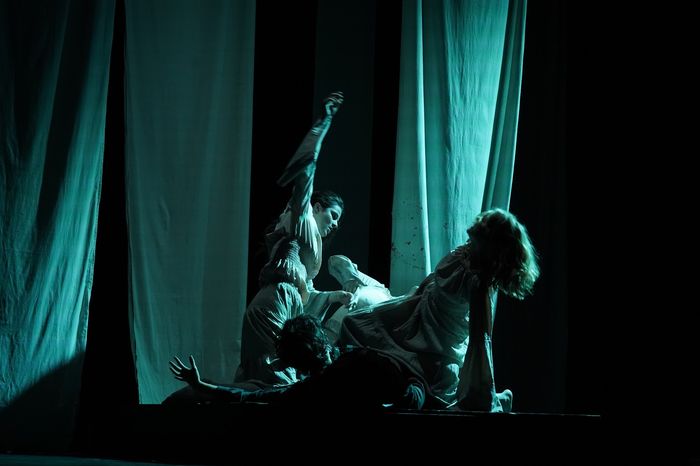
As I leave, I ponder Oakley’s “great age of reinterpretation” and what he will bring to his vivid – yet respectful – version of Twelfth Night. Most hopefully, I consider that a night in the audience of this production may well be someone’s first encounter with the Bard – and perhaps become a date that they, like Oakley, remember for the rest of their lives.
The Marlowe Arts Show 2026: Twelfth Night runs at Cambridge Arts Theatre from Wednesday 21st to Saturday 24th January at 7:30pm, with two matinees. Student tickets are capped at £15.
 Interviews / ‘You have to take it as it comes’: discussing content creation with Auden Barnes17 May 2026
 News / Science Park to ‘triple’ in size with £3bn investment21 May 2026
 News / Sons of imprisoned Saudi scholars urge Cambridge to call off deal with Saudi defence ministry22 May 2026
 Science / Forked over: dish-parity between college cafeterias17 May 2026
 Theatre / Crossing Points devastates the Corpus Playroom20 May 2026
 Sport / Fitzwilliam narrowly regain Cuppers trophy in tight affair with Selwyn22 May 2026
 Comment / The personal cost of reporting sexual violence at Cambridge22 May 2026
- News / Sons of imprisoned Saudi scholars urge Cambridge to call off deal with Saudi defence ministry22 May 2026
 Science / CamGraPhIC’s crusade to curb the AI energy crisis22 May 2026
 Film & TV / Hokum and the horror of guilt21 May 2026