From page to stave
Classical music and literature are inextricably connected, says Anastasia Prussakova
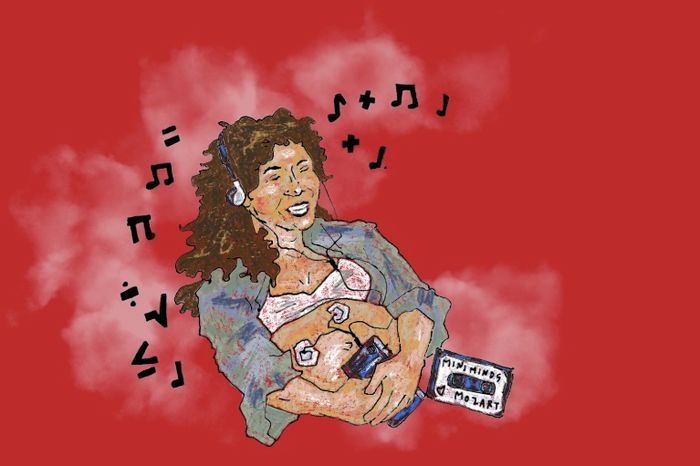
Contemporary pop music bursts with classic literary allusions. From Taylor Swift’s subtle references to Daphne du Maurier’s Rebecca to Lana Del Ray’s evocations of Plathian imagery, the link is clear. This connection between music and literature, however, is no new phenomenon. The arts are inextricably connected, and they’ve been this way for ages.
To begin the chronology of the age-old dance between music and literature, one might start with ancient Greece. The Greeks inhabited a world of song, so their literature, understandably, was consistently intertwined with music. It is widely known that ancient Greek epics were designed to be sung or spoken alongside musical accompaniment. Homer’s The Iliad and The Odyssey, which first appeared around the 7th or 8th centuries BC, are some noteworthy examples. These pieces of poetry were performed aloud together with music from a four-stringed lyre. Fascinatingly, Oxford classicists recently resurrected these musical pieces, pairing their knowledge of ancient Greek inflections with instruments modelled on ancient illustrations to speculate how Homer’s works originally sounded. When you have a moment, allow yourself to be transported to the past, listening to the very foundations of the music-lit combo.
“Ancient Greek epics were designed to be sung or spoken alongside musical accompaniment”
As time went on, the tradition of pairing the written word with music persisted. Somewhat similarly to the authors of ancient Greece, some musical virtuosos integrated writing into their compositions through self-authored poetry. This is how Vivaldi, composer of the haunting, perennially appreciated Four Seasons, embedded literature into his 18th-century works. To supplement each of his seasonal violin concertos, he produced sonnets, vibrantly detailing relevant scenes. Winter, for instance, is accompanied by verses of precarious, windy journeys on ice, and Spring provides a fusion of murmuring streams and chirping songbirds. As scholar and musician Nicholas Lockey puts it, Vivaldi’s sonnets help us better envision the composer’s intended narrative. Though it is uncommon to hear the poems prior to orchestral performances, they are easily accessible online. So, try listening to Summer with its accompanying sonnet in mind. The experience of it all – and especially of the final movement – is nothing short of rapturous.
Then, in the 19th century, Romantic composers were again drawn to the merging of arts. In lieu of producing textual accompaniments themselves, though, several musicians drew inspiration from great literary authors. Beethoven, for example, having delighted in Goethe since childhood, dreamt ardently of an encounter with the writer. And, indeed, not just an encounter: Beethoven yearned to set his idol’s texts to music. “Mention me to Goethe”, he urged Goethe’s lover Bettina Brentano, for “melody is the sensual life of poetry”. After a long-awaited meeting, Beethoven released numerous compositions influenced by Goethe’s poetry and plays, including the 1815 “Meeresstille und glückliche Fahrt.” This cantata, also known as “Calm Sea and Prosperous Voyage,” is based on a pair of Goethe’s poems which trace a progression from deceitfully calm, and consequently perilous, waters to a liberating wind promising safe homecoming. Interestingly, in 1828, Mendelssohn drew on the same literary source, releasing his own overture of the same name, a work that was even more successful than Beethoven’s.
“This is a noteworthy testament to how musical adaptations can become more popular than the originals”
In some cases, 19th-century musical adaptations have entirely usurped the traditionally literary versions of stories. Take, for example, Carmen or The Nutcracker. Both Bizet’s collection of iconic arias and Tchaikovsky’s elegant ballet are rooted in literature. The former, a world-famous opera which premiered in 1875, sprouted from Prosper Mérimée’s identically titled 1845 novella. Despite their superficially similar plots and characters, Mérimée’s and Bizet’s Carmen do differ. Jennifer M. Wilks, an associate professor at the University of Texas at Austin, notes that while Mérimée’s protagonist primarily reflects the author’s concern with “racial, gender, and socioeconomic differences of his time,” Bizet’s clearly demonstrates an “appreciation for the unconventional women” which he encountered in everyday life. Thus, we see how authorial relationships to their subjects reshape characters between literary and musical variations of one work. Furthermore, this is a noteworthy testament to how musical adaptations can become more popular than the originals. While the “Habanera” has become a household classical piece, Mérimée’s work has receded into the background.
The Nutcracker offers a similar example. Now principally associated with Tchaikovsky’s glamorous ballerinas and sugar-sweet waltzes, the tale began with E.T.A. Hoffmann’s 1816 short story. His “The Nutcracker and the Mouse King” oozes with on-brand eeriness and tells a disturbing tale, starkly differing from the whimsical, fairy filled ballet we now deem a family holiday spectacle. Nonetheless, without its literary antecedent, there would be no musical Nutcracker.

In sum, centuries of symphonies, sonatas, and songs are laden with literary references. And, of course, this relationship between music and words is not unidirectional. Monumental writers – from Marcel Proust to George Eliot – are known to eloquently allude to musical pieces in their works. So, if one thing’s clear, it’s that literary melodies, and melodic literatures, are here to stay.
 Comment / Top of the slops: the competitiveness of college dining4 June 2026
 Interviews / What’s the story behind Pages coffee house?8 June 2026
 News / News in Brief: Cambridge crowns, council confirmations, and competitive cricket8 June 2026
 Comment / The Cambridge drift1 June 2026
 News / Cambridge researchers produce ‘world-first’ AI vaccine6 June 2026
 Arts / Don’t rush me – I’m reading!9 June 2026
 Lifestyle / Don’t Cry at Me, Argentina – a next-year abroad story8 June 2026
- News / News in Brief: Cambridge crowns, council confirmations, and competitive cricket8 June 2026
 Science / Failure is the foundation of science8 June 2026
 Fashion / The hidden gems of formal fashion8 June 2026