Palo Alto to Cambridge: Nate Bottomley’s sporting journey
Sam Ho catches up with Blues’ fly-half Nate Bottomley, one of the University’s leading student athletes
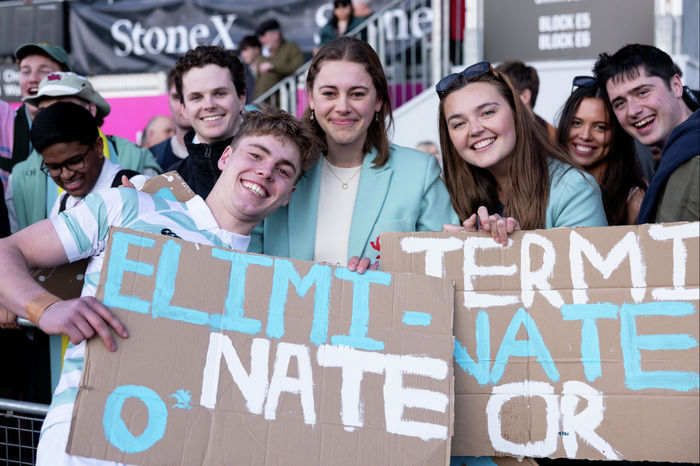
Kicking off the Oxford vs Cambridge Varsity rugby match in front of a near-capacity crowd is no easy feat. The noise. The nerves. The adrenaline. A historic rivalry that is among the most publicised university sports fixtures. 2025’s starting fly-half was Nate Bottomley – the only undergraduate fresher taking the pitch. I sat down with the former U18 Ireland 7s player and second year Trinity Engineer to discuss his rugby journey, aspirations and current life as a student-athlete at Cambridge.
Bottomley started playing rugby at London Irish Amateurs when he was 5, and had to play with his brother in an older age-group, perhaps foreshadowing the increased physicality of playing University rugby against men in their 20s. A brief move to Paso Alto in California led to a change of club, the Seahawks (no, I hadn’t heard of them either…), but upon returning to London three years later he rejoined his old faithful of London Irish and joined Colet Court (now St Paul’s Junior school). In his teenage years, Bottomley led St Paul’s, a private school in south-west London, to a near unbeaten season at U16 level, and later captained the 1st XV.
Bottomley revealed: “It was a really cohesive culture at St Paul’s, there weren’t many egos at all. Despite not being a top rugby school like Harrow, Wellington and Millfield, the facilities and coaching were top-quality.” Despite being a highly selective school where admissions are not based on sporting ability, St Pauls provided an environment where people could thrive at rugby: “Everyone being pretty academically switched-on meant people who had never previously played could learn and adapt quickly. Something like the 1-3-3-1 structure was easy to integrate into the team.” In a reference to a common attacking structure of forwards in rugby, Bottomley emphasised that a positive attitude and a friendly atmosphere within the locker room is key to team success: “There was good banter and chat off the pitch, but we were locked in as soon as we stepped on.”
“Being told the news was ‘one of the best moments of my life’”
During his time at St Paul’s, Bottomley was involved with the London Irish Development Player Pathway (DPP) and Junior Academy set-up, having been nominated to trial by both his club and school. This first began with training once a week at the Middlesex DPP (one of four London Irish DPPs), before making it into the selection squad for London Irish’s Junior Academy at U16 – a conglomeration of the best players across the four DPP centres. Following this, he represented the now defunct Premiership side against Northampton Saints at U16. Unfortunately, Bottomley did not make the U18 Premiership academy squad for the following year – a somewhat controversial decision, in my opinion. When asked if he felt particularly hard done by, he humbly acknowledged that being picked for an U18 premiership side was never going to be guaranteed, nor an easy feat to accomplish. At fly-half, arguably the most competitive position in rugby, there was incredibly tough competition in the Academy, which included England U20 fly-half Rory Taylor - a current professional player at Gloucester Rugby.
Despite this setback, he made the Irish Qualified (IQ) team to tour Ireland to play Munster and Connacht, where Irish national selectors come to watch their five playing pools (the 4 provinces and IQ, an expat team). Following outstanding performances at Rosslyn Park 7s in Year 13, he was called up to the Ireland U18 7s training camp. “I was flown to Dublin, where accommodation, flights and other costs were all covered. It was absolutely unreal. There were then three training weekends, where a couple of players were cut each week. We even got the opportunity to play against the Ireland Women’s Olympic Team.” After intensive training camps, Bottomley was informed that he would be selected to represent Ireland U18s at an international 7s tournament in Strasbourg. He described being told the news as “one of the best moments of my life”. At the tournament, Bottomley contributed to Ireland finishing a very respectable 3rd.
“Yes, we will win (the Varsity Match)!”
Moving onto Cambridge pre-season soon after, where had to sleep on the 1st XV captain’s floor, he hit the ground running by representing the Blues throughout the season. Rewarded for consistent performances, he was the only undergraduate fresher selected to start for Cambridge in the Varsity match versus Oxford – an even greater achievement given how competitive Bottomley’s position is. Asked about if he had any difficulties around balancing work and sport, he stated: “The couple weeks before the Varsity match it was more difficult as there were quite a few selection meetings and Captain’s dinners. In general, however, the time I spent doing rugby isn’t time I would have spent being productive doing Engineering. Also, at the end of the day, Rugby and exercise in general is really good for your mental health.”
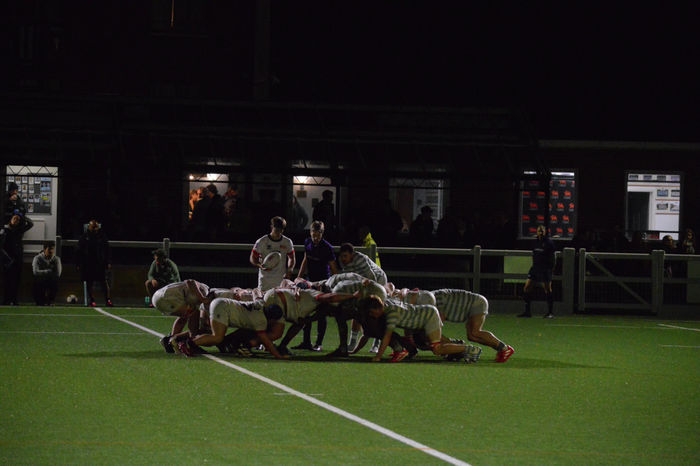
As for this year, despite “the biggest turnaround in the last 3-4 years” in squad personnel, Bottomley was very positive about Cambridge’s preparations and chances for the Varsity Match: “Of course, there is pressure to get the 4th win in a row, but with each game, we are continuing to build towards the Varsity match, and yes, we will win!”
Towards the end of the interview, I asked him about his eventual rugby aspirations. Bottomley stated: “My main focus at the moment is performing for Cambridge. However, I can’t see myself stopping rugby after university, and depending on what job I have, I would love to play at a National League 2, National League 1 or even Championship level.” It is clear that rugby will continue to have a huge impact in Bottomley’s life going forward, but ultimately he is still focused on the present, knowing he will have an even more important role to play in the lead-up to this year’s Varsity Match. Whilst Cambridge is known for its elite academics and focused environment, Nate Bottomley highlights that being a high-level athlete and a strong academic are not mutually exclusive. His consistently grounded, but focused approach means he will surely continue to succeed on many fronts both during and after university life.
 Comment / Top of the slops: the competitiveness of college dining4 June 2026
 Interviews / What’s the story behind Pages coffee house?8 June 2026
 News / News in Brief: Cambridge crowns, council confirmations, and competitive cricket8 June 2026
 Comment / The Cambridge drift1 June 2026
 News / Cambridge researchers produce ‘world-first’ AI vaccine6 June 2026
 Arts / Don’t rush me – I’m reading!9 June 2026
 Lifestyle / Don’t Cry at Me, Argentina – a next-year abroad story8 June 2026
- News / News in Brief: Cambridge crowns, council confirmations, and competitive cricket8 June 2026
 Science / Failure is the foundation of science8 June 2026
 Fashion / The hidden gems of formal fashion8 June 2026