Can exam stress sabotage your memory?
Amanda Gardiner explores the science behind exam stress and why it could harm both our academic performance and long-term health
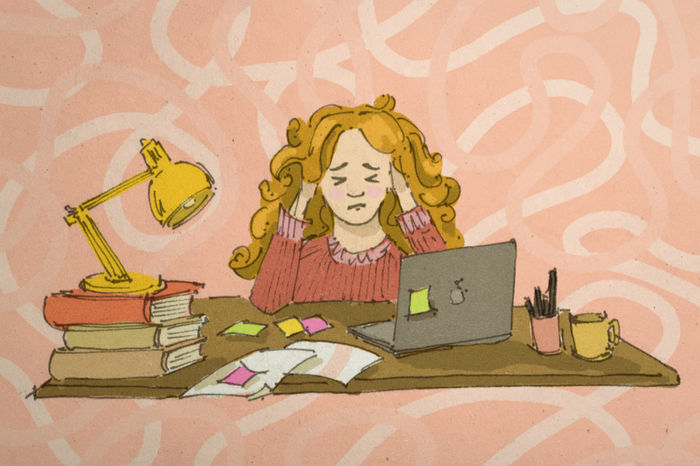
You’re probably reading this while procrastinating your work. Don’t worry, I’m not judging, I’m procrastinating my research while writing this. As Easter term gets into full swing, two words will be echoing through the minds of every student: ‘exams’ and ‘stress’. These words are not only associated with each other, but seemingly interwoven with the essence of life here as exams descend upon undergraduate students, while master’s and PhD students furiously write up their reports and theses.
But do any of us actually feel like we are performing at our academic best right now? If I am, then why am I forgetting the most basic information, and why do I feel so tired? Many of us often don’t speak up about feeling stressed and overwhelmed, likely due to the dangerous mixture of perfectionism, peer pressure, and the weight of Cambridge’s academic reputation. But stress is a common feeling, and scientific research suggests it may be more detrimental than we realise.
“Stress can actively damage our brains, impairing our ability to learn new information”
Stress isn’t just a simple emotion – it’s a complex cascade of physical and mental pathways that change how our entire body functions. Our response to short-term stress is regulated by the sympathetic nervous system, flooding the body with the hormones adrenaline and noradrenaline which trigger the well-known ‘fight-or-flight response’. Over long periods of time, stress is instead regulated by our endocrine system, initiating a cascade of multiple pathways involving hormones that affect our brains and bodies. Some of these can actively damage the region of our brains known as the hippocampus, impairing our ability to learn new information or remember things we’ve already learned.
Physically, long-term stress can cause us to sleep less, and what sleep we do get is often of poorer quality. Stress and exams may also lead us to exercise less, increase our resting heart rate, and impair our ability to regulate it – all of which have been shown to contribute to long-term health problems. In the rare moments we manage to steal away from our workloads, we are less likely to socialise with our peers or wider community, and instead spend more time on social media, potentially further intensifying our stress. As if this wasn’t bad enough, these negative effects can trigger a positive feedback loop, in which poor sleep, a sedentary lifestyle, lack of social connection, and growing frustration at not meeting our academic expectations kick off a vicious cycle that only amplifies our stress levels.
“The negative effects of stress on our memory may actively hurt our academic performance in exams”
Despite these negative effects on our bodies, there is no clear consensus in the scientific literature on whether stress actually negatively affects our academic performance. Some research has shown that the negative effects of stress on our memory actively hurt our academic performance in exams, while other research suggests stress can improve grades. There’s a dark sense of irony, and also some comfort, in knowing that actively damaging my brain cells could somehow result in increasing my grades. Although stress could provide a short-term benefit in exchange for long-term damage, many of us feel as if we have no other option, given the constant reminders that our futures depend on our academic performance here.
So, what can we do about this besides doomscrolling on our bed until our guilt drives us to continue studying? Unfortunately, we have to force ourselves to do exactly what the stress, anxiety, and peer pressure tells us not to do. Regularly step away from screens, go outside, eat nutritious meals, and drink enough water. Avoid screens before bed and skip the all-nighters to maintain a regular sleep schedule. Make time to connect with your friends, family, and the wider community both in Cambridge and at home. While these often feel like guilty pleasures we can’t afford during exam season, taking care of our bodies and regulating stress levels could help to improve our memory, and potentially even our exam grades. And, while this may not be mentioned in research, we should remember to treat ourselves with a little bit of kindness.
 Comment / Top of the slops: the competitiveness of college dining4 June 2026
 Interviews / What’s the story behind Pages coffee house?8 June 2026
 News / News in Brief: Cambridge crowns, council confirmations, and competitive cricket8 June 2026
 Comment / The Cambridge drift1 June 2026
 News / Cambridge researchers produce ‘world-first’ AI vaccine6 June 2026
 Arts / Don’t rush me – I’m reading!9 June 2026
 Lifestyle / Don’t Cry at Me, Argentina – a next-year abroad story8 June 2026
- News / News in Brief: Cambridge crowns, council confirmations, and competitive cricket8 June 2026
 Science / Failure is the foundation of science8 June 2026
 Fashion / The hidden gems of formal fashion8 June 2026