Why no two snowflakes are the same
Yu Tong Lim helps crystallise the chemistry behind this magical phenomenon
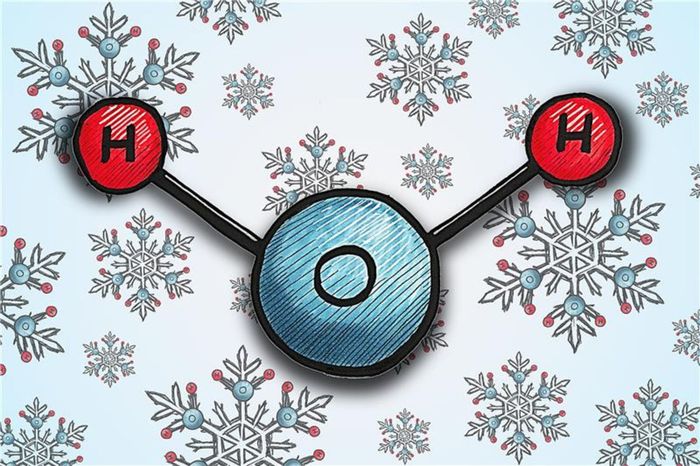
It snowed in Cambridge last week. Even if it lasted only a few hours before turning to sleet, the sight of shimmery white puffs floating down from the sky was nonetheless beautiful. This phenomenon is more than just picturesque, though – look closely enough, and you’ll see something quite scientifically extraordinary.
Snowflakes have captured the interest of both small children and scientists for decades. In the late 19th century, American meteorologist Wilson ‘Snowflake’ Bentley published an expansive collection of more than 5000 photos of snowflakes captured on black velvet, noting that no two were ever alike. Later, Ukichiro Nakaya created the Nakaya diagram, a plot enabling the prediction of the shape of snowflakes based on humidity and temperature. Today, the world expert on snowflakes is Kenneth G. Libbrecht, physics professor at Caltech, who also wins the award for coolest side hustle: ‘Snowflake Consultant’ on the set of Frozen.
“As it forms, each snowflake writes an intricate record of its journey through the atmosphere, never to be repeated”
So, what goes into making a snowflake? In his book Snow Crystals, Libbrecht explains that every snowflake begins as a tiny water droplet that freezes into ice. Because of the structure of water molecules, they arrange themselves into a hexagonal ice crystal. As this crystal grows, the corners stick out, making them more likely to attract incoming water vapour. These corners grow faster than the flat faces of the crystal, forming protrusions that extend outwards into branches, defining the six-sided snowflake shape we’re familiar with.
Importantly, snowflakes grow from gaseous water vapour and not liquid water. Water molecules in the air diffuse onto the ice crystal and attach directly to it in a process known as deposition. Since gas transforms straight into a solid instead of forming liquid droplets first, snowflakes can develop precise and delicate details.
This process also explains why every snowflake has a unique shape. The rate at which water vapour diffuses and deposits onto ice is highly sensitive to conditions like temperature and humidity. During its formation, a snowflake gets swept through different regions of air. Every slight change in its environment affects the way it grows, and every difference is amplified as the snowflake branches further. Nakaya once dubbed snowflakes “letters sent from heaven,” and he might have meant it literally; as it forms, each snowflake writes an intricate record of its journey through the atmosphere, never to be repeated in quite the same way.
“Current research focuses on developing computer models to predict snowflake properties, and growing snowflakes in the lab to verify these predictions”
Some common rules do exist. Because the formation of snowflakes is limited by the amount of water vapour in the air, structures become more complex when humidity is higher, and are simpler in drier places. Current research focuses on developing computer models to predict snowflake properties, and growing snowflakes in the lab to verify these predictions.
But why study snowflakes at all? To begin with, snowflakes offer a case study of the physical processes that govern the formation of crystals. This has applications in other fields of materials science and engineering. It can also help us understand the weather; meteorologists have used snowflake structure to study snowpacks and understand potential avalanche situations.
But Libbrecht himself, in his book Snow Crystals, admits that his work on snowflakes isn’t driven by any practical application, calling it “little more than [his] scientific hobby”. Funding for snowflake research is scarce, if not non-existent, because there is no straightforward payoff. As a result, “very few people have studied it over the years,” he writes.
Perhaps snowflake science is the perfect example of blue skies research, curiosity-driven in the purest sense; a field that has enthralled scientists and enthusiasts since they were children catching snow on their tongues. Like liquid crystal displays and the MRI, it might take a breakthrough many years later to discover the value in snowflake research. Until then, it serves as a reminder of the original motivation of science: the human desire to explain beautiful things. So, the next time it snows, consider picking up a magnifying glass and a copy of the Field Guide to Snowflakes and exploring it for yourself.
 Comment / The Cambridge drift1 June 2026
 Comment / Top of the slops: the competitiveness of college dining4 June 2026
 News / Cambridge psychologist warns against blanket social media ban for under-16s1 June 2026
 News / University support staff strikes end after month of action2 June 2026
 Music / We need to talk about Kendrick2 June 2026
- Comment / Top of the slops: the competitiveness of college dining4 June 2026
 Interviews / Bible Scholar Mattie Mae Motl: “God is a woman”4 June 2026
 Features / One big happy (college) family?4 June 2026
 Theatre / Bold beginnings in the Corpus Playroom 3 June 2026
- Music / We need to talk about Kendrick2 June 2026