Astronomical events to look out for over the break
Sophie Patel’s recommendations for a stellar way to spend your vacation
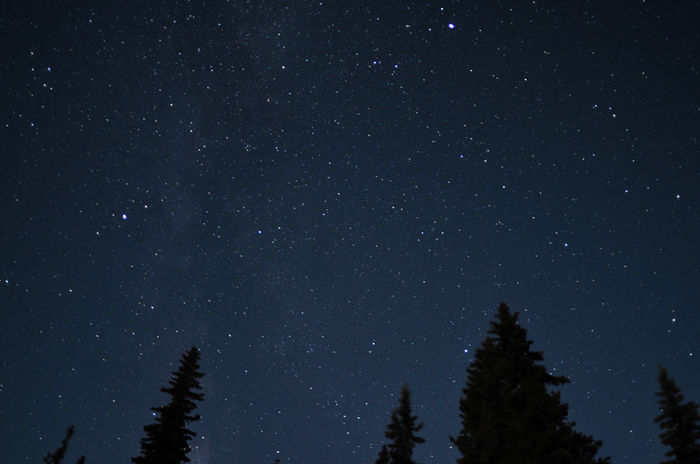
The festive season is upon us and it brings with it the separation of us, the students, from Cambridge. Sat at home wondering what to do with ourselves in the absence of supervision work, we may find our gaze drawn upwards to a unifying entity above us all: the sky at night, even if, like me, you’re from an area of significantly worse light pollution than Cambridge. I’ve rounded up some upcoming astronomical events to help us all through these dark winter nights with home friends who’ll never understand why you miss Jack’s trips so much.
“Sat at home wondering what to do with ourselves in the absence of supervision work, we may find our gaze drawn upwards”
Starting off with the most visible single element of the night sky, I couldn’t write a night sky article without talking about the moon. The next full moon is on the 3rd of January, just in time to help you out with your New Year’s resolutions as (according to astrologists …) the full moon is a period for reflection and letting go.
The astronomical event I’m perhaps most excited about over the break is the Quadrantid meteor shower. This will have its highest levels of activity on the 4th of January, which promises to be an exciting evening. According to The Royal Greenwich Observatory, there could be up to 120 meteors per hour at the peak of its activity. This meteor shower is unusual because of the very short duration of its peak activity – only a few hours compared to the more typical two days. It will be possible to view the Quadrantid shower from all over the country if you can find an area of low enough light pollution, and assuming conditions are not too cloudy. However, the moon will provide an additional challenge as it will be full at the time of the peak, making it trickier to observe the shower.
“Due to the fact that there are actually 365.24 days in a year, the exact date of the winter solstice does exhibit some variation”
An important astronomical date to reflect on is the 21st of December, which was the winter solstice. This is the day which experiences the shortest hours of daylight out of the entire year, traditionally considered the middle of winter and the start of astronomical winter. The winter solstice (in the Northern Hemisphere) occurs on the day that the Northern Hemisphere is tilted the furthest away from the sun out of its entire orbit, when the least sunlight is able to reach the hemisphere, and thus very low hours of daylight are recorded (with less than eight hours of daylight recorded in London on the 21st!). Interestingly, due to the fact that there are actually 365.24 days in a year (which is corrected for over time by leap years), the exact date of the winter solstice does exhibit some variation over a very small window of time – an interesting quirk of the Gregorian calendar system! Every year, hundreds of visitors gather to observe the solstice at Stonehenge, in Wiltshire. Here, the design of the stones means that on the winter solstice the sunrise can be seen perfectly aligned through the stones’ arrangement.
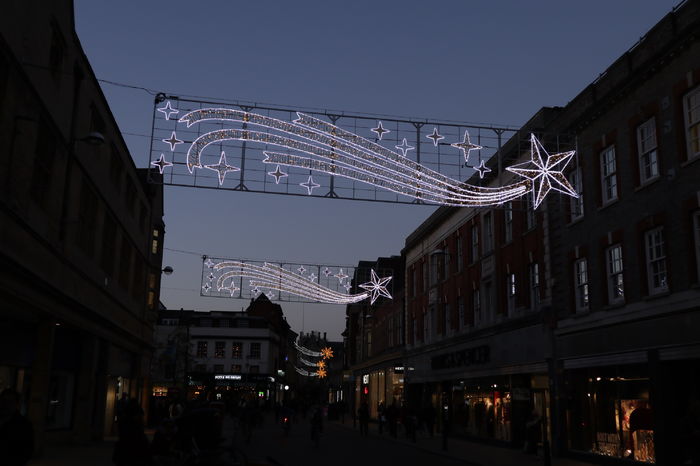
To round off the article, I’ll leave you with a reminder of a classic constellation that is visible all the year round, in Cambridge and at home: Ursa Major. Ursa Major is best known for containing the well loved and often observable constellation The Plough, which comes in handy when trying to find possibly the most observed star in the night sky: the North Star. ‘Ursa Major’ itself is Latin for ‘great bear’, because the constellation was believed to resemble the shape of a bear if you joined the stars (take a look for yourself and see if you can find the bear!). Enjoy the break and don’t forget to turn your gaze to the sky at night.
 Comment / The Cambridge drift1 June 2026
 Comment / Top of the slops: the competitiveness of college dining4 June 2026
 News / Cambridge psychologist warns against blanket social media ban for under-16s1 June 2026
 News / University support staff strikes end after month of action2 June 2026
 Music / We need to talk about Kendrick2 June 2026
- Comment / Top of the slops: the competitiveness of college dining4 June 2026
 Interviews / Bible Scholar Mattie Mae Motl: “God is a woman”4 June 2026
 Features / One big happy (college) family?4 June 2026
 Theatre / Bold beginnings in the Corpus Playroom 3 June 2026
- Music / We need to talk about Kendrick2 June 2026