Research Roundup: Week Three
Dhruv Shenai and Jessica Adams present some of the latest scientific developments
Cambridge device could restore speech
For years, sufferers of dysarthria, a speech disorder characterised by slurred, mumbled and quiet speech, have relied on brain implants or eye tracking programs to communicate. Last week, a team led by researchers at Cambridge published the results of their new wearable device, Revoice, that could revolutionise the lives of patients unable to communicate fully.
Dysarthria is caused by damage to the nervous system, and is a common result of many neurological diseases including stroke, ALS and Parkinson’s. Revoice is a choker-like device worn around the neck that senses laryngeal muscle vibrations, as well as carotid pulse signals. This means that the wearer is able to silently mouth words or phrases that can be interpreted by Revoice, while the pulse monitor interprets the emotional state of the individual.
“Revoice uses a high-resolution method that allows the wearer to ‘speak’ fluidly”
Limitations of wearable technology for dysarthria patients until now include the need for the user to pause between each word to give the system time to interpret it. Revoice uses a high-resolution method that allows the wearer to ‘speak’ fluidly.
As well as this, devices so far have only been able to provide 1:1 translation, dictating word-for-word what the person is saying. While this is practical for healthy people (on whom the technology is often tested), for those with neurological conditions, it can be very demanding, both physically and cognitively, to put together a full sentence. Revoice uses two AI agents: one to reconstruct words from the mouthed speech, and the other to expand these words into a full sentence, taking into account context clues such as emotional state and the weather. In one test, “we go hospital” was translated into: “even though it’s getting late, I’m still feeling uncomfortable. Can we go to the hospital now?”
While this was just a small study, with ten healthy people and five stroke patients, the model achieved a per-word accuracy of 96.3% and the participants reported a 55% increase in satisfaction. The development of Revoice provides hope for dysarthria sufferers looking to regain their voice.
Miniature microbiomes
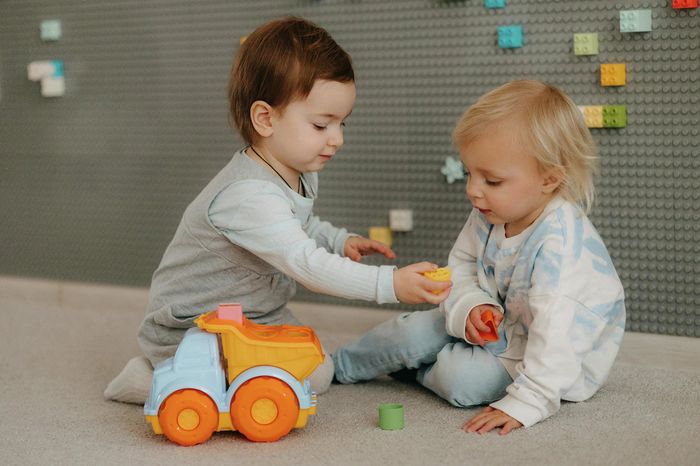
Nursery is often the first place children learn how to share – and perhaps this includes more than toys! For the first time, scientists have quantified that babies can share up to 20% of their microbiomes with each other, within the first four months of nursery.
“It may be a necessary step towards building a diverse and resilient microbiome”
This result is unexpected because it implies that babies share their gut microorganisms with each other at a higher rate than with their families after birth. The research team analysed faecal samples from babies attending a nursery in Trenco, Italy, both before and during their first few months. They found that the babies’ microbiomes became increasingly similar, reflecting their similar diets at nursery, and also transmission of bacteria via social interactions.
The microbiome consists of trillions of bacteria and microorganisms. They are critical for the development of our immune system, possibly influencing our sleep, mood and cognition too. Despite its importance, the microbiome remains underresearched, particularly in early childhood, where rapid biological and neurological development is taking place.

The nursery study assessed 134 people, including 41 babies, their parents, siblings, teachers and pets. The researchers observed sharing of microorganisms not only between babies, but also between babies and pets, and even from other babies to parents via their own children. This repaints our understanding of the microbiome, suggesting that it is far more socially dynamic than previously thought.
Whilst this level of microbial sharing may alarm parents already anxious about nursery illnesses, it isn’t necessarily a bad thing. Instead, it may be a necessary step towards building a diverse and resilient microbiome. So the next time you accuse a baby of not sharing, think of microbiomes!
 News / C4P vandalises University offices over divestment10 June 2026
 Lifestyle / A town with a view11 June 2026
 Comment / Top of the slops: the competitiveness of college dining4 June 2026
 Comment / ‘On the Poverty of Student Life’: sixty years on10 June 2026
 Theatre / The recipe to success this Easter term 10 June 2026
 Lifestyle / Confessions of a May Ball crasher12 June 2026
 Lifestyle / May Week horoscopes12 June 2026
 Lifestyle / The finalist’s bucket list12 June 2026
 Theatre / All of Cambridge is a stage12 June 2026
 Music / ‘It’s feminine intuition’: predictions for OR312 June 2026