Research Roundup: Week One
Pooja Gada covers the latest scientific research, from monogamous mammals to the earliest evidence of human fire-making
Mammals, mating, and monogamy: how faithful are we?
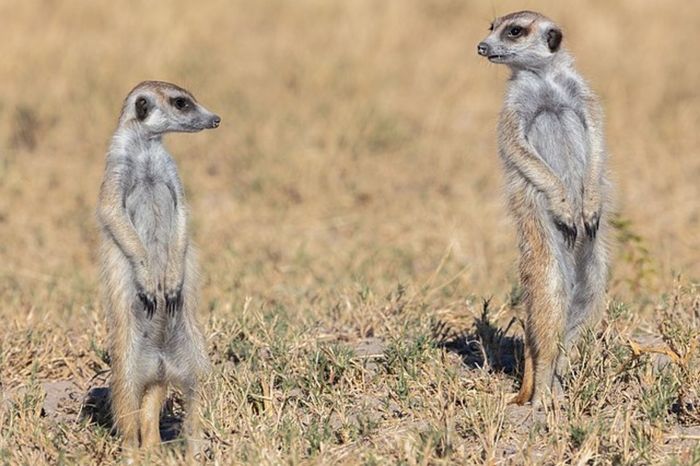
From Coldplay’s Kiss Cam to Lily Allen and David Harbour’s divorce, 2025 seems to have been riddled with cheating scandals. Despite monogamy feeling culturally natural to humans, infidelity remains widespread – raising the question: are humans naturally monogamous?
A new study from the University of Cambridge, led by Dr Mark Dyble, set out to answer this. By analysing ethnographic data from over 100 human populations, from the Early Neolithic to the present day, alongside genetic data from more than 30 mammal species, the study examined how monogamy has evolved independently across mammals.
To quantify monogamy, Dyble calculated the proportion of full siblings relative to half-siblings. This provides a robust genetic proxy for mating behaviour: monogamous populations tend to produce many full siblings, while promiscuous or polygamous systems generate far more half-siblings.
By this measure, humans ranked 7th out of 35 species for monogamy, with 66% of siblings sharing the same parents. Humans far outperformed our ape cousins, chimpanzees (4%) and gorillas (6%), but were on par with meerkats (60%). The most faithful mammal was the humble Californian deermouse, which forms inseparable, lifelong bonds, and scored 100%. By contrast, Scotland’s Soay sheep came last, with just 0.6% full siblings. As Dyble puts it, humans “sit comfortably” in the “premier league of monogamy,” while most other mammals “take a far more promiscuous approach to mating”.
Yet human monogamy has not remained fixed over time. Across centuries and civilisations, the proportion of full siblings varies dramatically – from just 26% at an Early Neolithic site in the Cotswolds to 100% in several Neolithic populations in northern France – suggesting fidelity is flexible, not biologically predetermined.
“As Dyble puts it, humans “sit comfortably” in the “premier league of monogamy””
Why, then, did monogamy evolve at all? Across mammals, monogamy is closely linked to how much fathers invest in caring for their offspring. In large-brained primates, offspring are costly to raise and remain vulnerable for long periods, making male infanticide both more likely and more damaging. Some species, such as chimpanzees and bonobos, reduce this risk through promiscuity, creating paternity confusion so that no male can be certain an infant is not his own. Humans, by contrast, tend towards paternity certainty through monogamy, increasing the likelihood that a single male will invest in and protect his offspring.
Evolution may explain why monogamy emerged, but not how it is maintained. A 2019 review suggests that human fidelity relies heavily on social, cultural, and religious norms. When these weaken, serial monogamy or polygamy often follows. Monogamy, then, is neither purely biological nor purely cultural, but driven by both. In nature’s dating pool, the Californian deermouse may be rare – but the Soay sheep is never far away.
Fire, flint, and fool’s gold: humans discovered fire far earlier than thought
Over a hundred thousand years ago, a group of hunter-gatherers huddled around a small clay pit on land that is now England. Together, they struck a spark that would ignite a revolution in human evolution.
An archaeological team, led by the British Museum, has uncovered the earliest known instance of humans deliberately creating fire – over 400,000 years ago. The discovery, made at the Paleolithic site of East Farm Barnham in Suffolk, pushes the origins of fire-making back by more than 350,000 years – far earlier than previously thought. At the time, Britain was inhabited not by Homo sapiens but by an early Neanderthal species; our own ancestors would not arrive for another 350,000 years.
“The earliest known instance of humans deliberately creating fire – over 400,000 years ago”
Buried beneath layers of ancient clay, lay three crucial clues that support the researchers’ claim. First, they unearthed flint hand axes showing signs of repeated heating: cracking, reddening, and spiral fractures. Second, fragments of iron pyrite (or fool’s gold) were discovered alongside them. When struck against flint, iron pyrite produces sparks, functioning as a primitive Stone Age lighter.
The third and most decisive clue came from the surrounding sediment. Researchers identified a thin layer of reddened clay embedded among the otherwise yellow-orange soil. This red colour stems from haematite, a mineral that only forms when iron-rich sediments are heated to high temperatures. Geochemical analysis revealed the layer had been exposed to short, intense bursts of heat exceeding 700ºC, consistent with small wood fires repeatedly built in the same spot. Pyrite is also extremely rare in the local landscape – it is not present in a database of more than 33,000 rock samples from Barnham, suggesting it was transported deliberately to the site for fire-making.
But why was the ability to harness fire so transformative? The newfound ability to cook food – particularly meat – increased the energy extracted from diets. This energy surplus supported brain growth that would otherwise have been too metabolically expensive to maintain. These larger brains enabled more complex thinking, social bonds, and cooperation, likely driving the emergence of early language. From those first sparks emerged the foundations of Homo sapiens – us.
 News / C4P vandalises University offices over divestment10 June 2026
 Lifestyle / A town with a view11 June 2026
 Comment / Top of the slops: the competitiveness of college dining4 June 2026
 Comment / ‘On the Poverty of Student Life’: sixty years on10 June 2026
 Theatre / The recipe to success this Easter term 10 June 2026
 Lifestyle / Confessions of a May Ball crasher12 June 2026
 Lifestyle / May Week horoscopes12 June 2026
 Lifestyle / The finalist’s bucket list12 June 2026
 Theatre / All of Cambridge is a stage12 June 2026
 Music / ‘It’s feminine intuition’: predictions for OR312 June 2026