‘Women just get it more’: autoimmunity and the gender bias in research
Asha Torczon explores why the female population are more susceptible to autoimmune diseases and the impact of misogyny in medical research
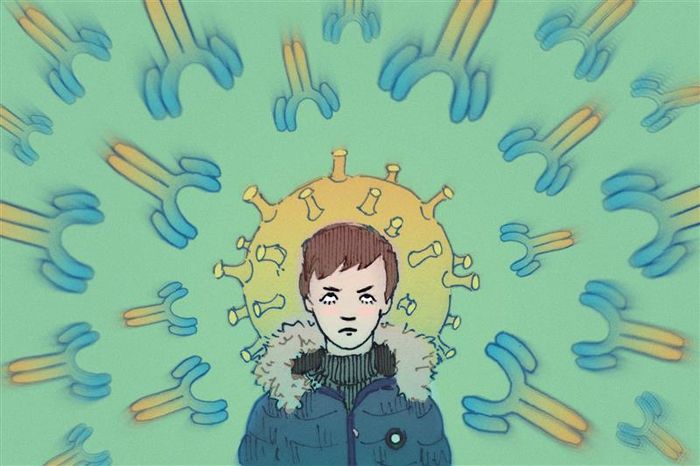
“So, why are women at a higher risk for autoimmunity?” I asked my supervisor, frustrated with how sex-specific risk factors had been brushed over in our lecture on autoimmunity. “Women just get it more,” he said with a shrug. I wasn’t quite sure what to say to that. I had come to expect dissatisfaction with the unknown and was hoping to hear a complex explanation – or at the very least, some speculations based on the data we have and insights into the research that is to come.
The truth with autoimmune diseases is that women do get them more – up to 80% of people with autoimmune diseases are women. However, there’s no ‘just’ in biology, only questions we have yet to answer. And, despite the impression I got from my lecture and my supervisor, researchers have many possible answers. The lack of research into autoimmunity in women (in this particular body of research the term ‘woman’ refers to an XX female with oestrogen as the primary sex hormone) and lack of clinical research using these sex-specific risk factors to help affected women reflects the pervasive gender bias in scientific research.
“Up to 80% of people with autoimmune diseases are women”
Throughout the history of scientific research, women have been excluded as participants from studies. Scientists of the past cited a variety of reasons: female hormones varied too much due to the menstrual cycle, introducing uncertainty into the data; testing unknown drugs might have impacts on fertility (and who cares about women’s health if they can’t reproduce?); and when it comes to animal studies, it’s just too difficult to house participants of two sexes.
These are excuses for the fact that female health concerns have been perceived as less worthy of study – far more funding and research has gone into erectile dysfunction or male pattern baldness than endometriosis and premenstrual syndrome. To be scientifically valid, they rely on the assumption that what is true about the default male body must also be true of the female body, and so results from studies on men could be easily generalised for women. However, health outcomes in women today clearly prove this wrong: women are more likely to present with ‘atypical’ symptoms, be diagnosed later, and experience adverse drug reactions – all as a consequence of inequality in how clinical research is conducted. As efforts are made to close the gender research gap, science has begun to reveal the fascinating mechanisms underlying sex specific disease presentations – such as autoimmunity.
Autoimmune diseases arise from a failure of the immune system to tolerate the self. The distinction between self cells and disease-causing non-self cells is essential to protect the body from infections while also preventing unnecessary damage from an unwarranted immune response. Almost paradoxically, decreased exposure to actually harmful pathogens, with the development of modern medicine, has weakened the immune system’s ability to discriminate between a threat and a normal part of the body. As a result, autoimmune diseases are generally increasing in prevalence. But what is it that puts women at a higher risk?
“People with two X chromosomes are at risk of receiving a ‘double dose’ of certain immune related genes”
Evolutionarily speaking, mothers with stronger immune systems pass on this enhanced defence to their children, offering them a survival advantage. This occurs through the transfer of antibodies, the molecules primarily responsible for specific targeting of disease-causing molecules, from mother to child during pregnancy and via breast milk. There is thus a selective pressure for women to produce more antibodies, as this would increase the likelihood of survival for the next generation. More antibody production means a greater risk of making autoantibodies, which target self cells instead of pathogens – and thus causing autoimmunity. It’s almost infuriating – millions of women today are affected by severe and often incurable conditions – even evolution has prioritised the survival of the child over the mother.
The mechanism for this involves both hormones and the X chromosome. Oestrogen induces the production of more powerful and selective antibodies, while decreasing the expression of a gene involved in tolerance. This results in a more active immune system, with fewer safeguards to protect self cells. Additionally, many genes involved in the immune system are located on the X chromosome. People with two X chromosomes are at risk of receiving a ‘double dose’ of certain immune related genes if control mechanisms fail, leading to a hyperactive immune system and a greater risk of autoimmunity.

There is still so much we don’t know in autoimmunity research – what environmental factors (like hormone disrupting chemicals in the environment) put certain women at a higher risk? Why is the gender gap more marked for some autoimmune conditions than others? How does autoimmune risk change in people undergoing hormone replacement therapy (HRT) as part of gender affirming care? These questions can only be answered by doing more inclusive research that refuses to accept that women are just destined to suffer from autoimmunity.
 Comment / The Cambridge drift1 June 2026
 News / Cambridge psychologist warns against blanket social media ban for under-16s1 June 2026
 News / University support staff strikes end after month of action2 June 2026
 News / News in Brief: Corpus climbing, climate cash, and commendable contributions1 June 2026
 Music / We need to talk about Kendrick2 June 2026
 Comment / Top of the slops: the competitiveness of college dining4 June 2026
 Interviews / Bible Scholar Mattie Mae Motl: “God is a woman”4 June 2026
 Features / One big happy (college) family?4 June 2026
 Theatre / Bold beginnings in the Corpus Playroom 3 June 2026
- Music / We need to talk about Kendrick2 June 2026