Outlaw
Rudolph Eliott Lockhart catches up with Nick Love’s new crime film
Clearly there is something afoot in the West Country. Hot on the trail of Hot Fuzz comes Outlaw, another film featuring bent coppers, dodgy criminals, plenty of guns and a Gloucestershire setting, although any similarities end here. Outlaw is definitely not played for laughs.
Writer-director Nick Love’s film follows the story of five men brought together by the feeling that the law has let them down. Along with the police officer who decides to help them, they mete out summary justice vigilante style. It’s a film full of angry men fed up with a society where no one is safe, who reach for their baseball bats and guns to, er, put a stop to all the violence.
It’s a film full of angry men fed up with a society where no one is safe, who reach for their baseball bats and guns to, er, put a stop to all the violence
 Love himself is angry, although fortunately he’s picked up a film camera instead of a weapon. There is a political core to the film with an implicit attack on the government for being more interested in public image than delivering actual change and making people feel safer on the streets. The suggestion is that the only people who have any real freedom are the criminals, especially when the legal system is perverted by crooked policemen and the victims of crime end up in a worse state than the perpetrators.
It all sounds a little like a Richard Littlejohn wet dream: the idea of avenging angels, fighting crime in the face of liberal judges who might try to rehabilitate them with namby-pamby community service orders. But the film does sound a slight cautionary note as most of the Outlaws come to sticky ends.
It’s not a subtle film. The vision of society is so dystopian it can seem ridiculous. Every policeman is corrupt, every hoodie threatening. Moreover, the film starts slowly as each of the five Outlaws are introduced by showing the events from which the law failed to protect them, or provide adequate justice for. The result is that it feels like a lecture and the message that society is going to the dogs ends up being hammered home five times over.
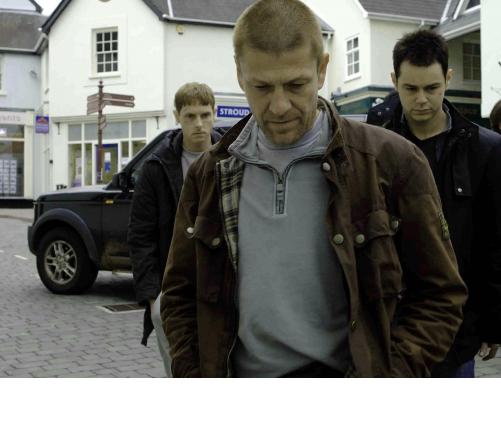
It’s hard to believe the character’s motivations sometimes. You feel sympathy for Bryant (Sean Bean) after he comes back from a tour of duty in Iraq to find his wife has shacked up with another man and changed the locks. But quite why that should turn him into a psychotic dispenser of justice to the criminal underworld is not clear. Similarly, the Outlaws conveniently hook up with Lewis (Bob Hoskins) who after 25 years as a straight policeman, curiously decides to drop his by-the-book approach and instead help the vigilantes, giving them police details on all the paedophiles, drug dealers and gangsters that they know about.
Outlaw is more high-minded than Love’s previous films, The Business and The Football Factory, and wants to be taken seriously. Its message is that something must be done about an increasingly violent society, but it stops short of offering any solutions. Ultimately, it fails because the picture it paints of society is so bleak and so unsubtle that the film loses the realism it relies upon.
Rudolf Eliott Lockhart
 Comment / Top of the slops: the competitiveness of college dining4 June 2026
 Interviews / What’s the story behind Pages coffee house?8 June 2026
 News / News in Brief: Cambridge crowns, council confirmations, and competitive cricket8 June 2026
 Comment / The Cambridge drift1 June 2026
 News / Cambridge researchers produce ‘world-first’ AI vaccine6 June 2026
 News / C4P vandalises University offices over divestment10 June 2026
 Interviews / ‘Central banking gets under your skin’: Sarah Breeden on working at the Bank of England 10 June 2026
 Theatre / The recipe to success this Easter term 10 June 2026
 Music / To Be Forever Yung10 June 2026
 Comment / ‘On the Poverty of Student Life’: sixty years on10 June 2026