‘Race realist’ fellow: College ‘actively encouraged’ protests for my sacking
Nathan Cofnas provided no evidence for his allegations against emmanuel College
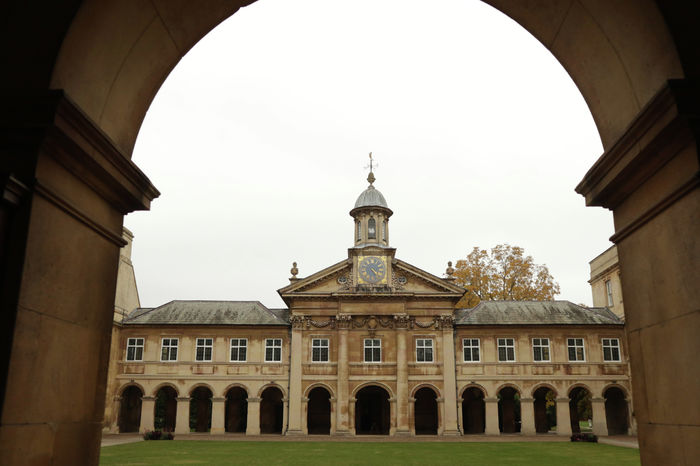
A Cambridge academic who said that Black professors would “disappear” from Harvard under a meritocracy told a court he was treated "less favourably" for his views, and that his College “actively encouraged” protests for his sacking.
Dr Nathan Cofnas, a former research associate at Emmanuel, is suing the College for belief discrimination, claiming the College cut ties with him over protected philosophical beliefs. He argued the dismissal also breached his human rights, violating his rights to freedom of belief and expression, and argued that even if the college’s actions were lawful, they were neither necessary nor proportionate given the strong protection for academic expression.
Cofnas was dismissed from his position in March last year after publishing a blog post on his own website that prompted widespread backlash. He wrote that under a meritocracy, Black people would “disappear from almost all high-profile positions outside of sports and entertainment,” and the number of black professors at Harvard would “approach zero”.
He alleged that the College’s administration was “actively encouraging protesters” against him after during the fallout over the blog. The College rejects this claim and Cofnas declined to provide examples of this conduct. The academic further claimed that Cambridge’s Philosophy Department was “siding with the protestors” and encouraging further action to have him removed.
His legal claim is being supported by the Free Speech Union, a UK-based organisation which has previously taken legal action over the issue of free speech at other universities, including the University of Essex.
Cofnas, who was hired by Emmanuel in 2022, characterises his views as “race realism” and advocates for the preservation of “racial distinctions” through a “hereditarian revolution” against the “DEI [diversity, equality and inclusion] devil”. He also called for an end to the “war on nature” and for people to “accept that talent is not distributed equally within or across groups”.
Lawyers acting on behalf of the College told Cambridge County Court on Wednesday (28/01) that the College’s Fellowship Committee – a governing body of academics – believed the post “amounted to a rejection of DEI policies and, in its entirety, amounted to a call to action encouraging others to reject DEI values”. These actions were read as a rejection of College members to uphold a ‘culture of respect’ which promises to provide “a welcoming and inviting environment for all”.
The College also argued that Cofnas used an “aggressive” tone in claims that relied on “sweeping generalisations, blunt assertion, and an absence of evidence”.
The College said the post had a “severe” impact on Black students, and that “it was reasonable to take action in relation to the Blog given its adverse impact on members of the College community and a range of core objectives that the College must strive to achieve.”
Following the publication of the post, the College sent an email to all students to “reassure minority groups, particularly black students, that they belonged at Emmanuel on merit”. Cofnas argued that this correspondence attributed “explicitly extremely inflammatory views to me that I do not hold” and believed it labelled him “a pseudo-scholar”.
58 students made formal complaints about the contents of Cofnas’ blog post, a petition demanding his dismissal gathered more than 1,200 signatures, and a protest was held outside the Philosophy Faculty.
Cofnas told the court said he believed “Cambridge was a very strong free speech University. That is why I accepted the position at Cambridge,” but claimed the University’s handling of protests failed to uphold this principle.
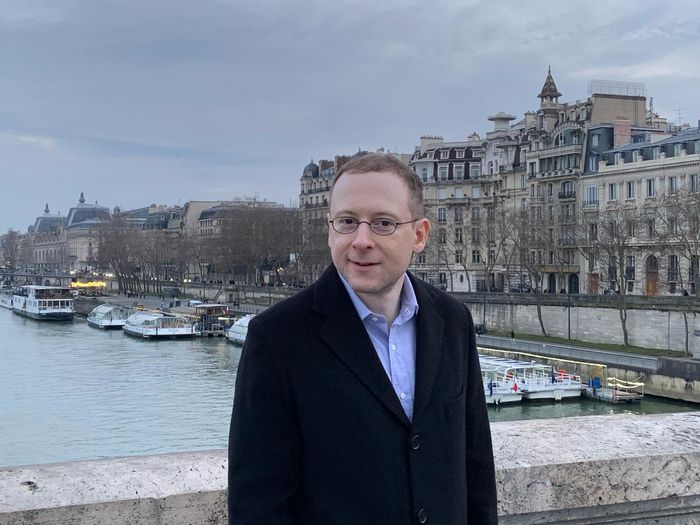
Emma initially defended Cofnas’ academic right to express his views, but later cut ties, saying the blog rejected DEI, and conflicted with its core values.
Varsity previously revealed that Cambridge’s disciplinary body, which is separate from the College, dismissed all 58 complaints against Cofnas after its investigation found no breach of university rules and that the blog did not amount to discrimination or harassment.
The investigation was conducted under the University’s freedom of speech policy, which was adopted last year. The policy is said to safeguard academic freedom and allow scholars to “question and test received wisdom, and to put forward new ideas and controversial or unpopular opinions” without the risk of losing their jobs.
After the College’s decision to cut ties with Cofnas, 14 academics, including five from Cambridge, wrote to The Times urging the College to reinstate him.
The trial took place on the 28th-30th of January, with a judgement expected in the coming weeks.
Emmanuel College declined to comment.
 Comment / The Cambridge drift1 June 2026
 Theatre / CUMT’s The Wind in the Willows brings a classic to life 31 May 2026
 Features / The language of optimisation and the architecture of merit30 May 2026
 News / Venue cancels Cambridge talk by right-wing commentator Matt Goodwin after backlash28 May 2026
 News / News in Brief: Corpus climbing, climate cash, and commendable contributions1 June 2026
 Music / We need to talk about Kendrick2 June 2026
 News / University support staff strikes end after month of action2 June 2026
 Arts / To the letter2 June 2026
 News / Cambridge psychologist warns against blanket social media ban for under-16s1 June 2026
 Sport / Caius beat Magdalene in last-minute thriller to clinch mixed netball Cuppers final1 June 2026