20 vet organisations sign letter backing Cam vet course
The coalition, led by the British Veterinary Association, joins a growing chorus of opposition to the potential cessation of the course
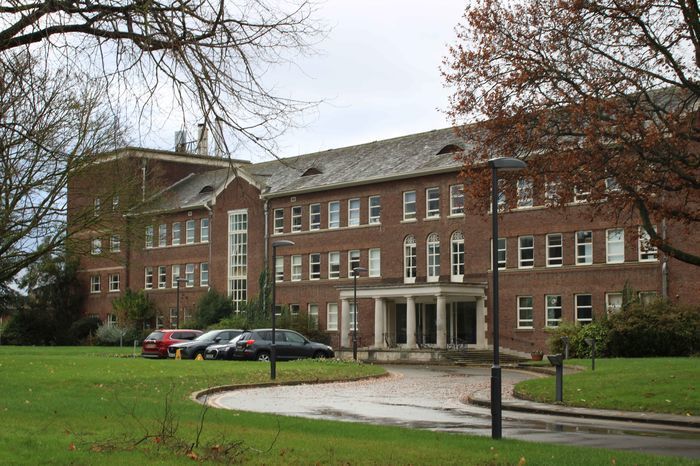
A coalition of 20 veterinary organisations, led by the British Veterinary Association (BVA), has published an open letter expressing “strong opposition” to the potential cessation of the Cambridge veterinary medicine course.
The letter calls the decision made by the Council of the School of the Biological Sciences (SBS) last month to recommend closing the Queen’s Veterinary School Hospital and ending the vet course “premature, flawed, and short-sighted”.
If the University approves the proposal, the incoming 2026 cohort would be the last to join the course, which would then end in 2032.
This comes after a meeting last week (09/01) between members of the SBS and the BVA’s president, Dr Rob Williams, in which he urged the School to reconsider its position. The SBS had previously justified its recommendation by claiming that there is “no viable long-term solution” for the “sustainable delivery of clinical services” at the Vet School.
The letter acknowledges that “financial sustainability for professional clinical training is a valid concern in the absence of a government funded, NHS-like hospital,” while contending that “the irreplaceable value the School provides to the UK and the world far outweighs the internal institutional cost”.
According to the authors, these benefits include the “vital role” that the vet course plays in “ensuring the UK has a resilient veterinary workforce, which is critical to the UK economy, animal health and welfare, and protecting the UK against public health risks such as future pandemics”.
Closing the veterinary hospital would also deprive the region of a “critical tertiary care centre” and “cause significant damage to Cambridge’s reputation in science and medicine,” the letter continues.
The authors are only the latest organisations to call for the preservation of the hospital. In late December, the National Farming Union (NFU) wrote a letter arguing that “its closure would undermine efforts to train future farm vets,” while the British Veterinary Union (BVU) called the recommendation “hasty, lacking in transparency and unreasonable”.
They joined thousands of individuals and organisations that have published statements on the ‘Save the Vet School’ website, set up soon after the SBS made its decision.
Vet School advocates have also sought government intervention on the issue. Last month, 11 senior Cambridge academics wrote a letter to the prime minister Keir Starmer warning about the consequences of ending the veterinary course.
Two MPs – the Liberal Democrat Danny Chambers, and the Conservative Niel Hudson – both having trained as vets, have voiced their support for the Vet School. The government has stated that the issue it is a matter for the University to decide.
In December, Professor James Wood, a former head of the vet department, told The Times that the SBS was attempting a “land grab”. Alongside other senior vets, he alleged that the SBS wants to turn the veterinary hospital’s 25-acre site into a “dynamic innovation district” whose properties can be leased to private companies.
The Vet School is located in Cambridge’s West Hub, home to some of Britain’s most sought-after scientific real estate. Recent constructions on the STEM campus include the £300 million Ray Dolby Centre, and the £58 million New Whittle Laboratory.
Senior vets told The Times that they had not asked for any new buildings, but that the £56 million cost of moving to a new site was included in the financial evaluation that the SBS used to make its decision.
These claims and others are set to be addressed at a Discussion of the Regent House later today (13/01), called for by 93 of its members.

A University spokesperson said: “All options were explored in-depth and weighed up carefully against the School’s strategic vision and plan, their implications for teaching and research, financial impact, and achievable implementation, either within the University or through external partnerships. After careful consideration, it was concluded that there was no viable long-term solution.
“We understand that this is a difficult time for colleagues and students in the Veterinary School and are putting in place support structures for both staff and students who may be affected.”
The University’s General Board is expected to make a decision about the Vet School within the next two months.
 Comment / Top of the slops: the competitiveness of college dining4 June 2026
 Interviews / What’s the story behind Pages coffee house?8 June 2026
 News / News in Brief: Cambridge crowns, council confirmations, and competitive cricket8 June 2026
 Comment / The Cambridge drift1 June 2026
 News / Cambridge researchers produce ‘world-first’ AI vaccine6 June 2026
 Arts / Don’t rush me – I’m reading!9 June 2026
 Lifestyle / Don’t Cry at Me, Argentina – a next-year abroad story8 June 2026
- News / News in Brief: Cambridge crowns, council confirmations, and competitive cricket8 June 2026
 Science / Failure is the foundation of science8 June 2026
 Fashion / The hidden gems of formal fashion8 June 2026