News In Brief: Michaelmas marriages, monogamous mammals, and messaging manipulation
A light-hearted round up of this week’s stories from a porter’s wedding to new research into online influence campaigns
Caius’s Christmas rom-com
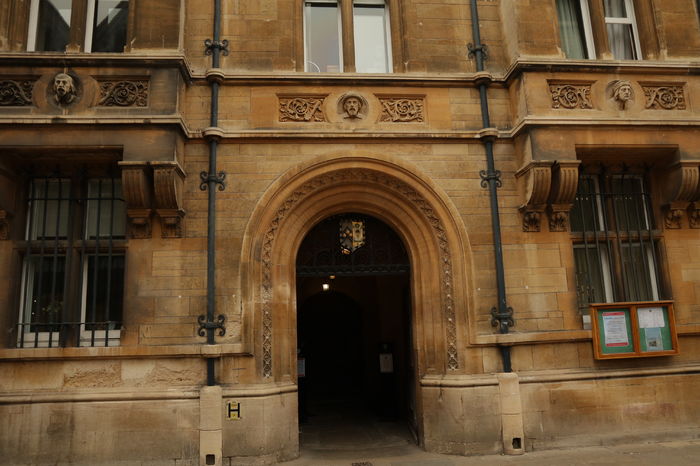
Last Friday (12/12), Gonville and Caius College porter Michelle married her partner Paul in the familiar background of Caius College. The couple married in Gonville and Caius Chapel, parts of which date from 1390, making the building the oldest purpose-built chapel in Cambridge still used today. The College shared on social media that the couple of 29 years married in front of their children, friends, family, and colleagues. In the Instagram post, they expressed the College’s well wishes: “A Christmas rom-com to rival Love Actually… our fabulous Porter Michelle last week married Paul, her partner of 29 years, in Caius Chapel, in front of their children, family, friends and colleagues. Congratulations to Michelle and Paul!”
Pirouetting professors
Cambridge geochemist Dr Carrie Soderman stunned with her pirouetting performance at a Latin dance world championship in Vienna on Saturday (13/12). The professor is a Postdoctoral Researcher in the Department of Earth Sciences, and a Fellow of Selwyn College. To balance her dancing passions with her rigorous research, she used any free time she could find on research trips to get dancing; honing her routine to perfection. At Cambridge, Soderman investigates the magmatic enrichment of metals, and is testing a new modelling toolkit to various case studies globally. “I was missing training with the rest of the team for weeks at a time, and I needed to keep up with the changes that were being made to our dance,” she said. “So, I’d watch the videos my coach was sending me, and I’d practise a bit of the routine or some footwork at our camp in the evening – inbetween cooking dinner and keeping a watch for polar bears!” She performed at the WDSF World Championship Formation Latin Adult with the Cambridge XS Latin dance team, founded by ex-Cambridge students.
Mammal monogamy league table
A Cambridge study has shown that humans rank between meerkats and beavers in a mammal monogamy ‘league table’. Researcher Mark Dyble analysed genetic data on full versus half siblings across animal species and human societies. In the study species producing more full siblings are considered more monogamous. Humans show a 66% full-sibling rate, like socially monogamous mammals such as meerkats and beavers, and far higher than primates like chimpanzees or gorillas. However, humans ranked lower than animals like the California deer mouse and African wild dog. By drawing on global archaeological and ethnographic data, the study suggests monogamy is humans’ dominant mating pattern, despite cultural variation and historical tolerance of polygyny.
SIM safety
Researchers at the University of Cambridge have launched the Cambridge Online Trust and Safety Index (COTSI); a new site which tracks the global market for fake online accounts across more than 500 platforms. COTSI reveals how SIM farms sell SMS verifications that enable bots, scams and influence campaigns to effect victims worldwide by mass-producing fake accounts. An analysis of twelve months of COTSI data published in the journal Science shows fake account prices are lowest in the US, UK, and Russia, but higher in countries with stricter SIM identification rules such as Japan and Australia. The data also showed that, on platforms like Telegram and WhatsApp, prices spike before elections suggesting an increasing demand for operations with a political motive.
 News / International students complain of ‘impossible choice’ under Cambridge travel disruption policy28 March 2026
 News / Missing Sidgwick sculpture spotted in Oxford 1 April 2026
 News / Downing law society banned from holding formals in College for a year31 March 2026
 News / Belgian university faces backlash over appointment of ‘race-realist’ fellow31 March 2026
 Comment / The anti-AI performance at Cambridge 30 March 2026
 Interviews / Cambridge SU presidents on divestment, engagement and the role’s challenges1 April 2026
 Features / Hyper-productive or healthy? The rise of wellness culture at Cambridge1 April 2026
 Film & TV / Awards season goes to the dogs1 April 2026
 News / Homerton plans to convert former Labour Club into student accom1 April 2026
 Theatre / Inside the double life of a thespian student 1 April 2026