News In Brief: elevated prices, eliminated neutrinos, and enormous anacondas
A light-hearted round-up of this week’s stories, from the giant anaconda to Sidney Bar’s new prices
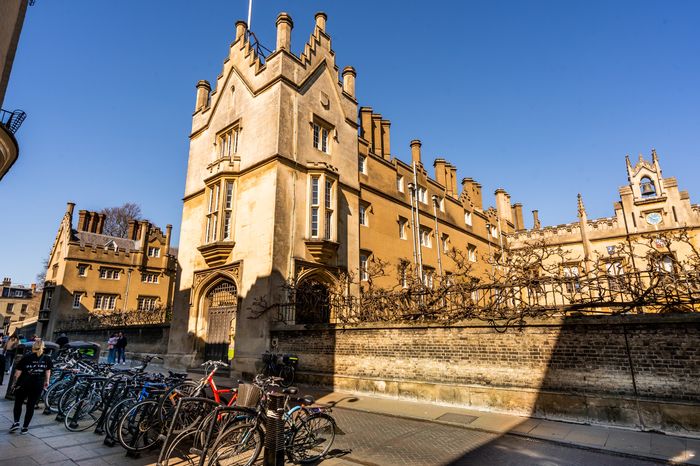
Sidney Bar raises prices
Sidney Sussex Bar announced last Wednesday (05/12) via an Instagram post that it will raise the prices of drinks. The bar explained that this “is long overdue, as we’ve had a price freeze since 2022 despite the annual increase in wages and costs”. The post also reveals that the bar has been “operating on a loss for a couple years now and want to prioritise continuity at Sidbar more than anything.” Some price increases have already been revealed, with a Carlsberg now costing £2.90 instead of £2.20, while a Vodka single will be £2.10 instead of £1.70. Despite these increases, mixers will remain free. A student at Sidney commented: “We’re all very sad to see the prices go up, but I think we knew it had to happen at some point. As a non-drinker, I’m just glad they’ve kept the mixers free. Maybe that extra 30p will help me lay off the J2Os.”
New £2.3 billion acute hospital
Plans for a new £2.3bn acute hospital run by Cambridge University Hospitals NHS Foundation Trust (CUH) have been announced, as part of a “radical” new care model. CUH has revealed that by 2040 it will require double the number of beds it currently has as well as an emergency department five or six times the size of its current one. The trust, which currently operates at a shortage of 160 acute beds, explained in papers received by South Cambridgeshire District Council’s Scrutiny Committee that with the city set to grow by in excess of 60% by 2040 to meet the government’s ambition for economic growth in the region, “hospital facilities have not kept pace with rising demand”. The paper added “We require a radical rethink of how and where we deliver care to meet the needs of our patients”.
Anacondas have always been giants
A recent University of Cambridge-led study has revealed that anacondas have been giants for more than 12 million years. By analysing anaconda fossils in Falcón State in Venezuela, the research team has shown that the giant anaconda reached its maximum size 12.4 million years ago and has not changed since. By measuring 183 fossilised anaconda backbones, which represent at least 32 snakes, in combination with fossil data from other sites in South America the researchers calculated that ancient anacondas would have been 4 to 5 meters long, the same size as the modern anaconda. Andrés Alfonso Rojas, the lead author of the research and PhD Gates Scholar at the department of Zoology, commented: “Other species like giant crocodiles and giant turtles have gone extinct since the Miocene, probably due to cooling global temperatures and shrinking habitats, but the giant anacondas have survived – they are super resilient.”
Neutrino particle ruled out
An international team, including Cambridge researchers, working on the MicroBooNe experiment at the USA Department of Energy’s Fermi National Accelerator Laboratory, has published a paper finding no evidence of a long-suspected fourth neutrino, the “sterile neutrino”. The results rule out the single sterile neutrino model with 95% certainty, according to the University of Cambridge. By ruling out this particle, researchers refine the search for physics beyond the Standard Model which, as the paper explains, brings scientists “a step closer to uncovering the true nature of neutrinos and the fundamental laws that govern the universe”. For decades researchers have known the Standard Model is incomplete, with experiments hinting at unexpected particle behaviours. Magnus Handley from Cambridge’s Cavendish Laboratory, a co-author, commented that “while this result strongly restricts the single light sterile model, there are many interesting ways in which neutrino interactions can still allow us to probe new physics”.
 News / Union elections underway with only one position contested14 March 2026
 News / Jeeves Rohilla elected SU postgrad president13 March 2026
 News / Uni urged to help locate looted Zimbabwean skulls14 March 2026
 Comment / The cost of the humanities for international students13 March 2026
 Lifestyle / Is it embarassing to be a regular?13 March 2026
 Comment / Let’s get the monsters talking16 March 2026
 Theatre / Into The Woods promises enchantment and escapism 15 March 2026
 Fashion / All that glitters is gold (or silver)15 March 2026
 Lifestyle / Blind Date: ‘In an ideal world there would’ve been a little flirting’15 March 2026
 Science / The female pioneers of Cambridge science15 March 2026