No Other Choice kills it
Dylan Ingram reviews Park Chan-Wook’s stylish, satirical thriller
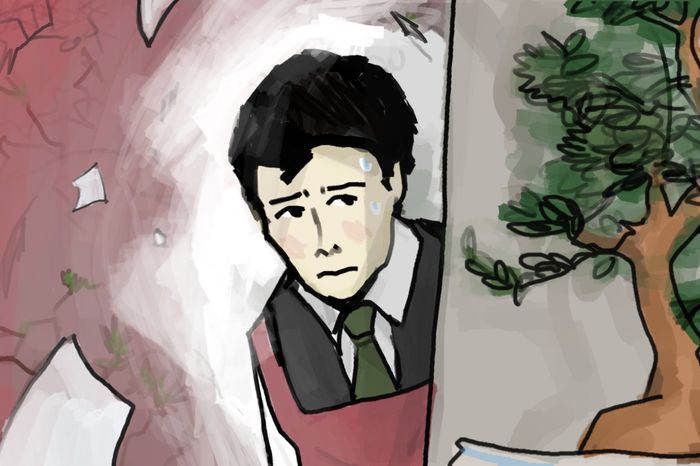
You have no other choice but to watch this movie. It’s vibrant, relentlessly funny and just delicious. I saw it in a packed theatre and everyone in there was half-laughing, half-grimacing their way through terrible job interviews and desperate scraps to the death. The two, the film wants to tell you again and again, are the same.
We are presented with a heightened, colourful reality, a Korea that doesn’t feel quite real, trapped between beautiful forests and industrial paper mills. The plot of the film revolves around a paper-factory manager who, after becoming unemployed, begins a murderous and wandering quest back into the workplace. Along the way, he anxiously eliminates competing applicants as his family begins to worry why he’s out so late at night. Paper keeps coming up: characters insist on its importance and omnipresence throughout our lives. It’s in cigarette filters, money, period products. Everything runs on paper, they say.
“No Other Choice is about alienation, from your work and from your community, the natural world bending to the man-made and mechanical”
This desperation to stay at the top of the paper industry feels impotent when the film’s visual and narrative world is dominated by the digital screen. I once read somewhere that an actor will never look cinematic while holding a mobile phone. Park Chan-Wook makes these screens beautiful. He plays with light and reflection to put a murderer’s face in the glass of a detective’s iPad. A difficult family meeting is disrupted by their son’s Netflix addiction. The film is also dominated by product placement – so many cars, logos, mobile phones, that in most cases would really irritate me, but actually kind of works here, as if the film itself is succumbing to the capitalistic logic it represents. That might be too generous to the film, but it’s hard not to be: it’s just so charming.
A Letterboxd review calls this film the year’s Parasite. They’re both satirical South Korean thrillers breaking into the English-speaking market with something to say about capitalism and the family. No Other Choice has received significantly less attention at the Oscars, which seems to be a pattern for Park Chan-Wook’s films, as 2022’s Decision to Leave was also only shortlisted. I think this comparison misses a lot of important differences between the films. Where Parasite is all about class, us-versus-them, high and low, No Other Choice is about alienation, from your work and from your community, the natural world bending to the man-made and mechanical. Wooden logs become paper, a bonsai tree snaps from being bound too tightly, and a factory slowly becomes automated. Insecure men fight for a place in a hierarchy which is eating them alive.
“Is the point of film in an age of digital monopolisation to indulge in meaningless, violent catharsis, only to leave the cinema to attend countless careers fairs and Microsoft Teams workshops?”
I make it sound rather sober, but it’s deliriously tipsy. It pulls you into a drunken dance then pushes you away to wretch as its rotten insides come up for air. These are brief flashes of voyeuristic cruelty, confrontations with its own joking amorality, where you pause to consider if you should really be enjoying all of this. One moment of improvised dentistry might have pushed it too far for me. “This isn’t a joking matter,” a character says. These spikes of critical engagement keep you in your head, even as the director pulls you into the next movement of the dance, his hand sticky with implications.
The film sings with internal connections and contradictions, set-up, and payoff. It goes on many different tangents but never seems to sag, bouncing from moment to moment as you continue to wonder what the film is really about. Korean workplace culture? Generational trauma? The modern family? Paper? It can’t really be about paper, can it? People fight, suffer, excuse, and justify just to become a cog in a paper-pulping machine. It’s brutally nihilistic, and doesn’t fill me with enthusiasm about joining the workplace. Is the point of film in an age of digital monopolisation to indulge in meaningless, violent catharsis, only to leave the cinema to attend countless careers fairs and Microsoft Teams workshops? There isn’t much hope for anyone here, except maybe the family’s young daughter, who isolates herself from the violent outside world and creates art which her parents struggle to understand.
Watch this in a packed cinema or with your least squeamish friends and you will have a blast. If nothing else, it will make you appreciate paper before we all get turned into computers. I’m still waiting for AI to write these reviews so I can finally be done with watching movies. Then I’ll have more time to, um, send emails.
 News / Simon Goldhill resigns following sexual misconduct investigation16 June 2026
 Comment / Exercise, academia, and the Cambridge addiction to both17 June 2026
 Theatre / A celebration of Queer Love in sacred spaces: Romeo and Juliet in Peterhouse Chapel16 June 2026
 Music / ‘Returning again and again’ to the Bateman room16 June 2026
 Lifestyle / Breaking no contact…hours15 June 2026
 Lifestyle / You can’t always get what you want 18 June 2026
 Theatre / ‘Mental illness doesn’t exist in a vacuum’ says Obsessive, Compulsive, Divine 18 June 2026
 News / Caius to begin antisemitism inquiry after Nazi symbol carved into bench18 June 2026
 Film & TV / Gen Z, FilmTok and the A24 problem17 June 2026
 Features / Are the Footlights getting dimmer?17 June 2026