Remembering Rob Reiner
Dan Porritt looks over the life and cinematic achievement of the actor and filmmaker

Following the tragic murder of director Rob Reiner in December 2025, I thought that his famous run of films in the 1980s deserved reappraisal. It’s a widely held belief that Reiner succeeded in every genre he tried his hand at in this period (and into the 1990s) but I would argue his greatest achievements were with the modern comedy. His mastery of this genre is displayed in my three favourite movies of his career: This is Spinal Tap (1984), The Princess Bride (1987) and When Harry Met Sally (1989). As awards season nears, and focus turns to virtuosic visual flair, I recommend these examples of the quieter style of directing that Reiner brought to the table.
Reiner’s innovative approach towards filmmaking can be seen in his early career. Reiner did not start behind the camera; he learnt the ropes around set as an actor. Through his role as Michael ‘Meathead’ Stivic on the American sitcom All in the Family (1971-79), an understanding of comic performance became embedded in Reiner’s mind, sowing the seeds of his actor-led directorial style. This meant that any extant value left in Alfred Hitchcock’s infamous quip that actors should be treated like “cattle” was shattered by Reiner’s approach. Instead, he privileged a more human focus, setting his sights on character and dialogue through a visual style that hid the seams of filmmaking.
“I recommend these examples of the quieter style of directing that Reiner brought to the table”
When Reiner did make deliberate use of the camera, however, he did so with self-reflexive insight. In his directorial debut – the mockumentary This is Spinal Tap (1984) – Reiner spoofed the genre of music documentary. Placing himself within the antics of the titular heavy metal band by playing the documentarian Marty DiBergi, Reiner explored how the intrusion of the camera can change the nature of performance, drawing laughs from the gap between how characters want to be perceived and what the camera mercilessly records. This style foregrounded the quirks of human behaviour that would stay at the heart of many of Reiner’s films. Christopher Guest, Michael McKean and Harry Shearer improvised all of their dialogue, drawing extensively on workshopped characters, and deserve credit for a large portion of the film’s deadpan genius. It was Reiner, though, who prevented this riffing from collapsing into fragments of quickfire wordplay. The director steered each scene towards a coherent arc for these wannabe rock-gods, tempering satire with moments of empathy and tenderness. Towards the end of the film, Reiner lingers in close-up on Christopher Guest’s Nigel Tufnel, as the guitarist stares in glazed disbelief at his crumbling childhood friendship. The moment is as moving as the 18-inch Stonehenge replica descending onto the band’s stage is face-achingly funny.
“He worked in a welcome middle ground, neither flashily groundbreaking nor spoon-feeding in his choices”
In 1987, Reiner cemented his reputation as one of the great versatile Hollywood directors of the decade, moving from the improvised riffing of This is Spinal Tap to William Goldman’s screenplay for The Princess Bride (adapted from Goldman’s own novel). Reiner maintained the tone of Goldman’s work, grounding storybook charm – pirates, giants, and “Rodents of Unusual Size” – in emotional sincerity, and prioritising performances above ostentatious visuals. In an interview for Cinefix in September 2025, the director stressed this aim of wrapping an audience in a story. He was bothered by an accidental lens flare in one scene from The Princess Bride, arguing its unwanted effect was to make viewers “aware” that this mythic landscape was “being filmed”. 38 years after the film’s release, his belief in keeping the camera invisible had not waned. This is Spinal Tap and The Princess Bride both receive nods during discussions of “most quotable movies”. The lines their fans recite emerged from two distinct modes of comedic creation – naturalistic, off-the-cuff interaction versus a crafted script with novelistic roots. The common denominator was Reiner’s unrivalled understanding of how to straddle the real and ridiculous when capturing them for the screen.
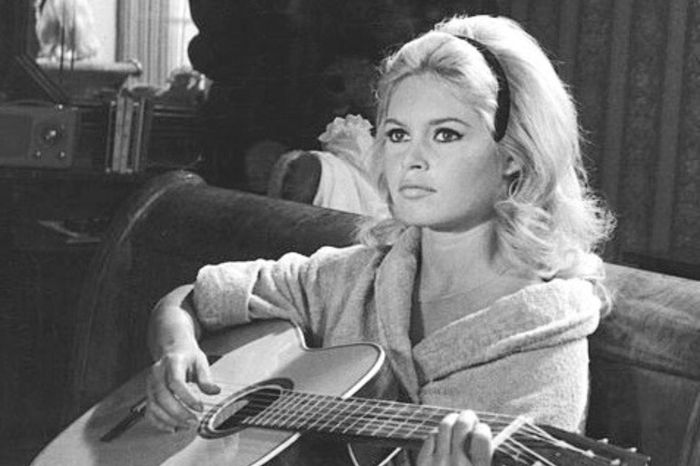
With When Harry Met Sally, Reiner helped to revive an entire genre. Writer Nora Ephron addressed the tropes of the stagnant romantic comedy form head-on. She overrode the convention of the ‘meet-cute’ with razor-sharp dialogue that kept a cliché-primed audience on their toes until the end credits. Reiner worked with Ephron to keep sentimentality at bay, but collaborated with the screenwriter on a conclusion that bent more towards tradition than her original ending had done; he knew that subverting expectations should not be at the cost of a satisfied audience. The blending of Ephron’s wryness and Reiner’s warmth is encapsulated in a scene displaying the film’s developing central friendship. Billy Crystal’s Harry and Meg Ryan’s Sally watch Casablanca in their own apartments, speaking on the phone. Reiner frames the couple at the centre of a split-screen, sandwiched between two broadcasts of the 1942 romantic staple: the meta cineliteracy of Ephron’s screenplay is echoed, without becoming abarrier to emotional involvement.
Reiner’s career was not exclusive to this string of hits. Aside from the dramas of this decade like Stand by Me, the 1992 courtroom drama A Few Good Men would be nominated for Best Picture, and 2025 saw him bookend his directorial journey with a sequel to This is Spinal Tap. As a starting point for watchingthe filmmaker’s work, though, I cannot recommend these three comedies highly enough. Reiner’s “seamless” style never cut corners: his visual clarity and intelligent pacing are rarely emulated by directors of the genre today. He worked in a welcome middle ground, neither flashily groundbreaking nor spoon-feeding in his choices. He prioritised a timeless joy for his audience that I think will live on long after his heartbreaking death.
 Comment / Top of the slops: the competitiveness of college dining4 June 2026
 Interviews / What’s the story behind Pages coffee house?8 June 2026
 News / News in Brief: Cambridge crowns, council confirmations, and competitive cricket8 June 2026
 Comment / The Cambridge drift1 June 2026
 News / Cambridge researchers produce ‘world-first’ AI vaccine6 June 2026
 Arts / Don’t rush me – I’m reading!9 June 2026
 Lifestyle / Don’t Cry at Me, Argentina – a next-year abroad story8 June 2026
- News / News in Brief: Cambridge crowns, council confirmations, and competitive cricket8 June 2026
 Science / Failure is the foundation of science8 June 2026
 Fashion / The hidden gems of formal fashion8 June 2026