H is for Hawk: Cambridge in cinema
Ellie Smith reflects on Cambridge’s own emotional architecture

Like many people, I always get excited when I watch something with a Cambridge backdrop. My recent viewing of Philipa Lowthorpes’s H is for Hawk at the Picture House proved no different. I grinned to myself as the camera panned down King’s Parade, reflecting the very path I took to get to my seat. I questioned when the protagonist, Claire Foy, drove down Trinity Lane as if seeking an actual destination and not a dead end. I giggled when she nearly got hit by a bike because she never walked on a path. These moments, and many more like them, constantly reinforced to me that it is infinitely comforting to see something so familiar on the big screen: an endearing familiarity that made the film simultaneously personal and poetic. H is for Hawk reminds you that where we are in the city of Cambridge isn’t the grey, eight-week abyss that we commonly take it for: it’s the birthplace of antique and recent history, it’s even a worthy film set that we get to be a part of everyday.
“Mabel becomes the sole object of Helen’s love and care”
Originally written as a book, H is for Hawk was a memoir by Helen MacDonald. In both the book and the film, the plot maps Helen’s (Claire Foy) descent from stoic grief to internal collapse in the wake of their father’s sudden death (to clarify, Helen uses they/them pronouns, but the character in the film uses she/her pronouns). Unable to cope with this tragedy, Helen gradually becomes more and more withdrawn from the people who care for her. This increased isolation is additionally compounded by professional uncertainty. The audience learns that Helen’s Cambridge fellowship is also at risk as she struggles to fall back into her normal rhythms as a result of her intense grief. However, while Helen neglects her own needs, she transfers much of her affection towards her avian friend: her Goshawk, Mabel. Mabel becomes the sole object of Helen’s love and care. The bird acts as a sort of support structure for Helen, and the film tracks their increasing bond until Mabel has to eventually leave for the spring for her feather change, leaving Helen to face her depression on her own. It’s a beautiful film which intertwines the present and the past, memory and reality, through a delightful array of flashbacks and match cuts. H is for Hawk deals with the less performative type of grief often portrayed on screen; one that simmers in unaddressed waters and often goes undetected until your entire world comes crumbling down.
The fact that the complex and profound events of the film all occur within the small scope of Cambridge bears additional significance. Many of the moments in the film revolve around the city and its university structures. Helen wanders the cobbled streets with Mabel on her shoulder, she trains her on Jesus College grounds, and eventually, as her depression worsens, locks herself in college-owned accommodation. Throughout these scenes, the audience gets a sense that Helen is constantly expected to carry on. This rings particularly true at Cambridge, where emotional resilience in the face of a heavy workload often feels like the only way to go; a place where coming to a halt feels like it will leave a greater dent than just continuing on absentmindedly. This can be clearly perceived in Helen’s actions. At first, her university duties act as an emotional blockade. However, as her various obligations begin to slip, her grief begins to consume her and everything in her life fully. By the end, she doesn’t even have the strength to pack her house and doesn’t truly address her own career failings.
“Part of why the film feels like it has an even more personal touch is because part of it was filmed right on my doorstep”
Like all of us, I have had many hiccups during my three years at Cambridge. And while I am not trying to say that completing an undergraduate supervision essay whilst sick is the same as trying to maintain normalcy when grieving the loss of your father, that feeling of “if I start to neglect this one thing, everything will collapse underneath me” does resonate between the respective experiences. As someone graduating in five months, the foundations of my life feel increasingly hard to maintain, and the looming presence of the future lingers in everything I do. It is easier to ignore this feeling and to commit to the moment. But, much like in the film, that future (but also the past behind me) is still there and the more it’s ignored the more pertinent and terrifying it becomes.
Part of why the film feels like it has an even more personal touch is because part of it was filmed right on my doorstep. There are quite a few scenes shot at Jesus College, particularly when Helen is training Mabel with her friend Christina (Denise Gough). This was filmed on Jesus’ Chapel Court, my abode at the time of filming. I remember trying to leave my staircase for a lecture but being stopped by a crew member from leaving because a scene was being filmed. Claire Foy was outside the door to my home with an actual Goshawk! For all I know, that was the shot that made it into the film. It was a surreal experience, and so when that scene played in the cinema, not only could I see my second year home, I could have been in that shot in some way. This is obviously a hyperspecific emotional response, but it’s a microcosmic version of the feeling evoked by cinematic depictions of Cambridge that ripple through us all.
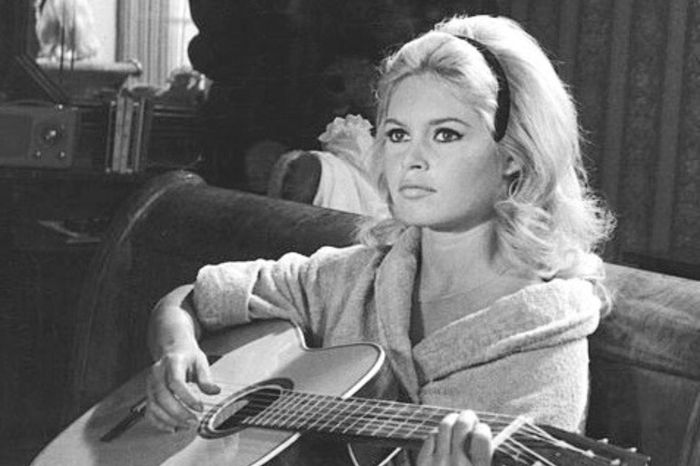
The broad setting and the individualized plot combine to create an allegory applicable to student experience, and then to life itself. I compel you to watch this film. Even as an artefact distinct from Cambridge, its depiction of the invisible, yet slowly consuming, aspect of grief is often underrepresented and extremely moving. However, even as a specifically Cambridge artefact, I ask that you let it be personal, let it be nostalgic, let it resonate. Do not scoff at it.
 Comment / Top of the slops: the competitiveness of college dining4 June 2026
 Interviews / What’s the story behind Pages coffee house?8 June 2026
 News / News in Brief: Cambridge crowns, council confirmations, and competitive cricket8 June 2026
 Comment / The Cambridge drift1 June 2026
 News / Cambridge researchers produce ‘world-first’ AI vaccine6 June 2026
 Arts / Don’t rush me – I’m reading!9 June 2026
 Lifestyle / Don’t Cry at Me, Argentina – a next-year abroad story8 June 2026
- News / News in Brief: Cambridge crowns, council confirmations, and competitive cricket8 June 2026
 Science / Failure is the foundation of science8 June 2026
 Fashion / The hidden gems of formal fashion8 June 2026