Global Frames: Burkina Faso
Freya Compton investigates the dynamic cinema of Burkina Faso
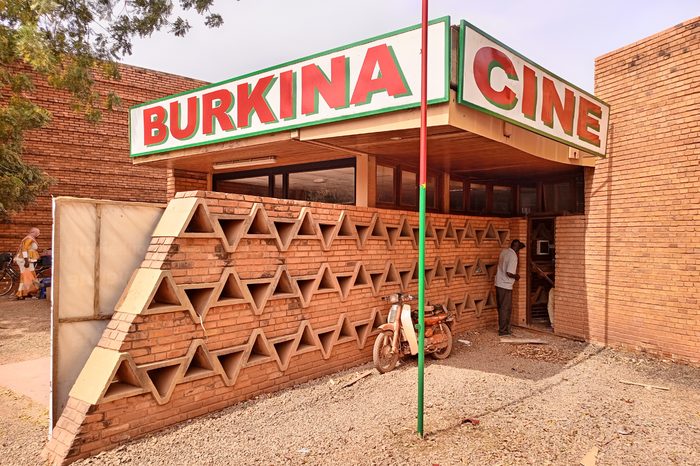
While not the largest producer of African film, Burkina Faso is widely considered the heartbeat of African cinema. It boasts several critically acclaimed movies and directors, and its own long-running Pan-African film festival, FESPACO. Often highly visual and thoughtful, Burkinabé films feature a French-influenced artistic style that allows ordinary African experiences to shine through and touch viewers.
Burkina Faso remains committed to its role as a creative hub for cinephiles despite a growing military conflict with the neighbouring Malian Jihad insurgency. Film-making remains a beacon of hope amid wartime violence, producing content that explores everything from life under terrorism to cultural dilemmas, from romance to comedy. It’s an industry that remains staunchly honest and surprisingly optimistic, continuing to focus on sharing the magic of film with Burkinabè residents far and wide.
Buud Yam (1997)
“Film-making remains a beacon of hope amid wartime violence”
Gaston Kaboré is likely Burkina Faso’s most well-known and internationally acclaimed director, drawing from his studies of colonial racism at the Sorbonne to create films exploring the art of remembrance and identity. A sequel to the country’s first-ever feature film, Wend Kuuni, Buud Yam follows Yanogo – a young man whose mother was stoned to death for sorcery – as he attempts to restore a sense of belonging in his disrupted community.
When his stepsister falls ill, he sets off on a quest for a healer and medicine, mirroring classic Western storylines that revolve around a hero searching for a magical object, or a ‘holy grail’ that brings one virtue through healing others. Yanogo, when close to death himself, meets a wise old woman whose potions do indeed cure his sister, allowing Yanogo to be reinstated as a loved, ‘good’ member of the community. This structure highlights the restoration of fractured social ties and the importance of one’s community roles in shaping their individual identities.
Aided by Jean-Noel Ferragut’s sharp cinematography, the long shots of the youth traversing forests and deserts give the viewer time to reflect with the protagonist. Where does the quality of one’s moral standings come from? And how are we to understand ourselves when the possible tainting of evil contests our identity to those around us? When the clouds of superstition and intolerance part, Kanobe’s simple yet honest message reveals itself: we must be tolerant of people different from ourselves and accept our own societal responsibilities and identities to grow as human beings.
The Night of Truth (2004)
Fanta Régina Nacro’s feature debut, The Night of Truth, deliberately avoids romanticising the African continent, instead brutally exploring the universal cruelty that can emerge in times of immense human suffering.
"The Night of Truth deliberately avoids romanticising the African continent”
The film follows a fictional African country in a civil war between the rebel Bonande people and the ruling Nayaks as they attempt to move towards a peace negotiation. Purposefully, The Night of Truth pertinently reverberates with modern genocides and conflicts across Rwanda, Liberia, Sudan, but also the ethnic cleansing in Bosnia. One of Nacro’s core aims was to demonstrate that the inhumane acts of violence – triggered by the intense emotion, vengeance, and pride of war – are not unique to the African continent, but part of the broader human condition.
As the narrative follows a reconciliation attempt between the two sides, it reaches a dramatic climax with a man being spit-roasted over a fire by a mother hoping to avenge her young son’s death. The scene, expertly shot in a way that spoils any ‘perfect angles’, or ‘ideal cinematic lighting’, forces viewers to confront the realism of the human potential for evil, especially in circumstances of conflict and war. The film’s claustrophobic atmosphere, paired with its rough but honest storytelling style, encapsulates Nacro’s goal: to highlight “that all humans have their dark side and their human side, and that if one is not vigilant, then the dark side can easily take over”.
The film’s intentional cinematic imperfections, its poignant message about our shared capacity for monstrosity, and Nacro’s pioneering role as an emerging Burkinabè director make her stand out as a much-needed voice in both the local and global film scenes. She does not shy away from the brutality on her continent, instead offering an unflinching view of the motivations behind and the universal vulnerability to war.
It Rains on Ouaga (2017)
“Dao’s work bridges Burkinabè heritage with the voices of global and diasporic youth”
It is the rainy season in Burkina Faso’s capital, Ouaga: the air is full of love and potential, and protagonist Alpha is reflecting on his future.
This is the backdrop for It Rains on Ouaga, the second establishment in Fabien Dao’s short-film trilogy that pays homage to his father’s life. Dao is one of the most important up-and-coming directors in Burkinabè cinema, having been educated in France but raised by his Burkinabè family; his works bridge Burkinabè heritage with the voices of global and diasporic youth.

In the wake of the 2014 revolution, Alpha gets ready to move to France to join his French girlfriend. However, his meeting with a local woman, Leila, opens his eyes to the beauty and everyday culture that he once overlooked. Seeing his city and his identity in a new light, he finds that leaving is no longer so easy; the short piece encapsulates the inner conflicts of a youth torn yet uplifted by the hope of new beginnings and the depth of cultural connection.
Dao’s next, highly anticipated project, Princess Téné, will follow street children as they are rehabilitated through their love of horses. The film centres on the symbolic importance of the horse in Burkinabè culture, especially for the Mossi people, and will continue to develop Dao’s grounded exploration of life within the rapidly changing, dynamic nature of Burkinabè society and the greater African continent.
 Comment / Top of the slops: the competitiveness of college dining4 June 2026
 Interviews / What’s the story behind Pages coffee house?8 June 2026
 News / News in Brief: Cambridge crowns, council confirmations, and competitive cricket8 June 2026
 Comment / The Cambridge drift1 June 2026
 News / Cambridge researchers produce ‘world-first’ AI vaccine6 June 2026
 Arts / Don’t rush me – I’m reading!9 June 2026
 Lifestyle / Don’t Cry at Me, Argentina – a next-year abroad story8 June 2026
- News / News in Brief: Cambridge crowns, council confirmations, and competitive cricket8 June 2026
 Science / Failure is the foundation of science8 June 2026
 Fashion / The hidden gems of formal fashion8 June 2026