Are you more yourself at Cambridge or away from it?
Amber Ahark explores how term time changes students’ identities
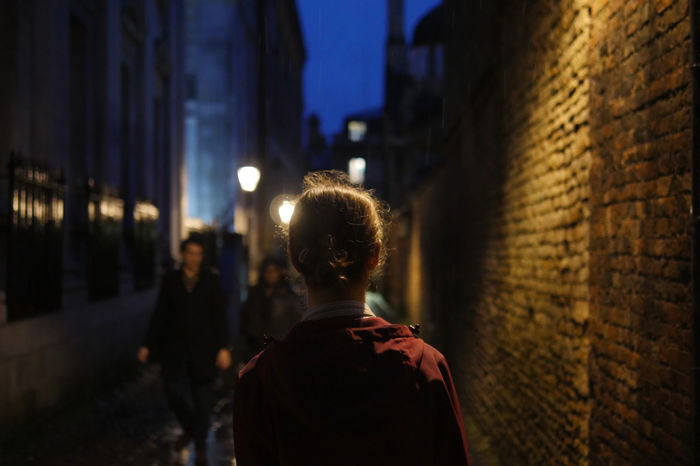
On a quiet afternoon during the holidays, the upper floor of the University Library is almost empty. A few desks are scattered with notebooks and half-finished coffee cups, but the hum that usually fills the space is gone. A postgraduate student sits alone near the window, laptop open, scrolling rather than typing. She has been here for hours, she tells me, not because she needs to work, but because she is not quite sure what else to do with the time.
“During term, I never sit like this,” she says. “There’s always something urgent. Right now it feels like I’ve lost the rhythm.” Cambridge is often described as intense, demanding and relentless. But less attention is paid to the way it empties itself. Three times a year, the city sheds its students. Deadlines dissolve. Libraries close early. College courts fall quiet. The shift is not just logistical. It changes how students experience the city and themselves.
“Without pressure, I didn’t quite know who I was supposed to be”
In term time, Cambridge compresses life into short bursts of momentum. Days are structured around supervisions, deadlines, meetings, and the constant sense of being slightly behind. Students move quickly. Conversations are often cut short. Even rest feels temporary. One Wolfson College student describes term as “a period where you become very good at being the version of yourself that works here.” That version is focused, articulate, and resilient. It is also constantly on display: in supervisions, seminars, and even casual academic conversations. Here, confidence is rewarded, while hesitation is quietly discouraged. In term time, you learn how to speak fluently about ideas you are still unsure of, and how to sound decisive even when exhausted. Over time, that sharpened self can begin to feel natural.
A second year undergraduate tells me that during term: “everything feels purposeful, even stress.” There is comfort in the intensity. You know what is expected of you. You know where to be and when. The days may be exhausting, but they are legible. Identity becomes tied to output. You are your essays, your deadlines, your productivity.
Then the term ends.
The first days of vacation often feel disorienting. Cambridge without students is not just quieter, it feels oddly suspended. Colleges resemble museums more than homes, and familiar routes lose their meaning. Without the steady rhythm of deadlines, time stretches open. Some students describe this as relief, while others experience it as discomfort. Sade from St Edmund’s College, who stayed in Cambridge over the Christmas vacation, says the city felt strangely hollow. “I realised how much of my personality here is shaped by pressure,” they tell me. “Without it, I didn’t quite know who I was supposed to be.” Away from term, students often report feeling less efficient but more reflective. Thoughts linger and days blur. The self that emerges is quieter, sometimes less impressive, but often more recognisable.
“Slowness can feel like failure in a culture that prizes productivity”
Several students spoke about the difficulty of adjusting between these modes. One postgraduate explained that during the holidays, friendships can feel more fragile. “In term, you’re bound together by schedules,” she says. “Out of term, you realise which connections survive without that scaffolding.” Without the constant proximity of shared spaces and shared stress, relationships must find new footing. Some deepen, while others quietly fade. The shift between term and holiday quietly reshapes friendships. Relationships built on shared schedules and constant proximity often weaken outside term, while those grounded in long conversations or genuine affinity tend to endure. Returning to pre-university friendship groups can also feel disorienting after months spent moving at Cambridge’s pace.
The holidays expose how much of Cambridge life depends on urgency. When time is no longer scarce, some students describe the freedom of reading without a deadline, returning to creative hobbies, or simply allowing days to unfold without structure. One admits: “It’s the first time all year I do things without needing a reason.” For others, it is unsettling. Slowness can feel like failure in a culture that prizes productivity. Without deadlines, worth becomes harder to measure. What emerges from these conversations is not a simple division between real and performed selves. Instead, Cambridge seems to cultivate a cycle of identity. In term, students assemble themselves to meet the demands of intensity. During vacation, that assembly loosens. A master’s student who splits time between Cambridge and home describes feeling like “two slightly different people.”
Cambridge, then, is not just a place of learning, but a place of ‘temporal training’. It teaches students how to live inside compressed time; how to think quickly, speak clearly, and endure intensity. It also teaches them how disorienting absence can be. By the time students leave Cambridge, many will remember specific moments rather than entire terms. A late night in the library. A supervision that went unexpectedly well. A silent walk through an empty court during the holidays. What lingers beneath those memories is something harder to articulate: an understanding that identity is not fixed, but shaped by time.
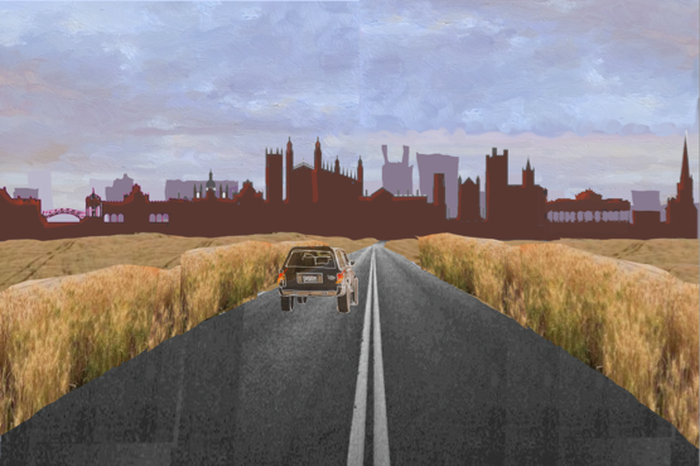
Cambridge does not simply ask students who they are. It asks who they become under pressure, and who they are when that pressure disappears. For most, identity settles somewhere between those two states.
 News / C4P vandalises University offices over divestment10 June 2026
 Lifestyle / A town with a view11 June 2026
 Comment / Top of the slops: the competitiveness of college dining4 June 2026
 Comment / ‘On the Poverty of Student Life’: sixty years on10 June 2026
 Sport / The imperfect privilege of Cambridge sport12 June 2026
 Lifestyle / Confessions of a May Ball crasher12 June 2026
 Lifestyle / May Week horoscopes12 June 2026
 Lifestyle / The finalist’s bucket list12 June 2026
 Theatre / All of Cambridge is a stage12 June 2026
 Music / ‘It’s feminine intuition’: predictions for OR312 June 2026