Should I stay or should I go? Cambridge students and alumni reflect on how their memories stay with them
Francesca Evans looks at Cambridge’s quiet pull on those who stay put or inevitably return
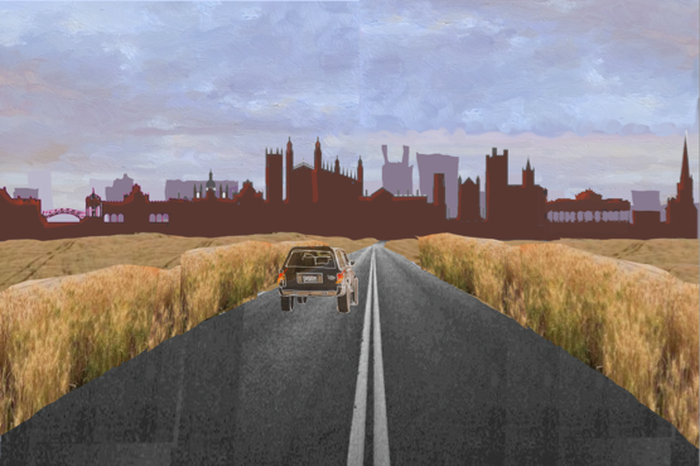
As Cambridge winds down for the end of term, the city shifts. Bustling streets slowly empty of students who are packing up and driving home for Christmas. The University has weathered eight centuries of arrivals and departures, holding traces of long-past friendships, daring exploits, and laughter in its cobbled streets. But for those in the midst of transition, returning means confronting their place within this city’s long history. The familiar faces have scattered, and the memory of arriving as a nervous but hopeful fresher feels impossibly distant. Is Cambridge still the place you left behind, or does returning transform it into something new and different?
The city invites return, and generations of alumni have come back to rediscover familiar haunts. BBC detective comedy Ludwig is currently filming its second season in Cambridge, starring David Mitchell – a Peterhouse alumnus and former-president of the Footlights (1995-6). In an interview he reflects on returning to the site of his undergraduate days, describing it as “slightly bittersweet,” and admitting it is a reminder that “I will never be 21 again.” Former MP and Pembroke alumnus Lord Chris Smith similarly laments that “many of my favourite haunts are alas, no more”. From the old Eros restaurant “which did the most wonderful moussakka,” to the Indian restaurant in Free School Lane “that did the hottest imaginable curries,” it is clear that some parts of Cambridge have inevitably changed with the intervening years.
“I’m living in a very beautiful place; I’m surrounded by highly intelligent people; and I’m surrounded by young people at the outset of their lives; what is not to like about this?”
Unlike the passing visit of David Mitchell though, Lord Smith has returned to the city on a more permanent basis. Having completed both his English undergraduate degree and PhD at Pembroke College, he “never dreamed” he would come back as Master in 2015. Reflecting on the changes the college has undergone since the days when it was, “(alas) all men,” he celebrates the “academic excellence of the College which has improved almost in synchronicity with the admission of women”. Yet, despite the transformations, the college’s fundamental “friendly, open-arms, inclusive” spirit has endured across the fifty year interim. As he puts it, “Coming back as Master definitely felt like coming home”.
His recent election to Chancellor has only deepened his ties to the city where he now hopes to leave a lasting legacy. He has set out to strengthen the relationship between the University and the Colleges, preserving the “unique excellence” of the collegiate system, while also recognising its “fundamentally interdependent” nature. Consistently drawing on his own experience as a student, Chris seeks to foster a “welcoming and inclusive” community for all the students. His affection for Cambridge is unmistakable and quietly infectious: “I’m living in a very beautiful place; I’m surrounded by highly intelligent people; and I’m surrounded by young people at the outset of their lives; what is not to like about this?”
The sense of returning home after decades away is mirrored on a smaller scale in the interim between third and fourth year. Lois Turner, a fourth-year MML student, is back in Cambridge after a year abroad in both Munich and Paris. “Driving away from Cambridge felt strange!” she reflects, noting that the end of her second year felt like a “natural end from some friendships, and a more painful end for others”. While working in Germany, she often felt a disconnect between her office routine and the “formals, parties, and day-to-day life happening from afar”. Watching friends graduating whilst she was in France brought an understandably severe case of “Cambridge FOMO,” but returning for Christ’s May Ball offered a welcome chance to reconnect with some of her graduating cohort.
“Part of that feeling results from the absence of close friends who shaped their previous year’s social dynamic”
Straight off the Eurostar Lois walked back into her college, now filled with two unrecognisable year groups. Similarly, Matt Taylor, a fourth-year NatSci, describes the “slightly strange liminal space” that he occupies suspended between postgraduate and undergraduate communities. Part of that feeling results from the absence of close friends who shaped his previous year’s social dynamic. But Matt has also found this year a welcome chance to “get to know people outside our circles from our year.”
Lois reflects on the push and pull of life in this city: “Cambridge is a special place. Having worked for a year, though, I definitely feel more ready for the next step.” It is precisely this dual feeling of attachment and preparedness for the future which Lord Smith fondly speaks of. Coming to Cambridge, he says, “stretches your horizons. It presents you with new opportunities. It gives you a confidence you never had when, rather nervously, you first arrived”.
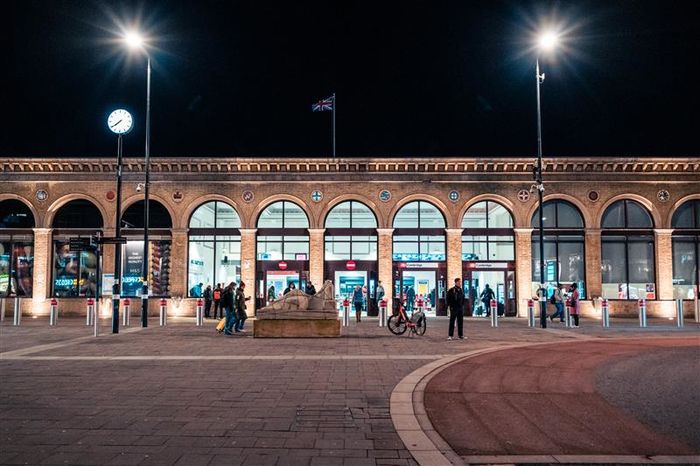
Far from the fresh experiences of first year, finalists find themselves surrounded by ‘lasts’ – the last Bridgemas, last walks to lectures, last formals. Third-year Law student Shivraj reflects on that “awareness that it’s all coming to an end and you’ll never truly get this time back at such a special, unique place.” The future looms on the horizon, as friends are sketching out wildly different plans, as they are set to spread out across the world. For fellow finalist Max, this year marks the end of that period of “being young and wild and free”. Being a student, he says, allows you to experience “that final period of growing up and after you leave you are a grown up.”
So whether you’re a fresher approaching the end of your first Michaelmas, or a finalist busily applying for grad schemes or internships, it is clear that living in this city can send you on to greater heights and wider horizons. And yet, as the Chancellor reminds us, we carry the spirit of the city wherever we end up, and with an enduring hold, “no-one ever finally ‘leaves’ Cambridge. I certainly didn’t.”
 Comment / Top of the slops: the competitiveness of college dining4 June 2026
 Interviews / What’s the story behind Pages coffee house?8 June 2026
 News / News in Brief: Cambridge crowns, council confirmations, and competitive cricket8 June 2026
 Comment / The Cambridge drift1 June 2026
 News / Cambridge researchers produce ‘world-first’ AI vaccine6 June 2026
 Arts / Don’t rush me – I’m reading!9 June 2026
 Lifestyle / Don’t Cry at Me, Argentina – a next-year abroad story8 June 2026
- News / News in Brief: Cambridge crowns, council confirmations, and competitive cricket8 June 2026
 Science / Failure is the foundation of science8 June 2026
 Fashion / The hidden gems of formal fashion8 June 2026