Exploring Cambridge’s past, present, and future
Cerys Burch discusses Cambridge’s changes and consistencies with members of the university who have experienced its effects

For all the positive transformations Cambridge has undergone in its storied history, the rapid changes of the 21st century appear to be a double-edged sword. On one hand, the internet has allowed wider accessibility to vast amounts of information; yet on the other, 24/7 connectivity and endless notifications can add to Cambridge’s already relentless intensity. Is it pure nostalgia, or were things genuinely better in ‘the good old days’?
Gavin Stevenson, who has experienced Cambridge as both an undergraduate and a current professor of HSPS, comments on the impact of increased digitalisation in academic life. He recalls how the shift to online teaching during Covid was “a deeply alienating experience.” The impersonal nature of speaking to faceless screens made professors feel “disconnected from those that you were teaching”.
While much of the University has primarily returned to in-person teaching, Stevenson acknowledges the positive effects of online learning. Teams calls have been one such advantage, and the Sociology professor claims it has “been useful to provide an ability to have a quick meeting with someone rather than trekking across the city” amidst a busy schedule. Nonetheless, “this comes with its own problems,” he says, “as it can lead to an expectation that you ought to be constantly available.” This may lead to the already stressful workload feeling unmanageable and all-consuming.
“AI can ‘undermine the difficulty and effort which is a key part of essay writing’”
Digital resources are often a seminal part of academic development, enabling the exploration of a range of topics at a rapid pace. However, limitless options can also be overwhelming, navigating deep pools of information with no clear place to start. Perhaps the simplicity of “going to a library for the day with the purpose of reading a single book”, as Stevenson recalls, is something we should hold on to. A 2024 meta-analysis of 49 studies found that reading physical texts is more effective for comprehending ideas, suggesting that the basics of physical media are not just relics of the past.
This is echoed by professor Leo Mellor, who was also previously a Cambridge undergrad. He highlights that “physical co-presence” is one of the main factors that “animates all teaching – and indeed intellectual discussions” at university. Moving to online systems can “place us in little bubbles of private individuality; only interacting through the form of technological systems, which channel or structure discussions into pre-formatted shapes.”
Luckily, a fully automated environment is not the current reality at Cambridge. Nevertheless, a focus on in-person interactions through supervisions and classes is perhaps even more important than it was in the past, combating the impact of artificial intelligence developments. Indeed, Mellor suggests that AI can “undermine the difficulty and effort which is a key part of essay writing,” potentially perpetuating the dilution of individual thought.
These impacts upon academic exertion and students’ cogitation invoke a much bigger question: why do we go to university? In the past, there seems to have been more of a focus on learning as a tool to expand intellectual horizons, removed from economic motives, with degrees that lack clear career pathways, such as English, being more common. However, there is growing tendency to view the outcome of our degrees – specifically, the job we can get afterwards – as more important than the act of learning itself. With tuition fees rising by 3% under the Starmer government's latest increase, the pressure to primarily view degrees as a means to a career has only risen.
“The rapid changes of the 21st century appear to be a double-edged sword”
However, for all the talk of a simpler past, not all changes are negative. Cambridge has taken significant steps to widen accessibility, including with the Sutton Trust Summer Schools and the University’s HE+ programme, which provide powerful opportunities for statistically disadvantaged students to consider Cambridge as an option. In the 2021-22 academic year alone, over 4,000 year 12 students from more than 170 schools and sixth-form colleges participated in the HE+ programme initiative.
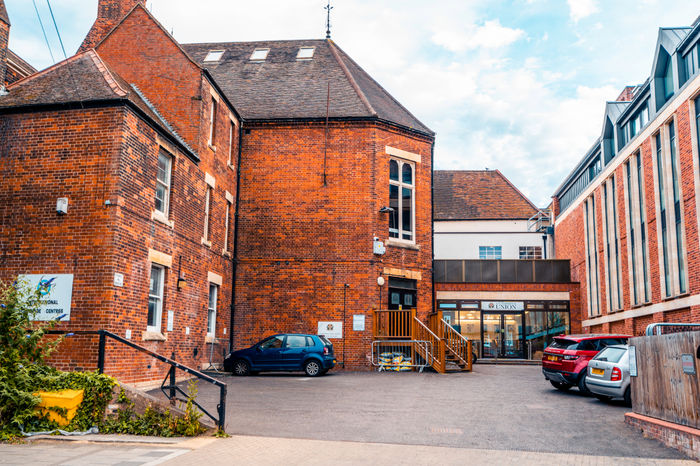
Moreover, the Foundation Year introduced in 2022 has bolstered this change, with the course focusing on developing deeper learning skills and preparing students for the academic demands of higher education. Foundation year student Eva expressed her gratitude for the course, saying: “I’d kind of given up on Cambridge in the lead up to applications because my grades weren’t quite there”. The Foundation Year helped remove these roadblocks, enabling her to still get the chance to develop skills to the level for tripos, something she is “so thankful for”.
As easy as it is to romanticise the past amid rocky economic and social changes in the academic sphere, recent evolutions have brought new people and perspectives to the University. Reflecting on the past can inspire us to integrate what has worked alongside the novel benefits of the present, ensuring the brightest future for higher education as a whole.
 News / C4P vandalises University offices over divestment10 June 2026
 Lifestyle / A town with a view11 June 2026
 Comment / Top of the slops: the competitiveness of college dining4 June 2026
 Comment / ‘On the Poverty of Student Life’: sixty years on10 June 2026
 Sport / The imperfect privilege of Cambridge sport12 June 2026
 Lifestyle / Confessions of a May Ball crasher12 June 2026
 Lifestyle / May Week horoscopes12 June 2026
 Lifestyle / The finalist’s bucket list12 June 2026
 Theatre / All of Cambridge is a stage12 June 2026
 Music / ‘It’s feminine intuition’: predictions for OR312 June 2026