Who gets to speak at the Cambridge Union?
Alessia Fietta speaks to Union members about issues with inclusivity and diversity in debate
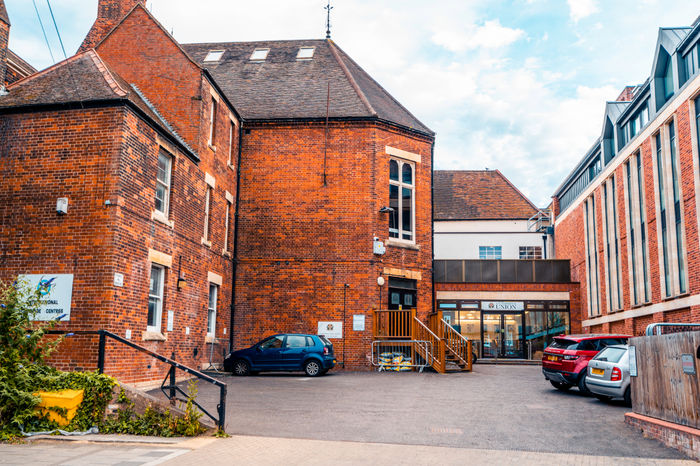
The Cambridge Union prides itself on upholding free speech and challenging accepted norms. As the world’s oldest debating society and the beating heart of Cambridge discourse, it aims to showcase a diversity of voices and perspectives to stimulate meaningful and productive discussion. Yet when its members identify issues with inclusivity – both in the Union and in debate culture more generally – we are compelled to question if all voices are truly being heard.
A look at the Union’s Michaelmas 2025 term card and its scheduled speakers may call into question who the Union chooses to platform. Of the eight speakers hosted at speaker events, six were men. High-profile figures such as former US vice-president Mike Pence and Nvidia CEO Jensen Huang, the eighth wealthiest person in the world, were among those invited to speak. While there is undeniable value in hearing from leading figures in society, their perspectives are not representative of the broader population, let alone minority or underrepresented groups. On the flipside, engaging with these influential figures can allow their ideas to be challenged, and their presence alone at the Union doesn’t necessarily translate to a lack of inclusivity.
“In the public speaking industry, women are often perceived as ‘arrogant’, ‘bitchy’ or ‘emotional’”
But the gender-imbalance continues when examining the guest speakers at the Union’s weekly debates listed on the term card, with 13 of the 42 guests listed being women. This trend is far from unique to Cambridge: according to the Oxford Union’s term card, just eight of 57 guest speakers at last term’s weekly debates were women.
The Cambridge Union shared these concerns, and said that “The Union finds it deeply frustrating that debating culture in Britain has been historically dominated by individuals from certain segments of society.” It emphasised the ways the society is trying to improve access and participation from underrepresented backgrounds: “The Union makes continual efforts to ensure that our events reflect the diversity of our membership through our dedicated Equalities Programme, and does everything it can to remove financial barriers for potential future members.”
However, as union members and committee members illustrated through their experiences, factors such as gender, class and ethnicity shape who takes part in the Union and in debating more broadly.
“Debate culture ‘inherently favours those who have attended private school’”
Navya Sharma Tyagali, a first year English student at King’s, delivered a floor speech opposing the motion ‘This House Would Decriminalise Sex Work’ in October. Reflecting on her experience in debate, she said: “I have been debating at the national level since I was 14 – and as a woman of colour, I have definitely experienced first-hand the impact of my identity on my success and experience within speech and debate.”
Tyagali observed: “In the public speaking industry, women are often perceived as ‘arrogant’, ‘bitchy’ or ‘emotional.’” She reflected on receiving feedback “telling me to ‘be less cute’, or ‘speak softer’, which may not have been intended as a slight … but nevertheless falls into the same tired stereotypes that women have been subjected to for centuries.” She added that, although she continued debating in spite of these comments, they “have pushed out fellow women from the activity”.
The Union emphasised the work it did for femle and ethnic minority speakers – including hosting a women and gender minorities (WGM) debating tournament, and using internal quotas for WGM speakers. It said: “There are nine members on our Competitive Debating Committee; seven of these members are women, and five are from ethnic minority backgrounds.”
Although committee membership at the Union appears gender-balanced, the disparities in student speakers may be shaped by wider societal biases and stereotypes. Rich Kawolics and Julia Lynn’s 2018 study has evidenced this dynamic, analysising Public Forum debate judge ballots from 2017-18. They found that female-identifying debaters were criticised for being too assertive or aggressive around twice as often as male-identifying debaters. Moreover, while male-identifying debaters criticised for aggression still had a 50% chance of winning the round, female-identifying debaters receiving the same criticism had a 75% likelihood of losing. “I believe the Union isn’t unique in its perpetuation of these circumstances,” Tyagali said. “It’s simply a victim of a wider cultural tendency to prioritise the male, eurocentric voice.”
“The British Parliamentary Debate style was originally designed to benefit a cohort of white, upper-class men”
Other students pointed to class as a significant barrier to participation in the Union. One committee member noted: “While great strides have been made in improving inclusivity at the Union, there is still more to be done, especially on the class front”.
They cited the way in which debate culture “inherently favours those who have attended private schools,” given that debate “is much more present and practised within those environments”. A 2024 Sutton Trust survey found that 53% of private schools reported having a debating club, compared with just 18% of state schools.
The committee member continued: “There are also monetary barriers to being a member of the Union. Whilst I was delighted to see that the Union’s next (Easter 2026) president has promised to keep the access membership price the same (£90 for life), this remains unaffordable for some members of the University.”
Another Union member explained that “the British Parliamentary Debate style was originally designed to benefit a cohort of white, upper-class men, trained in debate from an early age and raised with an innate self-belief.” They added: “If you have not been taught that your opinion is valid, finding the confidence to challenge the argument of an intelligent, confident opponent is much more difficult.”
Although students acknowledged the progress the Union has made in terms of ethnic diversity and inclusion, debate culture continues to marginalise historically underrepresented voices, and this remains evident within the Union. Navya said: “As demonstrated in the debate I participated in back in October, my arguments ended up being overlooked – a speaker choosing instead to focus on my ethnicity. The issue is, I don’t think she even meant it to be insulting … I believe that’s because our society deems [her response] a proper response – my ethnicity should be able to augment the validity of my statement.”
So, what can be done? Students suggested better promotion of lower-stakes activities, such as the Union’s beginners’ debate sessions, and more open Union events to widen participation beyond members. The Union is also already taking steps to become more inclusive through discounted memberships, scholarships and an outreach team working with schools to broaden access to debate. However, the students also recognised that inclusivity may not be truly achieved without “significant shifts in attitudes and culture far beyond the reach of the Union”.
 Comment / Top of the slops: the competitiveness of college dining4 June 2026
 Interviews / What’s the story behind Pages coffee house?8 June 2026
 News / News in Brief: Cambridge crowns, council confirmations, and competitive cricket8 June 2026
 Comment / The Cambridge drift1 June 2026
 News / Cambridge researchers produce ‘world-first’ AI vaccine6 June 2026
 Arts / Don’t rush me – I’m reading!9 June 2026
 Lifestyle / Don’t Cry at Me, Argentina – a next-year abroad story8 June 2026
- News / News in Brief: Cambridge crowns, council confirmations, and competitive cricket8 June 2026
 Science / Failure is the foundation of science8 June 2026
 Fashion / The hidden gems of formal fashion8 June 2026