‘Treated like we’re incompetent’: ents officers on college micromanagement
Grace Howell speaks to ents officers struggling to assert their autonomy in the face of mistrust and miscommunication from college administration
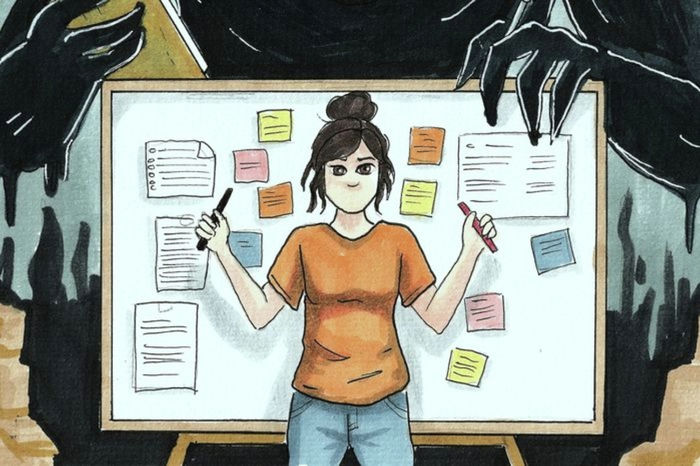
It’s a familiar cliché that Cambridge students don’t have time for a social life, or are even discouraged from having one. Infamously, in 2017 a physical science professor at Queens’ discouraged students from having a “good time” rather than focusing on their degree – a message that drew BBC coverage and sparked debate. Working against this narrative, though, are ents officers who dedicate their free time to organising social events and creating opportunities for students to unwind during the intense academic term.
Yet they frequently find themselves facing resistance from their own colleges, ranging from condescending attitudes and unnecessary regulations to persistent communication problems. Although all the ents officers interviewed demonstrated a clear awareness of colleges’ need for supportive oversight due to safety reasons, in recent years they felt this has tipped into overbearing control and micromanagement. Despite voluntarily taking on responsibility, officers’ autonomy is increasingly undermined, leaving them accountable for events but sometimes without real authority to run them effectively.
Most of the time, the relationship between ents officers and the college is collaborative. One ents officer expressed their respect and gratitude towards the porters, with whom they have a “strong and trusted relationship”, noting: “communication with the porters is key to ensuring this stays this way”. Another officer described how college staff often “give suggestions for later events for improvement,” and are even “keen to arrange a meeting to offer feedback on both the students’ own leadership and what the college can do to help.” These examples highlight the extensive, genuine care some college admins go to ensure students have these pockets of social time to escape work.
“This erosion of confidence turns what should be a rewarding contribution to college life into a role that feels unnecessarily fraught and draining”
The student officers interviewed also expressed their understanding of the colleges’ need for oversight, with one stating: “their main concern is definitely safety,” and another mentioning: “the rules are applied fairly and in the interest of student safety”. Ultimately, the officers stress that a successful event hinges on open communication between themselves and the college, enabling them to fulfil their job. When this dialogue breaks down however, the environment increasingly becomes hierarchical and restrictive rather than collaborative and supportive.
Although the ents officers are happy to offer their time to run these events, the role is unpaid. Thus, the patronising tone and mistrust from the college – which all interviewed ents officers noted – can make the leadership position burdensome and stressful. One officer described how, despite generally good communication, college administrators frequently sent “unnecessarily long email chains which made me feel spoken down to and patronised, despite us always being professional,” written in a tone “they wouldn’t use with colleagues”. The authority of ents officers is consequently undermined, casting them as irresponsible rather than capable organisers who understand the safety requirements of events. This erosion of confidence turns what should be a rewarding contribution to college life into a role that feels unnecessarily fraught and draining.
At times, communication with college staff lapsed entirely. In preparation for a bop, one ents officer described the usual process of preparing the auditorium, only to find the space —booked months in advance —unexpectedly double-booked on the day of the event. The student added that the crew brought in to help “were quite annoyed and were getting really stressed about not having enough time to set up.” The college offered little assistance: “There was very minimal consulting with us about this; the college made the decisions, then informed us of what we had to do,” they stated. Though the event was allowed to go ahead, they were instructed to reduce capacity by 70 people.
The organisational failure was not the students’ responsibility, yet its consequences were felt almost entirely by the social event, with students missing out on the bop. Significantly, the team did “not get an apology for messing this up at the last minute.” Where communication fails between colleges and the ents teams, accountability rarely flows both ways.
“Legitimate caution often spirals into excessive interference”
Across colleges, a trend of increasing micromanagement from administration has emerged in recent years. With the introduction of new staff, new rules have followed, often shifting oversight into something more overbearing. An ents officer described a new operations manager introducing near-excessive alcohol restrictions where “senior staff stepped in to prevent cocktails and stop pictures of the event being posted on social media.”

When administrators disrupt the event and take measures to minimise it, students’ ability to organise lively, well-managed events is reduced, rendering some college-organised events underwhelming. The impact of this kind of interference falls almost entirely on student social life, which appears to be repeatedly deprioritised.
Though many ents teams fully understand “the college’s main concern is making sure students are safe”, legitimate caution often spirals into excessive interference. Another ents officer reflects on a very similar issue, saying: “the new staff are a bit stringent on rules, micromanaging every last decision, which is somewhat bizarre considering they were never this involved in previous events.” Many ents officers take pride in creating engaging social events. Yet when college oversight shifts from support to interference, it suggests a lack of confidence in student leadership and, as one officer described, an assumption of “incompetence”.
However, the same ents officer recognised that the college stepping in “came from a place of good faith and wanting to look after students.” Despite contention and annoyance, all the ents officers interviewed show a great deal of respect and patience with the colleges, understanding their perspective on ensuring safety. What they ask for, then, is not full autonomy or a bypassing of college administration, but to be treated as capable organisers, trusted with the responsibility they already hold.
 Features / The language of optimisation and the architecture of merit30 May 2026
 News / Venue cancels Cambridge talk by right-wing commentator Matt Goodwin after backlash28 May 2026
 Comment / We must support our strikers29 May 2026
 Theatre / CUMT’s The Wind in the Willows brings a classic to life 31 May 2026
 Interviews / Cambridge MP Daniel Zeichner on political realism and the ‘politics of grievance’29 May 2026
 Fashion / From princesses to PAs, power dressing is nothing new31 May 2026
 Lifestyle / What kind of punter are you?31 May 2026
- Theatre / CUMT’s The Wind in the Willows brings a classic to life 31 May 2026
 Science / Wired and tired: the science of caffeine31 May 2026
 Interviews / ‘Thank you for the music’: ABBA Support Society on friendship and managing stress through fun 31 May 2026