How Cambridge Made Me Lose My Faith
Josh Pritchard navigates the feelings associated with losing his faith, and how coming to Cambridge became a conflicted experience
As of late 2025, the UK saw a resurgence in church attendance amongst young adults, with monthly attendance amongst 18-24 year olds increasing from 4% in 2018 to 16%. Other trends, such as an increase in bible sales, have led some to conclude that we may be in the midst of a quiet religious revival in Britain: something this publication has touched on previously. As a lapsed Catholic, this news comes as a mixed bag. For a period of time, I likely would have identified as one of these young people, but nowadays, I’m very aware of a growing distance between myself and religion. My partner calls it cynicism, but there was a time where such a concept would have deeply unsettled me.
I remember the first time I was unsettled by the possibility of religious detachment: Year Two, following a playground incident where a friend of mine had suggested that Christ could possibly not have existed had me refusing to speak to him for a week. I am very confident in saying that this devotion was not inspired by my immediate surroundings. None of my teachers were especially devout, and had hardly seemed to have read the Bible for longer than a cigarette break: one assembly saw the headmaster recounting the famous story of Jesus going on holiday on doctor’s orders to restore his divine powers.
“I remember the first time I was unsettled by the possibility of religious detachment”
The appeal of religion was, I think, more about the figure of God himself; the omnibenevolent father who could forgive anything, heal anything, and one day, would reassure you himself that everything was ok. In a single-parent household, that idea carried such weight that I remember crying about it once when my Mum wasn’t home, overwhelmed by the worry that I, a small twelve year old boy, would disappoint someone who might always be.
In secondary school, Catholicism became ubiquitous. We’re talking the proper stuff: termly full-school masses, compulsory R.E. for Sixth Form, the lot. It was here, however, that I began to grapple with the intricacies Catholicism posed to me. I don’t think I ever had a real epiphany: no moment where suddenly religion just didn’t make sense. As with most things, it was gradual. Kind of. I can remember big moments that shook me: the realisation of how contingent my belief was on historical circumstance, COVID, and, yes, reading Dawkins’ The God Delusion. But despite the arguments these germinated in my mind, I don’t think my desire for a God shrunk. There was a very long time where I would repeat secular arguments and then later feel guilty, reproached by some ineffable factor.
“Whilst I enjoyed the overwhelming amount of freedom that came with it, it was accompanied by the quiet loss of a religious framework”
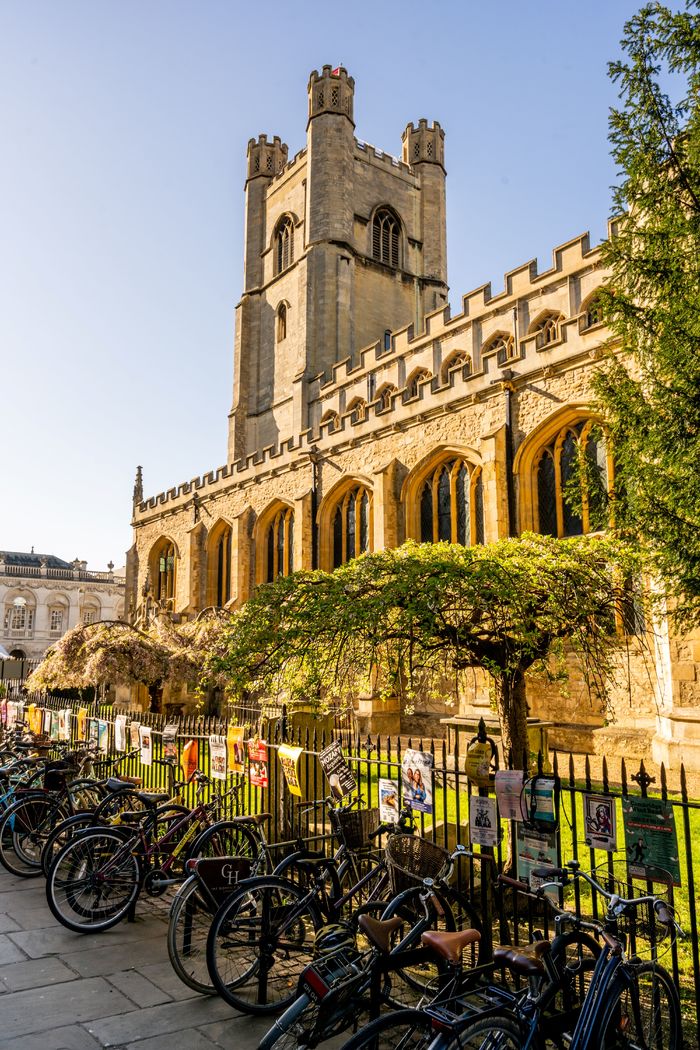
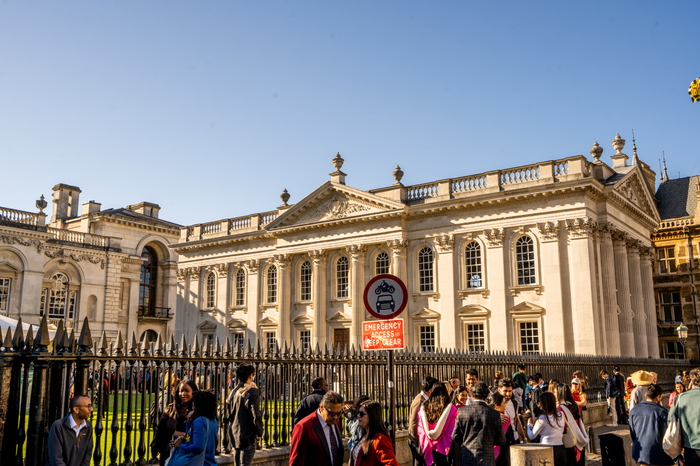
Coming to Cambridge was a conflicting experience, because whilst I enjoyed the overwhelming amount of freedom that came with it, it was accompanied by the quiet loss of a religious framework: all of my schools to this point had been religious, and a part of me took a while to adjust. I remember gravitating towards faith societies at Freshers’ Fair, being able to name all of the anonymous saints stapled to a picture board, and then hesitating when a friendly representative asked if I would like to attend a social next week. Another, more gently inquisitive, asked why I had begun to lapse when we struck up conversation. It took a while for me to realise how much comfort I had taken in the idea that I could always turn and find faith, a long-slighted friend who had now disappeared forever.
This unease has, however, improved with time. People here love procrastination, and the more ways I find to fill my time and think about the world, the less and less I think about the ways in which I did so previously. I still altar-serve at my parish when I’m back home, but oddly enough, I never feel particularly out of place. Some weeks I’ll feel like going, and others, I’m comfortable with giving it a miss. I don’t feel like I’ve lost anything essential to myself because the comfort that I once needed so urgently has been desaturated by time, distance and the person I’ve become.
Despite my grievances with Christianity’s premises and praxis, I am still quite defensive of those who still believe. Some in Cambridge who I have spoken to consider religion to have been fundamentally changed by the loudest voices who claim to belong to it: Tommy Robinson, Trump, whatever nut Turning Point USA lets into their offices. But despite my lapse, I still think that we shouldn’t mischaracterise religion. My experience taught me that faith is fundamentally an individual endeavour; anyone who is swayed more by a person of supposed authority, be they the Pope or JD Vance, over their own rationality in the matter of faith, is not a member of a potent religion. It’s also why I don’t believe Christianity is a force for evil, nor for good, merely the loose armour that many combatants have adopted and mangled in their various conflicts. Its original shine – if it ever existed – is lost to us forever, but that doesn’t mean we can’t appreciate the value it still conjures.
I would not be writing this piece had I not come to Cambridge. I call myself, quite firmly, an atheist now, but I don’t regret ever having faith in the first place. The words of Bruce Springsteen come to me as I finish this: “I came to ruefully and bemusedly understand that once you’re a Catholic, you’re always a Catholic. So I stopped kidding myself. I don’t often participate in my religion but I know somewhere … deep inside … I’m still on the team.”
 Comment / The Cambridge drift1 June 2026
 Theatre / CUMT’s The Wind in the Willows brings a classic to life 31 May 2026
 Features / The language of optimisation and the architecture of merit30 May 2026
 News / Venue cancels Cambridge talk by right-wing commentator Matt Goodwin after backlash28 May 2026
 News / News in Brief: Corpus climbing, climate cash, and commendable contributions1 June 2026
 Arts / To the letter2 June 2026
 News / Cambridge psychologist warns against blanket social media ban for under-16s1 June 2026
 Sport / Caius beat Magdalene in last-minute thriller to clinch mixed netball Cuppers final1 June 2026
- News / News in Brief: Corpus climbing, climate cash, and commendable contributions1 June 2026
- Comment / The Cambridge drift1 June 2026