The beautiful death of the ‘golden ticket’
Ben Lubitsh argues that the growing inability of degrees to guarantee future success is worth celebrating and embracing
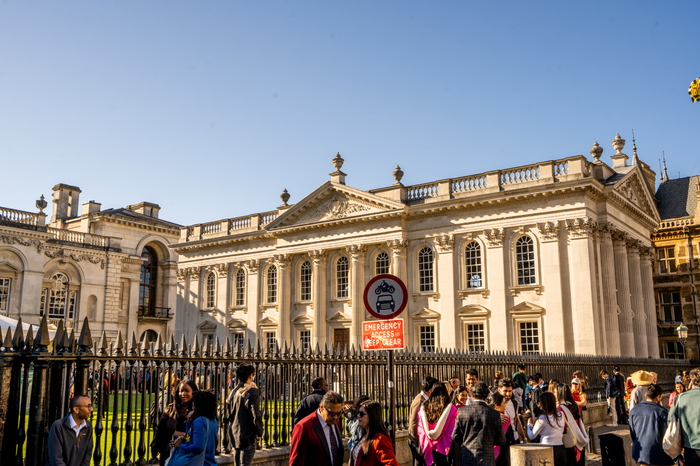
Anyone who has been lucky enough to open a Cambridge acceptance email in their life has probably had to fight the urge to pat themselves on the back and tell themselves “well done, you’re set for life now”. The urge is so strong because almost everyone around you is assured that this email is your ‘golden ticket’ into any job you want. Or, I don’t know, at least into a damn interview…
Sure, there’s still some inherent social value in getting that piece of paper that I’m due to receive in roughly 18 months. But what exactly is its value? Well, according to Vice-Chancellor and President of KCL Shitij Kapur, it’s a lot less ‘golden’ than many of us would have initially thought; it’s a necessary ‘visa’ required to enter the working world rather than a ‘passport’ of privilege one can use to thrive in it.
While even Kapur admits that the university one attended is a more relevant factor that determines a graduate’s social mobility, it seems as though many of us are learning the hard way (more specifically, through inboxes filled with rejection emails) that there’s at least some truth to the fact that the inherent value of a Cambridge degree is rather small on its own two feet.
“If the ‘golden ticket’ won’t necessarily get you through the chocolate factory gates, you might as well stop staring at the wrapper and start enjoying the chocolate”
So, perhaps the ‘golden ticket’ is dead. But this death is not one from a tragedy, it’s the most liberating thing to happen to higher education in a good while.
When we demand that our degrees be guarantors of social mobility, we inadvertently shackle ourselves to an insultingly narrow definition of worth. We are agreeing that the primary value of a Cambridge education lies in its ability to satisfy an HR department at Goldman Sachs. We turn ourselves into human capital, constantly polishing our ‘visas’ with extra-curricular box-ticking and resume-padding, terrified that if the stamp isn’t quite shiny enough, we will be deported back to the precariousness from which we hoped to escape.
But what happens when the visa fails? What happens when, as Kapur suggests, the degree no longer guarantees the destination? Paradoxically, we are set free. If the degree is no longer a reliable transaction, then the transactional mindset itself becomes redundant. If the ‘golden ticket’ won’t necessarily get you through the chocolate factory gates, you might as well stop staring at the wrapper and start enjoying the chocolate.
In embracing the ‘visa’ mindset, we reclaim the right to do our degree properly, as opposed to just doing it in the way that the job market instructs us to. In a world where a first class degree doesn’t automatically buy a house or a career, the pressure to choose ‘safe’ modules or ‘marketable’ subjects evaporates – because, well, who cares about those? We are liberated to pursue the obscure footnote, the radical theory, or the ancient language for no other reason than that it is fascinating, beautiful, challenging, or true.
“We don’t just have to be anxious applicants, we can also be authentic learners”
As the guy essentially telling you to embrace the horrors of the job market, it will likely come as no surprise to you that I’m a Philosophy student. Yes, I’m one of those who studies the ‘unprofitable’ degree – and I’ve never felt so good about that fact now that we’re in a world where whatever I do at university doesn’t guarantee me success.
To study a ‘fake degree’ in an age where the Vice-Chancellor of one of the nation’s top universities tells you it’s just a travel document is a beautiful act of quiet rebellion. It’s an assertion that our minds are not for sale and that our value is not determined by a starting salary.
We often assume that comments like Kapur’s are supposed to dampen our spirits with a dose of realism, so we try to defend against it, refute it, hide from it. Yet, in reality, it accidentally hands us a manifesto for studenthood. If the degree is no longer a guarantor of social mobility, then we no longer have to perform the exhausting dance of the ‘socially mobile’ student. We don’t just have to be anxious applicants, we can also be authentic learners.
So, perhaps what many of us suspected is now confirmed: that piece of paper really is just a piece of paper, and not a whole lot more on its own. But maybe the golden ticket’s death is exactly what we needed to actualise the real value of our time here.
This doesn’t mean that the LinkedIn network-appeasing internship grind has to stop, or that a general attitude geared towards employability shouldn’t be encouraged. It just means that we can genuinely separate that world from the world of higher education. The former is an undertaking for whoever wishes to tackle it, and is a whole universe in itself; the latter is exactly what it says on the label. So, instead of hopelessly conflating the two, we can pursue them each for what they actually are.
 Comment / Top of the slops: the competitiveness of college dining4 June 2026
 Interviews / What’s the story behind Pages coffee house?8 June 2026
 News / News in Brief: Cambridge crowns, council confirmations, and competitive cricket8 June 2026
 Comment / The Cambridge drift1 June 2026
 News / Cambridge researchers produce ‘world-first’ AI vaccine6 June 2026
 Arts / Don’t rush me – I’m reading!9 June 2026
 Lifestyle / Don’t Cry at Me, Argentina – a next-year abroad story8 June 2026
- News / News in Brief: Cambridge crowns, council confirmations, and competitive cricket8 June 2026
 Science / Failure is the foundation of science8 June 2026
 Fashion / The hidden gems of formal fashion8 June 2026