Cambridge has already become complacent on class
Keane Handley argues that the new Trinity Hall admissions policy undoes much of the progress that Cambridge has made towards combating classism

The cries of reverse discrimination are as old as time, the chief concern of those who fear progress having gone too far. Its repeated use is because it strikes a chord with some, some who look around and might see their privilege being gently pulled from beneath them.
The cries were made by the Director of Admissions at Trinity Hall, looking to recruit from elite private schools for better ‘quality’ applicants. It left me incensed, yet unsurprised. As the story broke it sparked backlash from social mobility experts and groups, including the 93% Club, whose work is vindicated at moments like this. Their recent Class in the Act campaign seeks to make social class the tenth protected characteristic under the Equality Act of 2010, with the 93% Club founder, Sophie Pender, claiming classism is the “last acceptable form of discrimination.”
This is what I find intriguing about classism at Cambridge, because it’s so embedded, because those who seek to affirm the status quo are making classism smarter, harder to spot. This is until the likes of Marcus Tomalin, Trinity Hall’s Director of Admissions, let the mask slip in this pursuit of better ‘quality’ applicants from elite private schools.
“This is a slap in the face […] to the outreach teams of every Cambridge college”
Tomalin argues that the best students from such schools arrive at Cambridge “with expertise and interests that align well with the intellectual demands.” Some old-fashioned classism, maintaining an inferiority complex that many students from working-class backgrounds feel, but to hear it out loud is painfully surreal. It vindicates all who have been accused of ‘waging class war’ or creating division and causing problems where there are none, when the evidence every now and then becomes apparent for all to see.
It has been argued that this is a slap in the face to state school students, but it is equally so to the outreach teams of every Cambridge college who spend every day fighting to dispel myths, and allay concerns of 16 and 17 year olds who think Cambridge isn’t for ‘people like me’. They are thrown under the bus and their work is undermined by headlines like these.
These headlines are read by prospective students, with national newspapers quoting straight from the heart of this institution: you are not welcome here. That is, if you haven’t got the “expertise and interests” which meet the “intellectual demands”, and one can only speculate on what that suggests. Perhaps if you are in a University target area like the North East but prefer the songs of the Gallowgate End to Mozart, your interests might be best served elsewhere. It also then simultaneously paints the arts as the rightful preserve of the elite, which working class eyes, ears and minds aren’t tuned to.
Despite great strides being made by the college Outreach departments, who work closely with student ambassadors who often want to address the concerns of their younger selves, I can’t help but think that they are doing so with their hands tied behind their backs. Those who hold the rope assert their authority in meetings, in spite of opposition from academics who for the most part were reportedly outraged, one saying it “risks returning Trinity Hall to the boys’ club culture of the past.”
“I shouldn’t have to [say] that these anecdotes and headlines are the reason why you should apply, to gradually change the institution yourselves”
I have been in the position too often where an anecdote, or worse, a headline like this one, is presented to me as I seek to assure prospective applicants Cambridge can be a welcoming place for them. My most common response is one I shouldn’t have to give, that these anecdotes and headlines are the reason why you should apply, to gradually change the institution yourselves.
Has Cambridge University done too much patting itself on the back for the progress it’s made, that we’ve forgotten to push for more? Recently, state school targets were removed, which would prove effective if those from working-class backgrounds feel properly welcomed with an alternative, improved approach. However, with initiatives such as Dr Tomalin’s, there is a real fear of going backwards, keeping classism commonplace at the University of Cambridge.
Perhaps there is a sense that those of us who tell ourselves the halls we eat in and corridors we walk aren’t meant for us are beginning to quieten that inner voice: we are getting too comfortable in our gowns, in our supervision rooms, in our ideas. That could be why this sentiment is seeping from a senior admissions officer’s mouth? Cambridge is coming too close to seeing its bubble burst, too close to noticing its status quo should not be seen as normal.
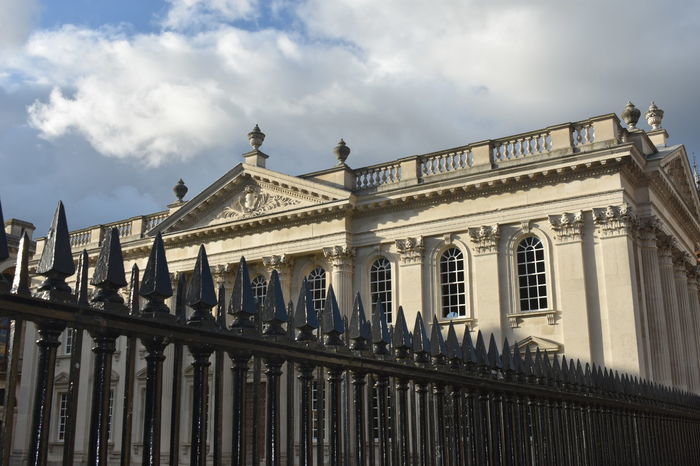
In reaction to the backlash, Trinity Hall offered a ‘no case to answer’ response in which it said that there has been “no change to [its] widening participation policy,” but simply “[adding] some schools to the email lists we use to share our existing online initiatives.” This response ignored Dr Tomalin’s quotes in the leaked memo which is where the damage had frankly already been done; it was somewhat emblematic of the handling of classism at Cambridge. I can only hope those prospective students who saw those comments also saw the defiant response from across the University student body, particularly those from working-class backgrounds, to whom it too often falls to call out classism.
I also hope those that feel targeted by the false rhetoric of being ‘de-aligned’ with your subject feel emboldened in your rage. You should be daring to diversify the interests those in this place have to offer, to lead with your own intellectual way of thinking, all in the name of being proudly working-class.
It’s time for this University to continue opening its doors and minds, not retreat and cower at the prospect of working-class excellence, but rather, finally embrace it.
 Comment / Top of the slops: the competitiveness of college dining4 June 2026
 Interviews / What’s the story behind Pages coffee house?8 June 2026
 News / News in Brief: Cambridge crowns, council confirmations, and competitive cricket8 June 2026
 Comment / The Cambridge drift1 June 2026
 News / Cambridge researchers produce ‘world-first’ AI vaccine6 June 2026
 Arts / Don’t rush me – I’m reading!9 June 2026
 Lifestyle / Don’t Cry at Me, Argentina – a next-year abroad story8 June 2026
- News / News in Brief: Cambridge crowns, council confirmations, and competitive cricket8 June 2026
 Science / Failure is the foundation of science8 June 2026
 Fashion / The hidden gems of formal fashion8 June 2026