
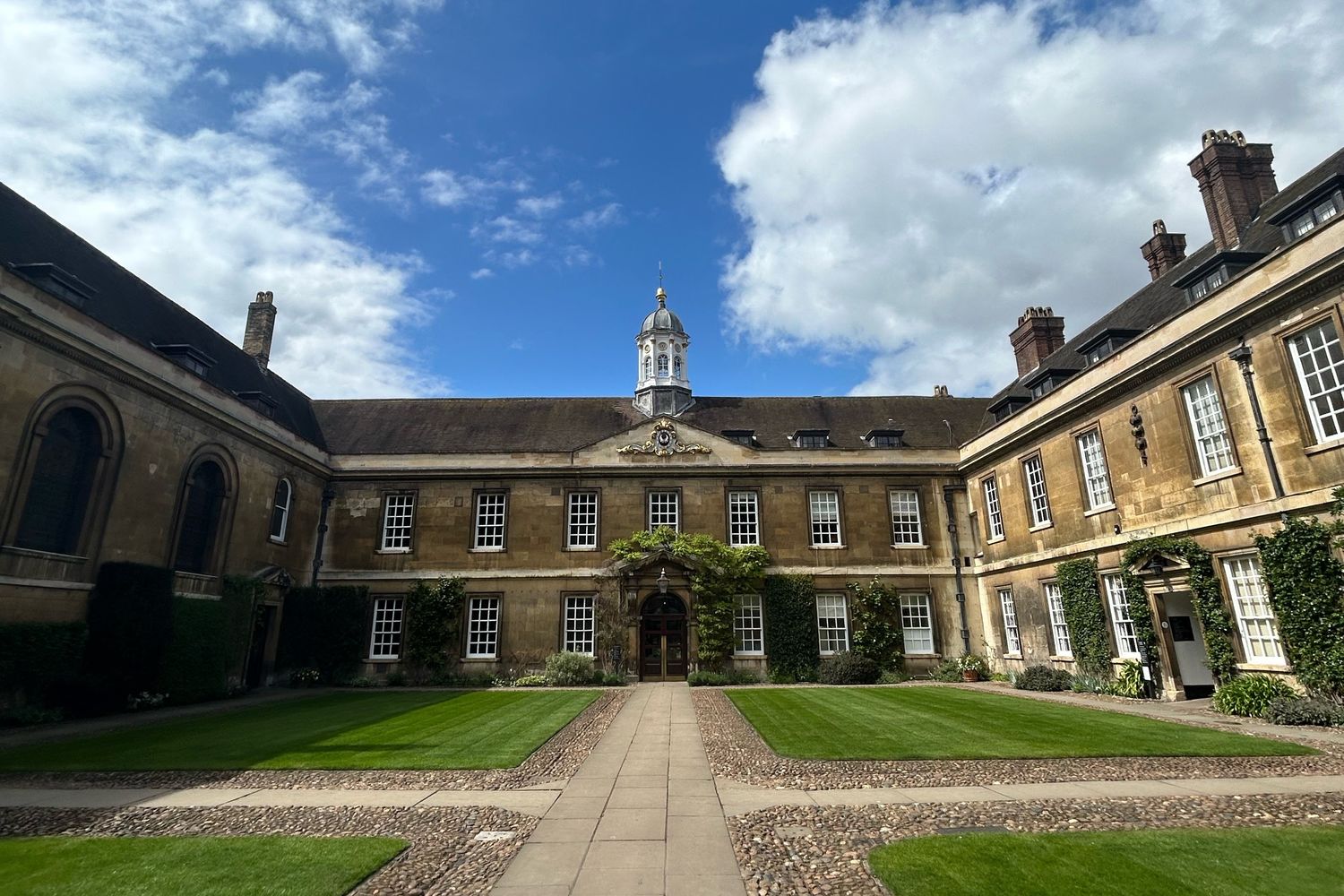
Trinity Hall has sparked controversy after approving a proposal to approach elite schools as part of their admissions outreach strategy to improve the “quality” of students applying.
The College plans to target schools that they believe provide “the strongest applicants” for Classics, Music, History of Art, and Languages degrees.
Among the schools listed were Eton College, St Paul’s School, Winchester College, and Cheltenham Ladies’ College – some of the most expensive private schools in the United Kingdom.
In a memo outlining the proposal, the College’s Director of Admissions, Dr Marcus Tomalin, said that due to the “rigorous academic environments, strong subject teaching, and extensive support for university preparation” private schools provide, they offer “the strongest applicants” for certain degrees.
He also warned against “reverse discrimination” towards private school pupils when pursuing “greater fairness in admissions,” claiming that a significant proportion of privately-educated pupils may have faced “considerable personal or financial challenges,” including a “significant minority of students at leading independent schools on full bursaries”.
“To ignore or marginalise this pool of applicants would risk overlooking potential offer holders who are not only exceptionally well-qualified, but who have been encouraged to engage critically and independently with their subjects in a way that Cambridge has historically prized,” Tomalin added.
Despite support from the College’s leadership, the policy has been met with significant opposition, including from within Trinity Hall’s academic body. One academic who was present at the meeting later said: “This is a deeply alarming policy. Claiming that the best students come from an elite set of schools will make many of our wonderful diverse community feel unwelcome and risks returning Trinity Hall to the boys’ club culture of the past.”
Another academic said that it was a “slap in the face” for state-educated students as well as for staff trying to widen participation in admissions.
Since The Guardian first reported on the story on Wednesday (07/01), a petition titled ‘Stop Trinity Hall targeting elite private schools for student admissions’ has already received over 1,350 signatures.
Carys Lines, the Trinity Hall student who started the petition, said that the memo’s “comments on the quality of students” are “deeply offensive, divisive, and a shallow look on the educational system and the applicants Cambridge receives”.
“My peers and I struggle to compute how concerns of reverse discrimination can be justified considering private school students, who make up 7% of the population, continue to occupy around 25-30% of Cambridge places, showing not an issue of reverse discrimination, but a desperate call for more outreach in state schools and areas that remain deprived and ignored in the admissions process,” she continued.
The College’s JCR has also responded to the proposal, stating that “targeting private schools with the aim of improving ‘quality’ is both reprehensible and fundamentally flawed logic”. They added that they were “in active conversation with senior college staff regarding their recent rhetoric”.
The policy has also sparked national criticism, including from Cambridge alumnus Alastair Campbell, who told The Guardian: “For the college to talk about pupils from the top private schools being ‘ignored and marginalised’ suggests a total departure from reality, which is not a great sign for an elite academic institution.”
He added that “it suggests the college wants to reverse the painfully secured advances in social mobility” and that his “worry would be they are doing this so that others may follow. Hence the need to raise voices against this now”.
Sophie Pender, the founder of the 93% Club, a network which represents state-educated students, said that Trinity Hall “should be ashamed,” adding: “this is so depressing, I have no words.”
Responding to the controversy, a Trinity Hall spokesperson said: “There has been no change to Trinity Hall’s widening participation policy. This modest additional activity is aimed at ensuring we get the best applications from talented students from all backgrounds. The College is very proud of the progress it has made in widening access.
“Average admissions from state schools at the College in the past three years has been 73% and Trinity Hall and we have seen a rise in the admission of students from the most disadvantaged backgrounds to 20.4% in recent years.”
In a separate statement on their website, Trinity Hall said: “We propose to add some schools to the email lists we use to share our existing online initiatives, to ensure we receive applications from talented students from all backgrounds. This activity does not affect our overall Admissions Policy.”
It also highlighted efforts to widen participation in the college, which include the ‘You’ll Fit In’ programme, aimed to engage “ethnic minority students from maintained sector schools,” and the ‘Cambridge from the Inside’ podcast, which aims to “break down barriers for applicants”. Dr Marcus Tomalin is often a guest on the show.
However, the College’s statements have not been received positively by many of its students, with one telling Varsity that it “has been completely ineffectual at quelling the concerns of students”.
According to the University’s admissions statistics, just under a third of Trinity Hall’s most recent cohort came from private schools. However, the College has seen a drop in applications from private schools, falling from 32% in 2022 to 26% in the most recent year. Varsity understands that the College has had to take students from the winter pool for the subjects mentioned in the memo, for which it has been receiving historically low numbers of applications.
The College’s new proposal comes after Cambridge opted to scrap a University-wide initiative to admit at least 69% of its students from state school backgrounds, following new guidelines from the Office for Students. The University now focuses on more ‘specific’ metrics, such as whether an applicant received free school meals.
