Where there’s a Will, there’s a way
Emma Gower discusses why we should retell stories of Shakespeare’s life as much as his plays
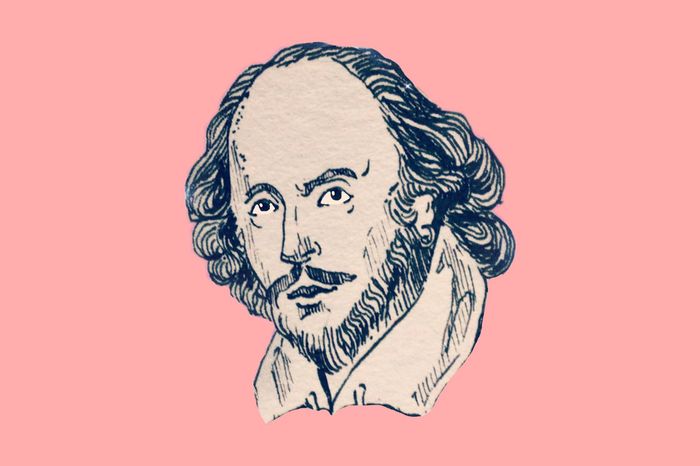
“A rose by any other name would smell as sweet,” declares Juliet famously in one of Shakespeare’s best-loved plays. But would it really? If, say, Romeo and Juliet was not written by the Bard, and instead by a different or less famous playwright, would it still be as revered? No matter how many new plays emerge, no matter how much traction they gain, the artistic and literary worlds turn time and time again to finding new ways to showcase Shakespeare. Between West Side Story, 10 Things I Hate About You, or even the countless paintings inspired by Shakespeare’s characters, there is evidently something we inherently value about these works. Aside from their literary flair, Shakespeare’s works do certainly cover a vast range of topics that remain relevant throughout time. Audiences trust tradition; they like to know that what they are engaging with is not only relatable but finds its basis in universally accepted ‘good art’.
“Suddenly it’s not just Shakespeare’s plays that interest us, but the reasons he might have written them”
But it is time to think more broadly. Given that we as consumers of art seem so preoccupied with Shakespeare, little thought is generally given to the life of the man himself. It is only in recent years that stories imagining what Shakespeare might have been like have begun to gain mainstream attention. This seems particularly pertinent now, in the wake of Maggie O’Farrell’s successful film adaptation of her novel Hamnet. Suddenly it’s not just Shakespeare’s plays that interest us, but the reasons he might have written them. The recent West End run of Liz Duffy Adams’ Born With Teeth seemed to enrapture audiences in a similar way, as the art was no longer Shakespeare’s words but his potential actions. In this post-truth era, perhaps it is a natural consequence that we are suddenly engrossed by the endless possibilities that could have been, rather than the written stories we already have.
Yet despite all of this apparent branching out, all of this new interest in Shakespeare’s life as well as his work, the focus still comes down to the singularity of the man himself. There needs to be more mainstream media and artistic focus on the people around him, on the personal yet contextual backdrop that surrounded him. This is something that both Adams’ and O’Farrell’s works touch upon, yet still falls secondary to the great Bard when it comes to the focal point of critical discussion. There is a necessity to think more imaginatively about the people around Shakespeare if society is so intent upon declaring his greatness – greatness which I do not dispute, but that I think requires deeper understanding than we give it.
“In hearing previously silenced voices, we are forced to consider why we enjoy the literature that we do”
Some do, however, take the Anti-Stratfordian approach and deny entirely that Shakespeare authored the works attributed to him. Whether or not this is the case, Jodi Picoult’s novel By Any Other Name is an incredible exploration of how it may have played out. Importantly, Picoult explores how this feat would have relied on the other people around Shakespeare. It specifically posits Aemilia Lanyer, the first female published poet in English, as his ghostwriter. Regardless of the fact that this is an imagined history, it reminds us of how many voices, particularly female ones, are drowned out by that of the dominant man. Carol Ann Duffy’s poem ‘Anne Hathaway’ takes up a similar idea. A part of her collection The World’s Wife, in which Duffy gives voices to the women behind famous men, this poem puts Shakespeare’s wife first and him second. In giving Hathaway a perspective, Duffy breaks down what it means to tell a story and have your voice put on display.

Hopefully in the wake of the mainstream attention given to projects like Hamnet, people’s eyes will be opened to these newer stories. They may be lesser known, but they are equally important avenues to explore. Whether or not you’re an Anti-Stratfordian, it’s so important to engage in these sorts of stories from a creative perspective. In giving voices to these characters who were real people, we enlarge the volume of history we understand, if only imaginatively. In hearing previously silenced voices, we are forced to consider why we enjoy the literature that we do; what it is that makes us value something creative or artistic. Perhaps now society will start to shift towards a broader framework of airing Shakespeare, perhaps a more holistic viewpoint will emerge that encapsulates the complexities behind his works. It’s time to move away from the fact that they were simply written by the Bard, as currently it appears that what’s in a name is actually quite a lot.
 Comment / Top of the slops: the competitiveness of college dining4 June 2026
 Interviews / What’s the story behind Pages coffee house?8 June 2026
 News / News in Brief: Cambridge crowns, council confirmations, and competitive cricket8 June 2026
 Comment / The Cambridge drift1 June 2026
 News / Cambridge researchers produce ‘world-first’ AI vaccine6 June 2026
 Arts / Don’t rush me – I’m reading!9 June 2026
 Lifestyle / Don’t Cry at Me, Argentina – a next-year abroad story8 June 2026
- News / News in Brief: Cambridge crowns, council confirmations, and competitive cricket8 June 2026
 Science / Failure is the foundation of science8 June 2026
 Fashion / The hidden gems of formal fashion8 June 2026