What counts as art, and who gets to decide?
Bryony Clarke explores what Rufino Tamayo’s unique collection teaches us about the power of exhibition
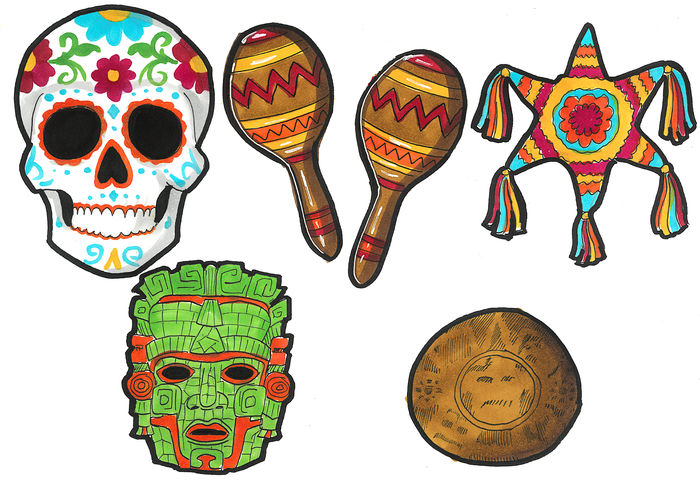
Last weekend, a small, peaceful, courtyard gallery in Oaxaca surprised me with its highly intentional stance on defining, categorising and exhibiting art. The Rufino Tamayo Museum of Pre-Hispanic Art makes one thing very clear: the pieces in its stunning collection are not merely objects extracted from ancient history. They are works of artistic beauty and skill that remain awe-inspiring to anyone who chooses to gaze upon them, regardless of their own cultural background.
“What makes us emotional is the aesthetic value of the works, their beauty and aura, their originality and the rhythm which governs them. The ancient art of Mexico undoubtedly possesses an immense importance as an archeological, historical and cultural artefact. But above all, today it exists because of its independent artistic value, accessible to anyone open to receiving it.” Translated from Spanish, Fernando Gamboa’s words introduce us to the collection’s ethos as soon as we enter the first display room: art should be respected for art’s sake.
There is power in viewing these works as art first and history second. Many mainstream galleries are pseudo-sacred spaces reserved for the ‘fine arts’ of Europe from the last few centuries, or the abstract creations of today’s elusive elite. Meanwhile, the legacies of non-European cultures are often relegated to museums, separated as much by geopolitics as by chronology. Whether dealing with ornate pieces of function or artefacts used in religious ceremonies, Western collectors and curators are quick to forgo the artistic value of such objects in favour of heralding them as evidence of an exotic otherness.
“There is power in viewing these works as art first”
Of course, historical context is important to understand and appreciate works of art. But it is possible to frame artefacts in a way which honours this without denying them their status as artworks. After all, I think it is a truth many are reluctant to admit that beauty, and especially unfamiliar beauty, is often what draws us towards other cultures.
Rococo furniture, Greek urns and Portuguese tiles are just a few examples that are framed and studied as artistic marvels. Their descriptions reflect the complex techniques used to create such beautiful things, beyond functionality. They are positioned physically and academically alongside paintings, sculptures and frescoes which solidify their place among named eras and celebrated movements. Undoubtedly, this imbues them with an inextricable artistic presence, and the respect that comes with this status.
At the same time, sweeping categories can swallow entire realities from the global South, from stolen, homogenised ‘tribal art’ to whole regions condensed into a single exhibition hall. Artworks are indiscriminately grouped together and accompanying information is almost always purely historical. Context is often too dense to be properly taken in – or revealingly absent due to dubious methods of acquisition. Either way, this forced distance between us and the artists discourages true engagement.
The Rufino Tamayo Museum rejects this hierarchy in several important ways. Firstly, the organisation of its broader gallery geography is intentionally minimal. There are no named titles or time periods that might serve as themes for each room, flattening the diversity of art and artists within. The collection also refuses to order works by separating them into their respective cultures, allowing them to exist and be appreciated as art before all else. Instead, the museum follows a chronological structure sin rigidez (without rigidity), inviting the viewer to approach each piece individually with curiosity and to learn about its specific historical and cultural context. Admiration leads and information follows, just like in the Louvre or the National Gallery.
Then comes the labelling. It is usually at this point that many exhibitions disappoint me, with descriptions that either leave you in the dark or overwhelm you with jargon. But the Rufino Tamayo collection sticks to a clear, consistent and refreshingly human style of explanation. Historical details are neatly informed: where, when and from which era the piece comes, as well as a simple description of the figure or activity depicted in each artwork.
Even the given categories of pre-Classical, Classical and post-Classical are a subtle defiance of umbrella terms such as ‘pre-Hispanic’ and ‘pre-Columbian’. Prioritising art history over colonial history communicates the breadth and diversity of the period, instead of presenting a binary ‘before and after’ around a central axis of Spanish colonisation. I find the similarities between these and modern Mexican artworks emerge more naturally when viewed on a timeline, as proof of a continued legacy and deep cultural roots, rather than the echoes of a distant past.
“We must appreciate the fruits of individual artists’ labour”
Perhaps my favourite part about the words offered to contextualise these works is the explicit celebration of skill, craftsmanship and beauty. “The central figure is one of the most impressive on record, both for the extraordinary complexity of its attire, and for the artistic excellence of its execution.” These labels below standout pieces encourage subjectivity and thus foster our closeness with the wider collection. Which is my favourite? Which one moves me? Instead of an inherently beautiful conglomerate, we must appreciate the fruits of individual artists’ labour.
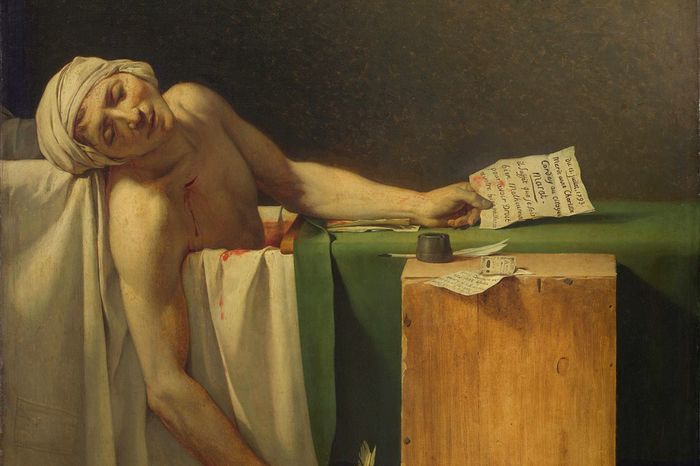
The uncomplicated exhibition of pre-Hispanic art in this gallery creates a space for admiration and human engagement. I found myself smiling again and again at the intricate facial expressions, hyper-stylised figures and clever transformations of people and animals into functional objects, without feeling obliged to wade through excessive historical detail. Allowing this ancient art to be consumed as art is a simple but powerful subversion of cultural hegemonies. It says, let us be close to beautiful things, and celebrate them.
 Comment / Top of the slops: the competitiveness of college dining4 June 2026
 Interviews / What’s the story behind Pages coffee house?8 June 2026
 News / News in Brief: Cambridge crowns, council confirmations, and competitive cricket8 June 2026
 Comment / The Cambridge drift1 June 2026
 News / Cambridge researchers produce ‘world-first’ AI vaccine6 June 2026
 Arts / Don’t rush me – I’m reading!9 June 2026
 Lifestyle / Don’t Cry at Me, Argentina – a next-year abroad story8 June 2026
- News / News in Brief: Cambridge crowns, council confirmations, and competitive cricket8 June 2026
 Science / Failure is the foundation of science8 June 2026
 Fashion / The hidden gems of formal fashion8 June 2026