Fall into a Rapture this Valentine’s Day
Emily Cushion suggests swapping classics for Carol Ann Duffy in times of romantic distress
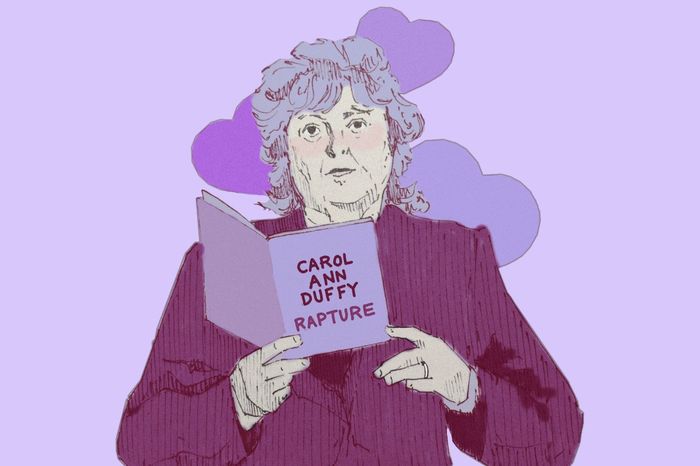
If we look to canonical literature for relationship advice, what do we get? Shakespeare tells us we should die for each other – romantic, but perhaps a bit impractical when relationships become so intense that it’s your degree getting sacrificed. The idea of throwing a party to impress the person you like is more attributed to Charli xcx than Fitzgerald these days. And Austen’s Emma, the matchmaker, is really out of a job now that Hinge is about.
If you, like me, are feeling like some of these books are getting a little bit hard to relate to, I’d suggest reading a more contemporary (and perhaps far rawer and realer) writer: Carol Ann Duffy. I’m a long-term fan of hers, having made it past the ambivalence we all developed towards ‘War Photographer’ in GCSE English. Your teachers won’t have shown you the romance of Rapture, her 2005 poetry collection, but sometimes we have to choose love over war.
In ‘You’, the collection’s first poem, Duffy proclaims that “Falling in love / is glamorous hell,” a sentiment we might all do well to accept this Valentine’s Day. There are definitely levels to this glamour – your first meal as a couple may have been a formal dinner, or it may have been a 3am trip to Van of Life – but I think all love is beautiful. Duffy’s oxymoronic notion of love also reminds us that relationships are inherently difficult, and this is especially true at uni. If your parents question your dating life every single break, try asking them which they’d compromise out of weekly essays, lectures, supervisions, seminars (all of which contribute to good grades), and a love life (which often contributes to crying in Spoons).
“Duffy proclaims that ‘Falling in love / is glamorous hell,’ a sentiment we might all do well to accept this Valentine’s Day”
Duffy is certainly aware of the hellish nature of 21st-century love, and this later becomes epitomised through her amusingly accurate knowledge of texting etiquette. In ‘Text’, Duffy poeticises the perils of the talking stage: “We text, text, text / our significant words.” Duffy shows that texting has a kind of rhythm to it, that classic I-text-you, you-text-me-back sequence. Beware disrupting this flow, however; my friends always insist that there is a ‘right time’ to respond, and that texting too early or too late is a situationship’s death sentence. And all good sentences must close with kisses, according to Duffy, who “look[s] for your small xx, / feeling absurd”. Indeed, it seems like a romantic text is a short poem – we search for the same patterns to signify feelings, including the punctuation marks of a kiss or an emoji heart (or a ‘<3’, if you’re feeling vintage).
Duffy draws attention to the phone as a vessel for the verse of, for instance, an Instagram DM, but in ‘Quickdraw’, it mobilises to become a weapon: “I wear the two, the mobile and the landline phones, / like guns, slung from the pockets on my hips.” If phones previously harboured the heart, they now harbour bullets, capable of a shot rather different from that of Cupid’s arrow. Without the cushioning of a preliminary notification, Duffy’s words are capable of instantly wounding when released: “I twirl the phone, / then squeeze the trigger of my tongue.”
“Love is thus not the subject of poetry, but the very verse itself, and does the writing for us”
Many of us at Cambridge are in long-distance relationships outside of termtime, and understand how words often get lost in translation when they’re travelling hundreds of miles down a phoneline. Sometimes, Duffy feels, the best thing to do is to speak in person, and in ‘December’ she reminds us that there’s always a (very expensive) way of doing so: “The train rushes, ecstatic, / to where you are.” For me, the long Cambridge summer has always lent itself to a few too many LNER trips from Norwich to Newcastle, in an attempt to permeate the “endless northern rain between us / like a veil” (‘Bridgewater Hall’). I feel better about it now that I’m justified by my favourite poet.
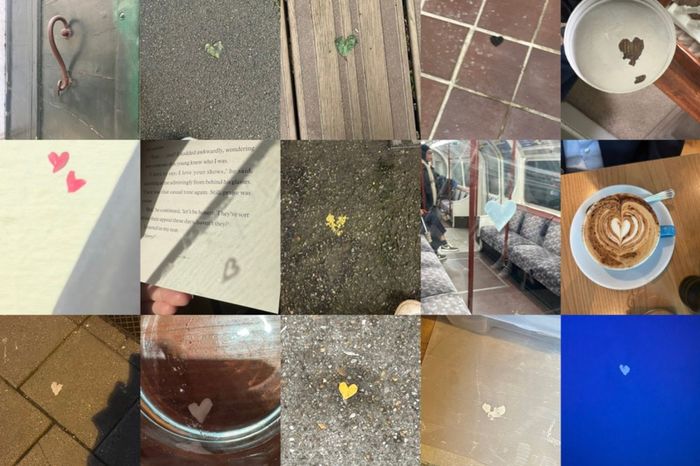
This justification roots itself in the importance of human connection. It is only when together that you can “look love full in the face,” as Duffy does in ‘River’ – this isn’t something that can be replicated over a blurry FaceTime call. And it’s not always something that can be replicated in words. In ‘Bridgewater Hall’, Duffy calls the world “love’s metaphor” – love is thus not the subject of poetry, but the very verse itself, and does the writing for us. You might find love in the trees who “kiss and throw away their leaves” (‘The Love Poem’) or “a hair of your head on my sleeve” (‘Presents’), or show it by making “any tea, for you, any time of day” (‘Tea’). And you might lose it, feeling it “flowing always somewhere else” like the river (‘Unloving’). But to want, seek, have, give, and lose love – all things that happen to the speaker of Rapture – is to know that it’s real.
 Comment / The Cambridge drift1 June 2026
 Comment / Top of the slops: the competitiveness of college dining4 June 2026
 News / Cambridge psychologist warns against blanket social media ban for under-16s1 June 2026
 News / University support staff strikes end after month of action2 June 2026
 Music / We need to talk about Kendrick2 June 2026
- Comment / Top of the slops: the competitiveness of college dining4 June 2026
 Interviews / Bible Scholar Mattie Mae Motl: “God is a woman”4 June 2026
 Features / One big happy (college) family?4 June 2026
 Theatre / Bold beginnings in the Corpus Playroom 3 June 2026
- Music / We need to talk about Kendrick2 June 2026