Entering the digital future of art at MODO Gallery
Ella Howard discusses iPad paintings, posters and artificial intelligence with Sally Clarke, director of MODO gallery
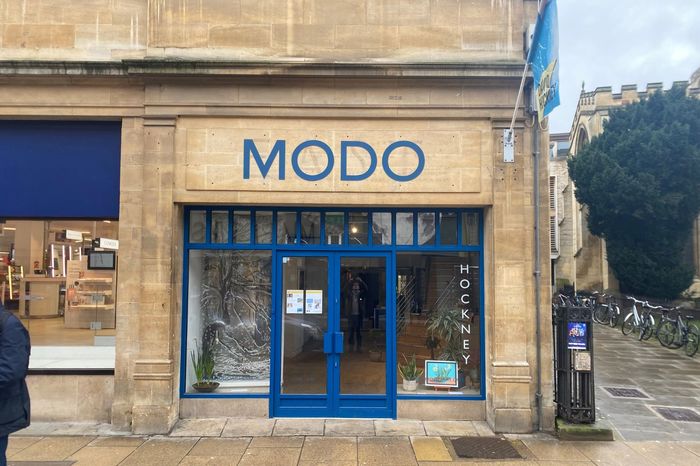
Located right in the heart of Cambridge (next to Boots pharmacy), MODO gallery has a surprisingly low-profile presence in the student art scene, perhaps due to its recent opening early last year. However, this relative anonymity is soon set to change thanks to Sally Clarke, director of MODO and founder of ACE C.I.C. Visiting the gallery earlier this term, I spoke to Sally about her visions for the future – both of the gallery, and art itself.
“Sally suggests that a ‘love of art generally starts with posters’”
But before diving into our new digital reality, Sally first brought my attention to one of art’s more humble, mass-produced manifestations: the poster. Stuck on bedroom walls and street corners, the poster for Sally is a vital “part of history”: “I think they are more important than we give them credit for because even the way the poster’s put together is an artistic representation of that time.” The advertisement becomes a work of art in itself, marked by the blue-tac stains of its viewer’s adoration. Perhaps unsurprisingly then, original posters, as Sally tells me, “have a massive market,” valued at a price not so far from the piece they depict. The Royal Academy of Art, for example, sells postcard prints of their past exhibition posters, some of which even decorate the walls of my university room – transformed into posters once more. Sally suggests that a “love of art generally starts with posters”, and this is no less true for the gallerist herself: “Especially with Hockney’s work, posters are a really good entry point and actually that’s where our collection started […] so they have got a little bit of a soft spot for me.”
Interested in her admiration for less traditional forms of art, I asked Sally about Hockey’s digital paintings, which are drawn entirely on an iPad screen. Given the common perception of digital art as an ‘inferior’ or less high-brow form of artistic expression, I was surprised to see Hockney’s iPad drawings adorn the walls of the gallery, and most notably, hung in an immersive Bayeux-tapestry-like scroll. For Sally, these printed images are just as valuable as oil-painted canvases, for, as she says: “Knowing how to layer, because of the light behind, is quite an art.” I am particularly interested in the added illumination of the electric screen which can warp our perception of the image, necessitating a new form of artistic consciousness. Sally also brings to my attention the exciting accessibility of the digital creative process: “When I watch the process of him drawing or painting the layers, it’s like you have no idea where he’s going with it, and then suddenly you’re like ‘oh, I see it now’.” Through a recorded video we can watch Hockney’s thought process in real-time, an experience once limited to the very few.
Of course, as with any discussion of art and technology, our conversation inevitably turned to the rising influence of AI, a societal shift that Sally regarded not with distrust or distaste, but with an unexpected optimism. As she told me: “I found very quickly that with AI I can function at a completely different level, which was great.” Realising the potential incongruity of her situation, she admitted “I don’t really think upon normal lines as a gallerist. I know I don’t. I suppose my incentives aren’t really the same as a lot of people.”
“Through a recorded video we can watch Hockney’s thought process in real-time, an experience once limited to the very few”
Yet despite such surprising enthusiasm, Sally did express her concern about society’s overdependence on AI, warning that “it’s not always very honest with you. It doesn’t matter whether you tell it to be honest with you and give it very clear parameters. It doesn’t listen.” To defend against this, she proposes that “in education we need to start nurturing creative thought, across all curriculums.” Worried about the growing lack of government funding for the arts, Sally is trying to involve the gallery in outreach to local schools, planning events from video-screenings to student-performed operas. Just as the Hockney poster opened a world up for her, so she hopes to instill a similar artistic interest in the next generation.
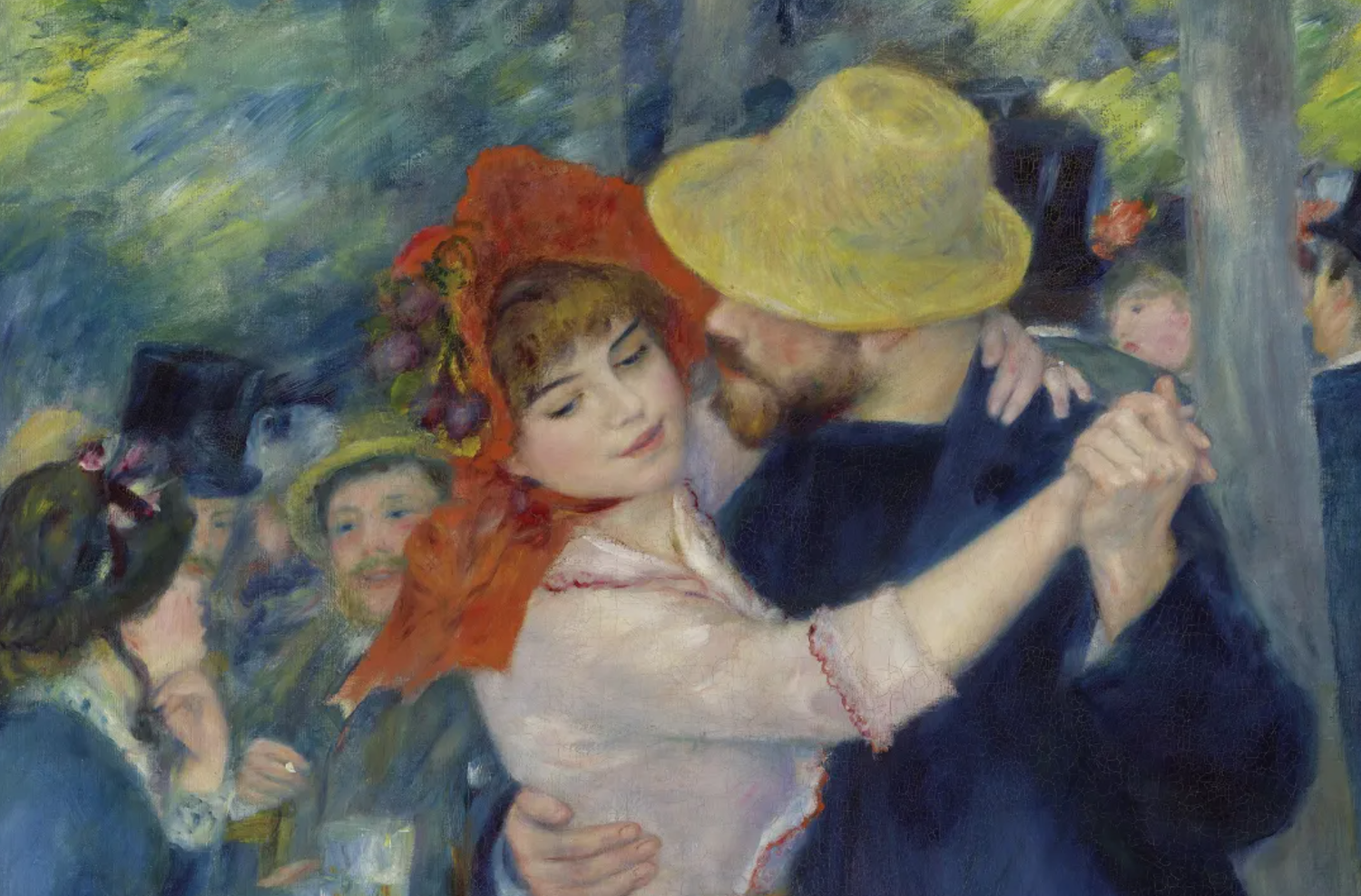
For older audiences, MODO gallery will soon be hosting a series of lectures in collaboration with Art and Culture Education CIC, aimed at exploring how “human intelligence evolves alongside AI, from education to industry, innovation, and the future economy.” Running from the 8th to the 19th of February, the lectures will feature speakers including Cambridge professor and clinical psychologist Simon Baron-Cohen, and Eryk Salvaggio, a researcher and artist whose work explores the social and cultural impacts of artificial intelligence.
 Comment / Top of the slops: the competitiveness of college dining4 June 2026
 Interviews / What’s the story behind Pages coffee house?8 June 2026
 News / News in Brief: Cambridge crowns, council confirmations, and competitive cricket8 June 2026
 Comment / The Cambridge drift1 June 2026
 News / Cambridge researchers produce ‘world-first’ AI vaccine6 June 2026
 Arts / Don’t rush me – I’m reading!9 June 2026
 Lifestyle / Don’t Cry at Me, Argentina – a next-year abroad story8 June 2026
- News / News in Brief: Cambridge crowns, council confirmations, and competitive cricket8 June 2026
 Science / Failure is the foundation of science8 June 2026
 Fashion / The hidden gems of formal fashion8 June 2026