Liverpool vs Manchester: the musical derby
Millie Wooler debates which city is really still the music capital of the north

It’s the age-old rivalry. The two largest cities in the North West – Liverpool and Manchester – seem to have been battling for decades over who has the right to the title of ‘music capital of the north’. Arguably, Liverpool is the cradle of the British music scene, The Beatles having defined what it is to be a successful pop group for more than six decades. But it was Manchester who stepped in at the end of the 1970s, when the British music scene had once again lost its way – at least, for those of us watching the punk bubble burst into two minute records of sneering and shouting (looking at you, Sex Pistols), and finding nothing else of any real meaning in the charts. Both cities have been invaluable to the British music scene, but who can take the crown?
Over the 64 years since The Beatles first released ‘Love Me Do’, the city has released a plethora of the great (or sometimes simply popular) acts. Even if you don’t recognise the name Orchestral Manoeuvres in the Dark – OMD for short – you definitely know their classic single ‘Enola Gay’. It has been one of the last songs played at nearly every party I have ever been to, and is now on several adverts. The distinctive synths seem to mark it out as a piece of classic pop, but OMD lyrics also often hide a deeply pertinent social message. Whether it’s the anti-war messaging of their 1980 single, or the anti-fascism of their most recent album, Bauhaus Staircase, this particular Merseyside band have a distinctive flair for mixing in true social relevance to a two-minute pop song.
“Liverpool has a vast and eclectic array of talent”
This is just as much the case with The Farm. Aside from my yearly argument over whether or not their single ‘All Together Now’ is a Christmas song (it is), this is another track to mix the supposedly-characteristic positivity of the city with the social bite of their lyrics.
Echo and the Bunnymen perhaps challenge this stereotype of the city’s enduring positivity against all the odds, but their music is just as central to the city’s scene as anyone else. Lead singer Ian McCullogh proved proud of his hometown when questioned on why he refused to leave it to seek fame. This Liverpool-pride seems to bind the city’s music scene, if nothing else will. Liverpool has a vast and eclectic array of talent, but, unlike Manchester, that talent was never brought under one house.
Jesus College alumna Tony Wilson has been immortalised in his home city for founding Factory Records, a shambolic but ultimately well-intentioned record label largely responsible for the post-punk and indie movements of the late 1970s and early 1980s. Without him, there would be no Joy Division, no New Order and no Happy Mondays, among many other definitive bands. In fact, there would be no Manchester sound.
Factory Records, however, will be better remembered for its mistakes. Under the belief that bands always fall apart after the deaths of their lead singers, the company sanctioned a single that would cost them five p per every sale. That single, ‘Blue Monday’ by New Order, went on to be the biggest selling 12” in history. When approached by a young man seeking to find a label for his new band, Wilson is reported to have told him to go and write a novel, instead. That band turned out to be The Smiths. And the related nightclub, the Hacienda, is memorialised in a book by Peter Hook subtitled “How Not to Run a Club”.
“In a city with that much talent, it’s hard to sort the wheat from the chaff”
But all this is in the past. If we want to debate who deserves the title now, we have to look to what the cities are doing to nurture new talent.
Manchester certainly has the name. Young bands, artists and creatives flock to the city, renting expensive apartments in the hope that they will be able to make a name for themselves. For me, it just seems all too easy for these bands to get lost. Arkayla, King No One, Callum Spencer and countless others all have what it takes to be the city’s next Smiths or Joy Division, but in a city with that much talent, it’s hard to sort the wheat from the chaff.
Liverpool seems to be pushing to promote its emerging talent – or, at least, Birkenhead is certainly pulling its weight. Every year, Birkenhead hosts the ‘Future Now’ festival, promoting rising bands from across the country in venues across the town, with Future Yard not only providing a year-round venue to continue this venture, but also providing the tools for those wanting to access other parts of the industry.
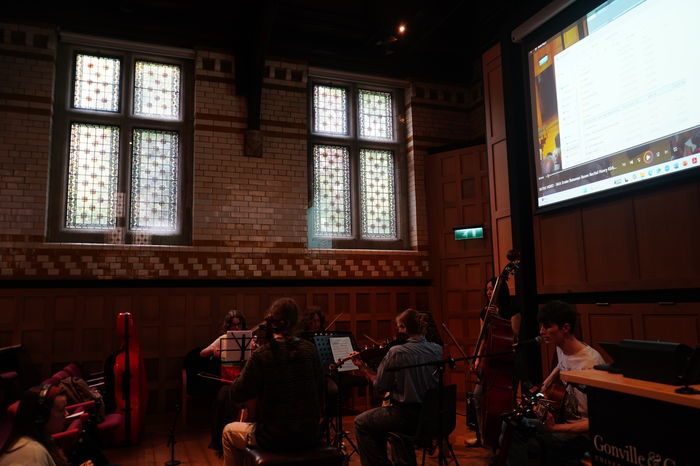
Liverpool, itself, is also helping new musical talent, too. Scottish singer Rianne Downey moved to the city and has since been ‘adopted’ by its people. She is one of the many smaller acts – alongside Red Rum Club, Casino and East Exchange – you frequently see filling up the city’s support slots. At least in terms of cradling new talent, the smaller, quieter city of Liverpool seems to have the edge.
In all, it doesn’t really matter whether you’re Manchester or Liverpool, though. If we’re defining who gets to be music capital of the north, you have to look at who has done the most consistently. With its small venues whose musical legacy stretches back decades, and returning artists always recalling how the city shaped their fanbase, the true crown goes to Leeds.
 News / Simon Goldhill resigns following sexual misconduct investigation16 June 2026
 News / News in Brief: Pokémon, planting, and the plague21 June 2026
 News / Join Varsity’s editorial team this Michaelmas22 June 2026
 Comment / How do we find exambiguity?22 June 2026
 Lifestyle / Far-flung foodie favourites21 June 2026
 Music / Liverpool vs Manchester: the musical derby23 June 2026
 Lifestyle / Not a pub, not a club: Cambridge nightlife’s best third spaces22 June 2026
 Fashion / Academic prestige or aesthetic appeal?22 June 2026
 Sport / Martina Abels Marti leads Newbroke to Cuppers victory against SJK amidst transgender ruling controversy22 June 2026
- Comment / How do we find exambiguity?22 June 2026