Between the lines of Little Women
Nabiha Ali believes this production promises to be an emotionally nuanced and fulfilling adaption of Alcott’s novel

One of the pitfalls of Louisa May Alcott’s Little Women is that it can so easily be watered down. It is, after all, a children’s classic, predominantly marketed as a childhood idyll of domestic life, sisterly squabbles and first love. In the quiet sanctity of the Queens’ Cafe, I sat down with co-directors Imogen Carter and Emily Megoran to hear more about their take on this beloved work.
When I ask how their approach might differ, given that we know so much more about Alcott’s life than her contemporary readers, Megoran, former Clare Literary Society president, points out that the novel’s autobiographical veneer is “already there”. It is clear that their version seeks to expound the novel’s enticing semi-autobiographical foundations with greater fervour: “We want to depict it from a meta-theatrical lens,” says Carter.
“The play will flicker between what March sister Jo chooses to fixate on, and what we, as an audience, can see objectively”
Blending together the two spans of the sisters’ lives, the play will flicker between what March sister Jo chooses to fixate on, and what we, as an audience, can see objectively. Though Greta Gerwig’s contemporary version of the story closes with the satisfying finish of Jo’s published work, Megoran and Carter stress how they want Jo’s writing to be a recurrent thread throughout the play. “Writing brings her joy and pain,” says Megoran: “Creating is her anchor.” She goes on to add how Jo’s writing acts as a kind of catharsis, because “the act of creating something removes you from it”. Audiences should therefore anticipate a play which oscillates between Jo’s literary spin on life in the March family, and the reality itself.
To tighten this analogy, much focus has been placed on optimising stage and theatre space. A metrodeck will be used to cordon off Jo’s writing idyll, the attic, from the rest of the stage space – working as a constant, hovering reminder of her craft. The left hand side of the stage will form the March house, doused with warmer lighting and cosily furnished. To the right will be the Laurence house which, as both directors inform me, will be “a bit more bare, tidier”. “We don’t want the play to be confined to the stage,” Carter adds, noting how the ADC’s surrounding space is rarely taken advantage of. It is clear that this is a play which thrives on the parallels its author delighted in.
“Life is more convoluted than that. Life isn’t just one tone”
For Carter, these paradoxes are embraced too by the Jo-Amy dynamic which the novel covers: “You have these two versions of strong, opinionated women,” she says, who are torn apart perpetually by their disagreements. She mentions her admiration for Amy, citing the budding artist’s qualms about her career: “Talent isn’t genius, and no amount of energy can make it so,” a line which reflects her own observations of theatre life – that persistent question of whether it will truly suit you in the end. Both directors admit that they have a particular soft spot for younger sister Beth, so often depicted as a fragile, subordinate character, but they argue that her preference to observe doesn’t make her any less convoluted than the rest. “Beth had her troubles as well as the others,” quotes Megoran who, like me, being an English student, can’t help but revert to the original text again. It is heartening to think of the production as one which will shed a particular spotlight on Beth March, so often overlooked.
I am eager to ask about the costume designs for the show. “Period-style dress!” says Carter, with an enthusiasm which I share. She references last term’s staging of Pride and Prejudice, saying that while it won’t be as traditional as the Austen staging, they are hoping to stick with conventional costumes.
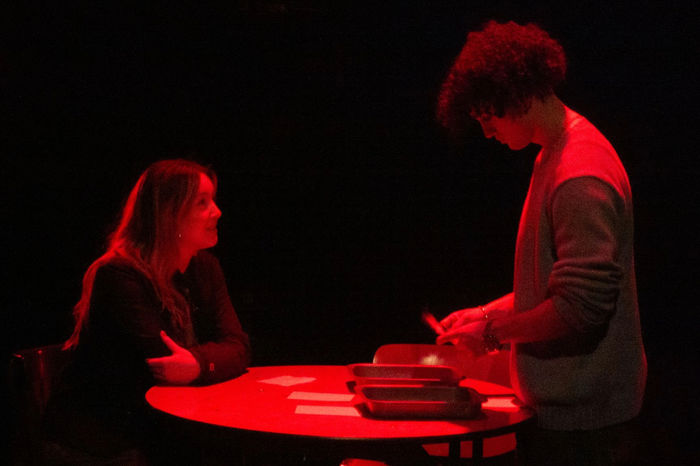
We end on a discussion of endings. For both directors, what Jo’s end proves is enlightening rather than a disappointment: that in a 19th-century fiction, ambition and love don’t have to be a balancing act. Rather, as Alcott demonstrates, Jo March deserves both. While the play won’t stray entirely from Alcott’s prescribed storyline, it is clear that this version is striving towards a unique interpretation. As Carter says: “Life is more convoluted than that. Life isn’t just one tone.”
As I make my way out of Queens’, I am cheered by the prospect of what I hope to be a sensitive and nuanced adaptation of the work so many, like myself, have loved.
Little Women will be showing at the ADC Theatre from 3rd to 7th of March 2026.
 Interviews / ‘You have to take it as it comes’: discussing content creation with Auden Barnes17 May 2026
 News / Science Park to ‘triple’ in size with £3bn investment21 May 2026
 News / Sons of imprisoned Saudi scholars urge Cambridge to call off deal with Saudi defence ministry22 May 2026
 Science / Forked over: dish-parity between college cafeterias17 May 2026
 Theatre / Crossing Points devastates the Corpus Playroom20 May 2026
 Sport / Fitzwilliam narrowly regain Cuppers trophy in tight affair with Selwyn22 May 2026
 Comment / The personal cost of reporting sexual violence at Cambridge22 May 2026
- News / Sons of imprisoned Saudi scholars urge Cambridge to call off deal with Saudi defence ministry22 May 2026
 Science / CamGraPhIC’s crusade to curb the AI energy crisis22 May 2026
 Film & TV / Hokum and the horror of guilt21 May 2026