Why do we associate The Nutcracker with Christmas?
Ahead of a run at the Cambridge Corn Exchange, Eleanor Baldwin muses on how this classic ballet became bound up in Christmas
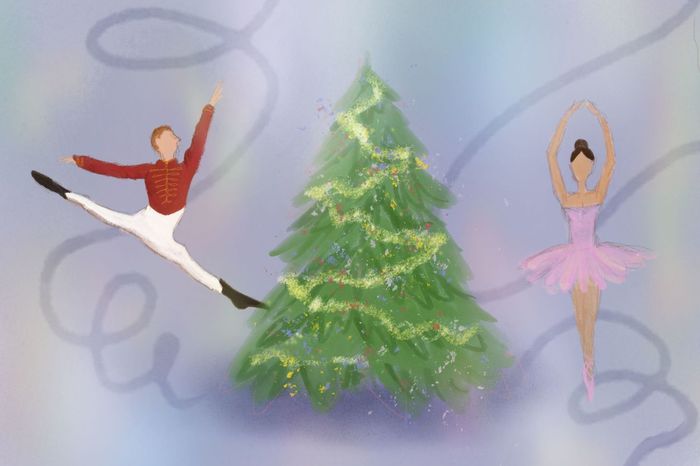
Every December, as WHAM defrosts and Mariah Carey awakens, another familiar ritual returns: The Nutcracker. More than a century after its 1892 premiere, Tchaikovsky’s ballet is one of the most renowned in the world; it remains a dependable Christmas companion as essential as mulled wine or last-minute panic present shopping. For many, myself included, The Nutcracker is the first ballet they see, and just as often it marks a young dancer’s first step onto a professional stage. Its annual return is therefore not merely a performance but a ritual – a quiet cycle of memory, tradition, and nostalgia. Its forthcoming run at Cambridge’s Corn Exchange underscores the ballet’s lasting appeal, leading me to ask the question: why has this particular ballet become a cultural shorthand for Christmas?
“Tchaikovsky’s score has become synonymous with Christmas”
Part of the answer lies in its aesthetic. Years ago, I watched Sir Peter Wright’s adaptation of the classic tale performed by the Birmingham Royal Ballet. As the longest-standing version, Wright’s production is widely praised for its magic and vivid storytelling, imbuing the traditional story with an iconic charm. What stayed with me most from that matinee performance was the staging, set against the backdrop of the live orchestra. On a stage covered with presents and framed by a towering Christmas tree, the opening scenes captured a world bathed in candlelight that felt perpetually on the brink of magic. As the audience, we are swept up alongside Clara; carried into a world veiled in snow. As I look back, this image glows with the brilliance of nostalgia, like the festive lights which illuminate the streets of Cambridge on a December evening.
The enchantment of The Nutcracker extends beyond its visual aesthetic. Tchaikovsky’s score has become synonymous with Christmas; melodies tucked behind holiday adverts and memories of childhood winters wrapped in ribbons. Nine months before the ballet’s premiere, a selection of its musical highlights was performed in a concert suite. This was an instant success, with encores requested for almost every piece. The magic of the score remains alive, the brilliance of its reception undimmed by time. A deserved favourite of many, the Dance of the Sugar Plum Fairy has a wintry delicacy that always entrances. The soft, bell-like sound of the celesta is whimsically reminiscent of the sound of snowfall. The ethereal landscape it captures is iconic, framing my memory of childhood winters. Through his music, Tchaikovsky moves his audience through two emotional worlds; from one full of festive and childlike excitement, to the fantastical and enchanted world of Act 2.
“Tchaikovsky’s score has become synonymous with Christmas”
Carried along one grand melody after another, the ballet’s structure is accessible, episodic, and visually indulgent. It asks little of its audience except to be delighted. Perhaps its endurance comes from the story’s deeper emotional core. Beneath the glimmer of the spectacle lies a simple narrative of transformation: a young girl stepping out of her familiar world, confronting fear and wonder alike, and returning changed. Christmas itself is built on this idea of transition – between years and versions of ourselves. The Nutcracker ritualises this shift, turning it into a dream we can revisit every December. It distils the idealised Christmas we half-remember from childhood, and half-invent to comfort ourselves as adults. And now, particularly in the whirlwind of term life, when it is easy to feel time running away with you, there is comfort in returning to familiar traditions.
Yet, crucially, the resilience of the ballet lies not in resisting change, but in embracing it. The Nutcracker endures precisely because it offers both continuity and a canvas for reinvention. One recent example is the McOnie Company’s reimagining, which transposed those familiar melodies onto a swinging jazz score. With a male hero at the centre, this version gave a close and intimate performance, with a live onstage band, that spoke to audiences who may not have felt represented by more traditional versions. As the figure of Clara shifts across productions, we are reminded that the ballet survives not by standing still, but by growing alongside its audience.
Above all, the balance between longing and escape is what defines The Nutcracker. It’s about growing up, as a coming-of-age story told through the dreams, hopes, and fears of one young girl. The bliss of a childish innocence lingers in its snowy and shimmering tableau, reminding us how easily that wonder once came to us and inviting us to reclaim it. And when the lights dim, and the overture begins, we’re reminded – for a fleeting moment – of the magic that keeps us returning every year.
The Nutcracker will run at Cambridge Corn Exchange from the 29th to the 31st of December 2025.
 Comment / Top of the slops: the competitiveness of college dining4 June 2026
 Interviews / What’s the story behind Pages coffee house?8 June 2026
 News / News in Brief: Cambridge crowns, council confirmations, and competitive cricket8 June 2026
 Comment / The Cambridge drift1 June 2026
 News / Cambridge researchers produce ‘world-first’ AI vaccine6 June 2026
 Arts / Don’t rush me – I’m reading!9 June 2026
 Lifestyle / Don’t Cry at Me, Argentina – a next-year abroad story8 June 2026
- News / News in Brief: Cambridge crowns, council confirmations, and competitive cricket8 June 2026
 Science / Failure is the foundation of science8 June 2026
 Fashion / The hidden gems of formal fashion8 June 2026