
Commercial Feature
Your App Idea is Great. Now, Prove It’s Needed.
Okay, I get it. You’ve got the idea. The one that woke you up at 3 a.m. It’s going to change how students study, socialise, or survive on beans. You’re buzzing. You want to open your laptop and start building.
Don’t.
Or at least, don’t yet. Because here’s the brutal truth they don’t teach you in lectures: most student app projects fail before they even launch. And it’s not because the code was bad. It’s because they built something no one was waiting for. They solved a problem that didn’t exist, or they ignored three other apps already solving it better.
Your first, most important job isn’t to be a coder. It’s to be a detective. A market detective. And you need to start your investigation before you write line one.
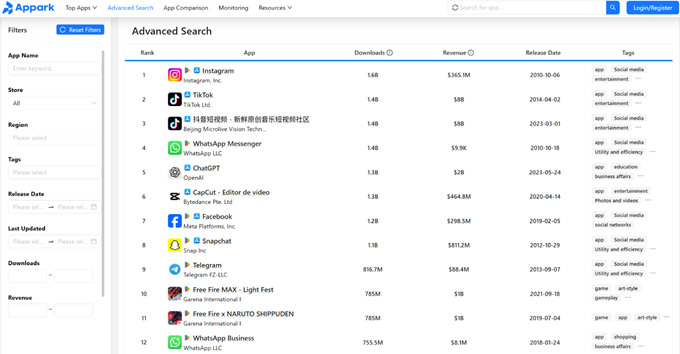
Your Crime Scene: The App Store. Your First Clue: Who’s Already There?
Right now, you’re probably looking at the “Top Charts.” That’s a mistake. Looking at TikTok and Monzo is like looking at Amazon and Tesco when you’re planning a small bakery. They’re irrelevant. You need to look at the other bakeries. The local ones. The new ones that just opened down the street.
This is where real tools come in. You need to move beyond the App Store’s useless search bar. You need to do competitor app discovery like a pro. This means asking the app store a super-specific question: “Show me every app launched in the UK in the last 6 months, aimed at student mental health, with a meditation component.” The list you get back is your actual competition. Not the giants. These are the other students, the other startups, in your exact arena. This is your starting line.
The “Post-Mortem” on Your Rivals (Before You’re Dead)
Finding them is step one. Now you need to perform an app competitor analysis. This isn’t creepy stalking; it’s smart research.
Set up a dashboard. Add every relevant app you found. Now, become a forensic accountant of their strategy.
- Watch their updates. When they push a new version, read the notes. What are they focusing on? What feature are they betting on next?
- Read their one-star reviews. This is pure gold. This is where you find out what users hate about them. Are people complaining it’s too expensive? Too complicated? That it’s missing one obvious feature? That’s your opportunity. Your app idea should start as a solution to their users’ complaints.
- Track their momentum. Is their download rate flatlining? Are they sinking in the rankings? This tells you what doesn’t work.
This process turns your “great idea” into a “strategic hypothesis.” Instead of “I’m building a revision app,” you can say: “I’m building a revision app that focuses on active recall, because the two most popular apps are focused on passive note-taking, and their users are complaining about poor exam results.”
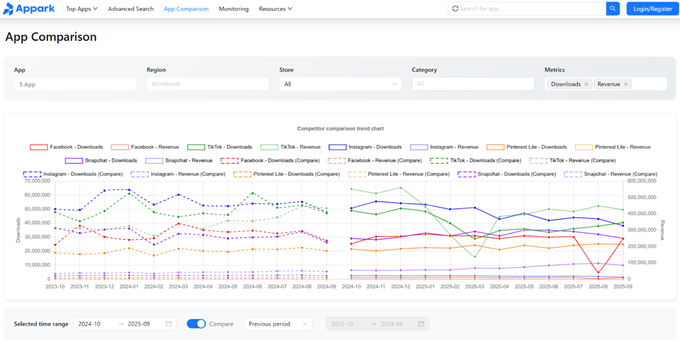
Why This is Your Unfair Advantage
As a student, you have one massive edge over big corporations: agility. You can pivot fast. But you can only pivot if you have the information to know when to pivot.
Doing this deep dive before you build does three things:
- It saves you 100 wasted hours building the wrong thing.
- It makes your pitch bulletproof. Imagine telling a judge or investor: “We know App X and App Y have 50% of the market, but their weakness is Z. Here’s the data. Our app solves Z.”
- It teaches you the single most important start-up skill: finding a market gap and proving you can fill it.
So put the IDE down. Pick up the analyst’s hat. The most successful founders aren’t the best coders; they’re the ones who did their homework. Go do yours.
 News / Missing Sidgwick sculpture spotted in Oxford 1 April 2026
 News / Downing law society banned from holding formals in College for a year31 March 2026
 Features / Hyper-productive or healthy? The rise of wellness culture at Cambridge1 April 2026
 News / Homerton plans to convert former Labour Club into student accom1 April 2026
 News / International students complain of ‘impossible choice’ under Cambridge travel disruption policy28 March 2026
 Lifestyle / Take a punt, and try canoeing!3 April 2026
 News / Cambridge alumnus Matt Brittin appointed BBC director-general3 April 2026
 Arts / In defence of decorative poetry3 April 2026
 News / Record-breaking £190 million donation will fund new Cambridge School of Government2 April 2026
 Interviews / Cambridge SU presidents on divestment, engagement and the role’s challenges1 April 2026
