
Commercial Feature
The Guide to Migrating Your Business to Microsoft Dynamics 365 Business Central Cloud
A 2024 cloud industry survey found that 59% of organizations anticipated cost overruns that year, yet most ERP migration teams still underestimate where the money goes. Business Central cloud https://global-mediator.com/business-central-development-services is where mid-market companies land after years on Dynamics NAV or on-premises BC. Most projects derail in scoping and data cleanup, not in the technology itself. Execution is the hard part.
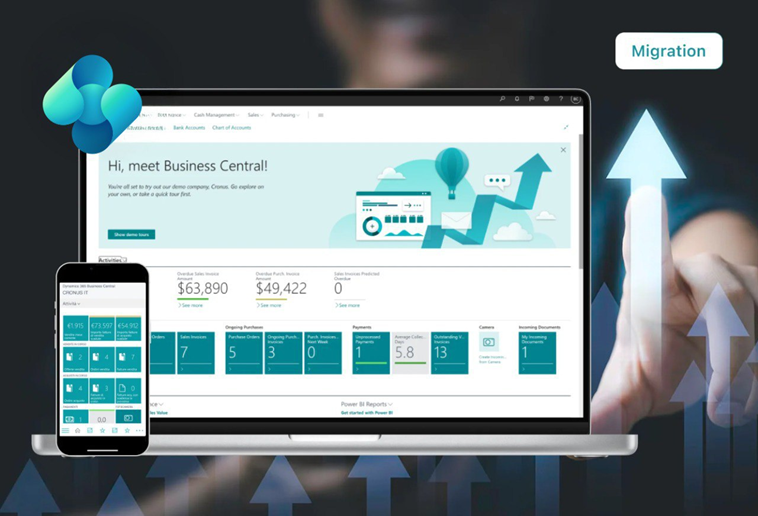
Why Migrate to Business Central Cloud: Key Benefits for Businesses
On-premises ERP carries a compounding cost structure. Infrastructure, patching, and hardware refresh cycles consume budget without adding new capability. Organizations that have moved to Business Central cloud report concrete operational benefits: infrastructure responsibility shifts to Microsoft, upgrade sprints disappear, and finance teams run current functionality automatically. Compliance updates and Copilot access arrive with the platform, not through separate upgrade projects. Those are structural benefits on-premises deployments do not offer.
Steps for Preparing Your Business and Data for Migration
Most migration preparation starts in the wrong place. Teams jump to data cleanup before they know what the system contains, and scope surprises follow. The correct starting point is a codebase analysis: a review of every customization and legacy object in the existing ERP. Each modification must be evaluated: kept, replaced with a standard extension, or dropped. Without a clear review before any migration process begins, organizations commit to a project with an unknown interior.
With the codebase picture established, preparation follows defined steps:
- Audit master data: customers, vendors, items, chart of accounts, removing stale entries that inflate migration scope and create issues post-go-live.
- Map fields between the legacy system and Business Central table structures, surfacing mismatches before they become cutover blockers.
- Run duplicate detection across all entity types before export, preventing errors that slow user adoption after launch.
After cleanup, teams define a cutover strategy. Most businesses migrate open balances only, leaving historical data in a read-only archive. This reduces scope without disrupting operations continuity. The scope is known.
Tools and Resources for a Smooth Migration to Business Central
For standard upgrades from Dynamics GP, NAV, or on-premises Business Central, Microsoft’s native cloud tools cover most scenarios without third-party support. Highly customized systems benefit from partner-built services that handle field-level transformations and run iterative test cycles: a process step that surfaces data issues automated tools miss. Configuration packages let business users validate data in-platform before committing, with no developer involvement.
How to Handle Business Operations During the Migration Process
The cutover window is where most migration pain originates. Running both the legacy system and Business Central in parallel for two to four weeks cuts post-go-live incidents for businesses with complex operations or regulatory obligations. Teams that skip this process in finance-heavy environments pay more in incident recovery than the overlap would have cost.
A practical set of tips for managing go-live: assign dedicated support services for the first post-launch weeks and deliver role-based training close to go-live rather than weeks before. Both measures reduce noise and accelerate adoption. Implementation services that include go-live support are worth the investment for this reason.
Final Thought on a Structured Migration to the Cloud
Technical readiness is not migration readiness.
Three tips for a cleaner outcome: complete the codebase analysis before touching data or tools; choose services based on actual system complexity; align adoption planning with technical steps from day one. Organizations that treat Business Central cloud as an operational platform requiring structured adoption report steadier post-launch performance and reductions in support costs.
 News / C4P vandalises University offices over divestment10 June 2026
 Comment / Top of the slops: the competitiveness of college dining4 June 2026
 Lifestyle / A town with a view11 June 2026
 Theatre / The recipe to success this Easter term 10 June 2026
 Comment / ‘On the Poverty of Student Life’: sixty years on10 June 2026
 Lifestyle / Confessions of a May Ball crasher12 June 2026
 Lifestyle / May Week horoscopes12 June 2026
 Lifestyle / The finalist’s bucket list12 June 2026
 Theatre / All of Cambridge is a stage12 June 2026
 Music / ‘It’s feminine intuition’: predictions for OR312 June 2026
