Meet the Cambridge physicist who advocates for the humanities
Dhruv Shenai speaks to Professor Siddharth Saxena about the intersection of physics and history, and why more scientists should get involved in world politics
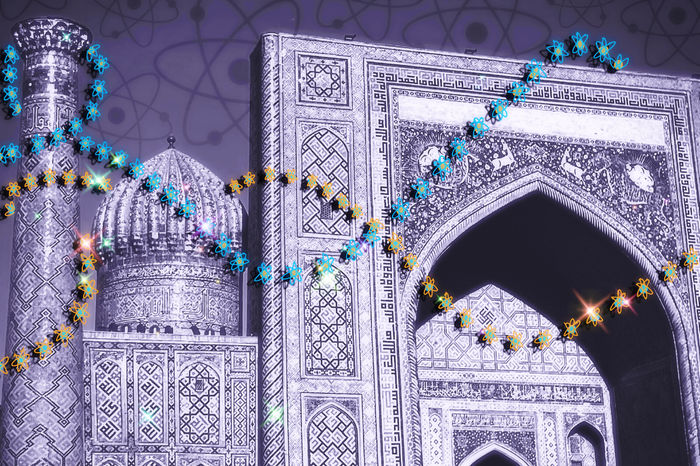
As the head of the Cambridge Central Asia Forum, Professor Siddharth (nicknamed Montu) Saxena has spent his life advocating for international relations and anthropology. The funny thing is, he is a research professor in Cambridge’s physics department. To find out how this happened and whether scientists should be more involved in world politics, I spoke to him in his office at the Cavendish.
Montu was brought up in the bustling, historic city of Lucknow, India. His father was a Professor of Medicinal Chemistry, and his mother a linguist, and he could not help but absorb the wealth of knowledge and history around him. “I couldn’t pick a side!” he jokes.
“I couldn’t pick a side!”
Montu pursued his studies in physics due to its elegance and capacity to explain how things work. “Physics is my natural place to go. Take this glass and the water inside it,” he says, dragging the glass across the desk. “They’re made from the same elements, but they don’t look the same.” The point, he explains, lies not in the composition but the structure.
He explains how this mismatch lies in the arrangement of the atoms within each object: “understanding these interactions is what science is.” For Montu, his fascination with the arrangement of atoms and electrons is what drives his research in condensed matter physics and superconductivity. Curiously, I felt like he wasn’t just talking about a glass of water, but also about the cultures he studies.
And that pulled me towards the one burning question I had. Where did his specialisation in Central Asia (the region encompassing countries such as Kazakhstan, Uzbekistan, and Tajikistan) come from?
“His scientific mindset applied in anthropology allows him to see international relations for what they are”
Montu tells me how, as a child, he found foreign influences in his vocabulary. He would ask his mother about the etymology of a word, only to find, on this occasion, she did not know. He later realised that these words came from Uzbek influences, carried along the Silk Road centuries before. This cultural fusion between Persian and Indian culture makes Lucknow the unique place it is. Montu was obsessed and continued to research more, unpacking the cultural history of the Central Asian region.
For Montu, this connection was real: “Bukhara and Lucknow are both places where the finer things in life are explored, from slow-cooked food to the arts,” he clarifies. “Lucknow is famous for its embroidery, but that is also influenced by Uzbek embroidery. Even when Tsarist Russia was invading Central Asian Khanates, India was facing similar trauma with the British.”
It’s clear that Montu sees a profound appreciation of culture as a route to self-discovery. For him, this has meant an involvement in teaching and international development; he seeks to bring awareness to a historic but underappreciated region. His latest article on Critical Minerals in Central Asia explores just how important the region is in the 21st century.
“Scientists need to understand rather than care about the sociopolitical consequences around them”
As Montu explores ultracold states of matter in physics, he seeks to understand their exotic properties and true nature. In the same way, his scientific mindset applied in anthropology allows him to see international relations for what they are.
For example, drawing on his understanding of the colonial histories of so-called ‘third world’ countries, Montu interprets modern resurgences of Hindutva and White supremacy as symptoms of a deeper capitalist imperialism. “They’re less for something, more against something,” observes Montu. So, should scientists care more about politics and world history?
“Scientists need to understand rather than care about the sociopolitical consequences around them,” asserts Montu. To illustrate this, he offers a stark analogy. “The pen has a purpose, but theoretically, you could kill someone with it. It has a duality.” He likens the pen to the technology we use. In the wrong hands, a useful technology can become harmful. It is therefore necessary for scientists to advise on policy-asking “what’s the best way to use this technology for society?”
In the same way, a knowledge of politics and history can advise scientists to evaluate current affairs. In short: yes, we should try, as our scientific mindsets could provide a useful perspective to society.

And it is fair to say that there is no better time to get involved. With climate breakdown, brazen neo-colonialist policies and worsening racial tensions as a few examples, it is time for scientists to call it out.
No matter how tempting it is for scientists to stay clear of politics–why avoid questions when you can answer them? It may be time for the brave few to step up. After all, we haven’t had a prime minister from a STEM field since Margaret Thatcher.
In refusing to separate science from the humanities, Montu embodies a simple conviction: “If you know your history, then you would know where you’re coming from.”
 Comment / Top of the slops: the competitiveness of college dining4 June 2026
 Interviews / What’s the story behind Pages coffee house?8 June 2026
 News / News in Brief: Cambridge crowns, council confirmations, and competitive cricket8 June 2026
 Comment / The Cambridge drift1 June 2026
 News / Cambridge researchers produce ‘world-first’ AI vaccine6 June 2026
 Arts / Don’t rush me – I’m reading!9 June 2026
 Lifestyle / Don’t Cry at Me, Argentina – a next-year abroad story8 June 2026
- News / News in Brief: Cambridge crowns, council confirmations, and competitive cricket8 June 2026
 Science / Failure is the foundation of science8 June 2026
 Fashion / The hidden gems of formal fashion8 June 2026