New year, new room, new you
Rose Firth explores the science-backed ways you can refresh your room for 2026
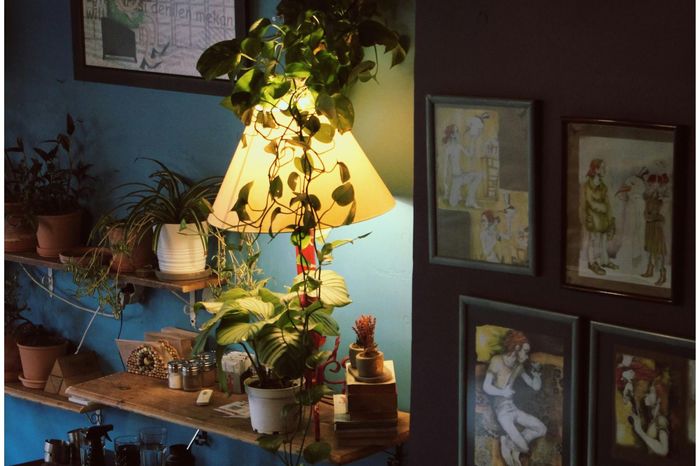
With a new year upon us, many will have pondered resolutions for 2026, and perhaps considered the lifestyle changes that could pave the way for a fruitful Lent term. Where better to begin implementing change than the place we spend a third of our lives – the bedroom.
Our physical surroundings influence us in many ways – affecting, amongst other things, our mood, sleep patterns and stress levels. Science suggests that simple, low-cost adjustments to home décor could help to transform your room into a sanctuary that promotes well-being. So, where to begin?
Let there be light! (just not too much)
Getting a good night’s sleep is fundamental to a healthy lifestyle. Your sleep-wake cycle is regulated by your body’s internal clock, known as your circadian rhythm. And this internal clock is synchronised to the outside world by a series of environmental cues called zeitgebers (a German word meaning timegiver), the most important of which is light.
“Where better to begin implementing change than the place we spend a third of our lives – the bedroom”
Today, people spend most of their lives indoors, basking under electric light and gazing at screens. To explore the effect of this highly illuminated lifestyle on the circadian system, one study provided participants with wearable sensors positioned at eye level to measure light exposure in the home. Researchers found that the average home’s lighting was sufficiently bright such that it could suppress melatonin (the hormone that promotes sleep) by about 50% in the average person. Moreover, homes with energy-efficient lights, such as LEDs (which are typically enriched in blue light), had almost twice the impact on the part of the eye that controls our internal clock compared to traditional incandescent counterparts.
But, fear not, energy-efficient lighting can be optimised to better support your circadian system. Scientists suggest implementing warm LEDs (~2700 K), along with dimmable lighting, to help you hit the hay. This Christmas, I was fortunate to be gifted a sunrise alarm clock (with additional sunset functionality!) that gradually changes brightness to help align the sleep-wake cycle. I’d recommend this bright idea to anyone who finds waking up in the morning a battle.
Roses are red, violets are blue…
… think carefully when choosing your bedroom’s hue.
Colours are made of three attributes (hue, lightness and saturation), and can have psychological effects, influencing emotions and mood. But which colour works best for a bedroom? To explore this question, a study conducted by the University of Bologna housed students for one year in a residence comprising six structurally-identical buildings, each with a differently coloured interior. Results revealed the students tended to favour living in cooler hues, ranking the interiors blue, green, violet, orange, yellow and then red in order of preference. Moreover, students living in the blue interior reported feeling calmer and perceived the space as more conducive to study.
“Students in blue rooms felt calmer and more ready to study”
The ecological valence theory proposes that people prefer certain colours based on their affinity towards environmental objects of that colour. From this standpoint, individuals may prefer blue and green because of their associations with water and plants. As painting your university room blue-green is unlikely to leave you in the college’s good books, consider introducing an oasis through bed linen, posters and rugs … it might just make your Lent term that bit more serene.
Bonus science-backed tips
Feeling stressed about that exam in a couple of weeks? Anxious about the draft you haven’t yet started? Here are a few extra tips to help you create a mood-boosting space that supports your study this term.
Try integrating natural elements, like plants, into your room – this has been associated with enhanced positive emotions and greater physiological relaxation during intellectually demanding tasks (something I’m sure you’re all too familiar with).
Keep it tidy! Clutter within a home has been shown to predict poorer life satisfaction, reduced mental well-being and negative emotions. Over the festive period, I myself experienced negative emotions after venturing into the unkept bedroom of my teenage sibling.

Lastly, don’t swerve the curve. Scientists found that emotionally neutral sharp-angled objects are associated with greater activity in a fear-processing region of the brain, the amygdala, compared to curved objects. It is postulated this occurs because sharp objects can be subconsciously linked to potential threats. So, to embrace curvature and soften your décor, consider adding furnishings with rounded edges, such as oval mirrors or circular cushions.
In a nutshell, science suggests that a tidy blue-green room filled with curves, plants and warm lighting may be the key to more tranquility in 2026. And don’t overlook the importance of adding your own flair – that cushion with your dog’s face on and your much-beloved statue of a gnome should still have pride of place.
 Interviews / ‘You have to take it as it comes’: discussing content creation with Auden Barnes17 May 2026
 News / Science Park to ‘triple’ in size with £3bn investment21 May 2026
 News / Sons of imprisoned Saudi scholars urge Cambridge to call off deal with Saudi defence ministry22 May 2026
 Science / Forked over: dish-parity between college cafeterias17 May 2026
 Theatre / Crossing Points devastates the Corpus Playroom20 May 2026
 Arts / The modern, Cambridge ‘Paragone’23 May 2026
 Sport / Fitzwilliam narrowly regain Cuppers trophy in tight affair with Selwyn22 May 2026
 Comment / The personal cost of reporting sexual violence at Cambridge22 May 2026
- News / Sons of imprisoned Saudi scholars urge Cambridge to call off deal with Saudi defence ministry22 May 2026
 Science / CamGraPhIC’s crusade to curb the AI energy crisis22 May 2026