News in Brief: creativity cuts, curtailed cycle crimes and Cavendish’s quantum computer
A light-hearted round up of this week’s stories, from reductions in cycle theft to quantum computing
Young people discouraged from creative subjects, Cambridge study finds
A Cambridge study has found that young people, particularly girls and those from low-income backgrounds, are being pushed away from creative subjects considered ‘low-status’ or financially ‘risky’. Using educational records from 1.7 million English pupils, researchers found that nearly half enjoyed studying creative subjects at the age of 14, but that just 1 in 25 entered creative occupations by their early 30s. While participation in creative subjects falls at every stage of education, this trend is especially pronounced for female and low-income students. Professor Sonia Ilie, of Cambridge’s Faculty of Education, blamed “wider societal structures, inequalities, cultural messaging and pressure on schools,” which means these students are “less likely to reach the point where studying for a creative degree is even an option”.
Cambridge cycle theft falls 70%
Bicycle theft in Cambridge has dropped by 70% since 2019, according to statistics released by Cambridge City Council. The Cambridge Community Safety Partnership, a multi-agency task force formed in 2019 to tackle the issue of cycle theft, has implemented a number of crime reduction measures – this includes 16 CCTV cameras covering 650 cycle parking spaces in the city centre, as well as a free bike marking scheme across the city. The cycle parking at Queen Anne Terrace, opposite Parker’s Piece, has been upgraded as part of the partnership. The council also encourages people to “love, list and lock” their bikes, by recording details such as the bike’s make and model, registering bikes on the national Bike Register and securely locking bikes up when not in use.
Cambridge to host the UK’s ‘most powerful quantum computer’
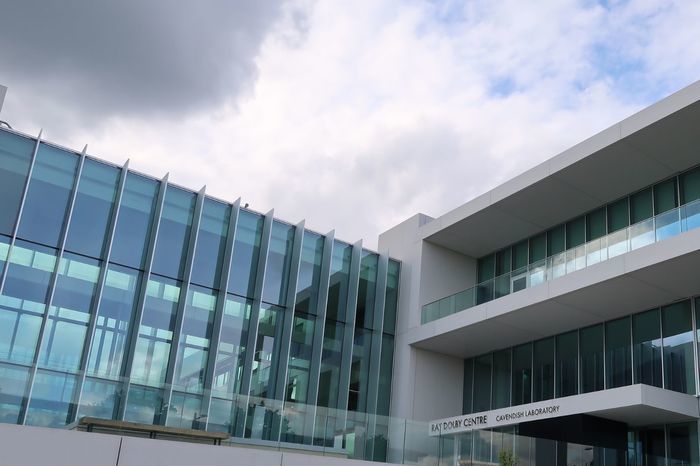
The University will host the UK’s “most powerful quantum computer” at the Ray Dolby Centre, the new home of the Cavendish Laboratory. The 256-qubit quantum computing system is the first commercial-scale quantum computer to be housed at a UK university, and will be accessible to “researchers and early-stage companies” from across the UK via the National Quantum Computing Centre. The scheme is part of a $90 million collaboration with quantum computing company IonQ. The University also plans to use this development to strengthen the existing Cambridge to Bristol UK quantum network.

Cambridge heats up?
Cambridge City Council is working on plans for a £121 million heat network linking council and University buildings across Cambridge. The proposed network would use air and river-source heat pumps, facilitated by a transition from gas to electric boilers. The project aims to cut emissions by 93% over 40 years, while avoiding the cost of having to decarbonise sites like the Guildhall and Corn Exchange. The University of Cambridge, 16 colleges and Anglia Ruskin University are currently considering where to connect the network. A final decision on the project is expected by March 2028.
 Comment / Top of the slops: the competitiveness of college dining4 June 2026
 Comment / The Cambridge drift1 June 2026
 News / Cambridge researchers produce ‘world-first’ AI vaccine6 June 2026
 News / Two more women allege sexual harassment by classics professor Simon Goldhill 28 April 2026
 Features / One big happy (college) family?4 June 2026
 Science / Failure is the foundation of science8 June 2026
 Fashion / The hidden gems of formal fashion8 June 2026
 Interviews / What’s the story behind Pages coffee house?8 June 2026
 Theatre / ‘Where does actor begin and puppet start?’7 June 2026
 Music / T.S. Eliot meets Eurovision: LYR + Natalie Wildgoose at The Storey’s Field Centre7 June 2026