Construction begins on controversial Queens’ accommodation
The £34m plans involve building four new accommodation blocks and refurbishing two others

Construction has begun on new postgraduate accommodation at Owlstone Croft, an accommodation campus for Queens’ College in Newnham ward.
The campus has been shut since the start of the academic year, with the College’s domestic bursar informing students that the closure could last for up to three years. However, if there are no delays, the project is expected to be completed by summer 2027.
The £34 million redevelopment involves the construction of four new accommodation blocks, as well as the refurbishment of two existing ones. The project also involves the extension of an existing café and gym, along with the construction of a cycle store and seminar room.
The accommodation will contain a mixture of single and double rooms, including 60 new rooms and 87 refurbished ones. The blocks are being built according to Passivhaus sustainability standards, through the incorporation of heat pumps, solar panels, and a rain garden.
John Stedman, project director for Morgan Sindall – the construction company overseeing the development – said: “Students deserve a place where they can study and unwind, and we’re so proud that our development plans will support a more fulfilling living experience for them.
“With these high-quality developments that remain in keeping with Queens’ College’s historic feel, we will create a comfortable and inviting space that students can truly consider home throughout their academic journey.”
The project has not been without controversy. In September 2022, students at Queens’ launched a petition to stop the plans, which they said posed “a significant threat to biodiversity” in the adjacent Paradise Nature Reserve.
Similar objections were made by the local group Friends of Paradise Nature Reserve and the nearby Newnham Croft Primary School. However, the College cited an assessment that predicted a 51% net gain in biodiversity due to the creation of new habitats as part of the development.
In January 2023, the City Council rejected the plans due to the “excessive height, scale, and massing” of the buildings, as well as the impact on the local landscape and bat populations. However, in November, Queens’ won an appeal of this decision, as the planning commissioner was satisfied with the College’s intention to “minimise impacts on and provide net gains for biodiversity”.
Friends of Paradise Nature Reserve announced plans for a “final determined effort” to pursue legal action against the College in January 2024, to no avail.
A year later, a local referendum approved a neighbourhood plan which included regulations to protect bat populations. The new rules cannot impact plans that have already been approved, but they could make future construction more difficult.
Local councillor Jean Glasberg said the referendum was not explicitly aimed at preventing further development at Owlestone Croft, but that it “might have prevented it” had the proposals been implemented earlier.
Glasberg, who is also a member of Friends of Paradise Nature Reserve, commented: “While Queens’ is celebrating their new development, local residents are mourning the impact on Paradise Nature Reserve and the habitats and wildlife there.”
He added: “The College’s claim to increase biodiversity on the site is belied by their first act, which was to fell a line of healthy, mature poplar trees in Protected Open Space on the boundary with the Nature Reserve. These were a key f[l]ight path and foraging area for at least 8 species of bats, including the rare barbastelle.”
Another member of the organisation, Gabriele Reifenberg, said: “Those living on the east side of Owlstone Road have suffered their houses shaking when preparatory work was undertaken, and now have cranes, high scaffolding and the noise of building work to contend with for 2/3 years.”
Reifenberg also highlighted the “detrimental effect” of the development on a nearby lake, as well as the issues of “noise and light pollution”.
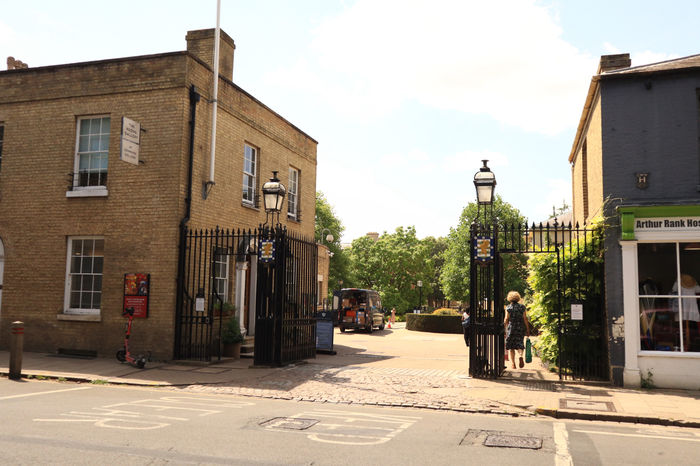
A spokesperson for Queens’ said: “The proposals for Owlstone Croft have been subject to extensive scrutiny over a number of years, including detailed assessment through the planning process and subsequent appeal. That process concluded with approval for the scheme, with recognition that it would deliver a measurable net gain in biodiversity alongside wider environmental benefits.
“This project reflects a broader, strategic commitment across the College to decarbonise our estate and support our environmental policy on our road to net zero. We are pleased that this has been recognised recently through the Erasmus Building, which was named runner-up with a joint City Council and Cambridge Forum for the Construction Industry (CFCI) award.
“With construction now underway, the College’s focus is on delivering the project responsibly and in line with those commitments. This includes careful management of construction impacts, continued engagement with stakeholders, and ensuring that the completed development provides high-quality, sustainable accommodation that supports the College’s long-term decarbonisation ambitions. Projects such as Erasmus and Owlstone Croft demonstrate how we are embedding low-carbon design and environmental performance into both new developments and the refurbishment of existing buildings.”
 Comment / Top of the slops: the competitiveness of college dining4 June 2026
 Interviews / What’s the story behind Pages coffee house?8 June 2026
 News / News in Brief: Cambridge crowns, council confirmations, and competitive cricket8 June 2026
 Comment / The Cambridge drift1 June 2026
 News / Cambridge researchers produce ‘world-first’ AI vaccine6 June 2026
 Arts / Don’t rush me – I’m reading!9 June 2026
 Lifestyle / Don’t Cry at Me, Argentina – a next-year abroad story8 June 2026
- News / News in Brief: Cambridge crowns, council confirmations, and competitive cricket8 June 2026
 Science / Failure is the foundation of science8 June 2026
 Fashion / The hidden gems of formal fashion8 June 2026