SU launches referendum on amending its constitution
Voting will take place at the same time as elections for next year’s sabbatical officers
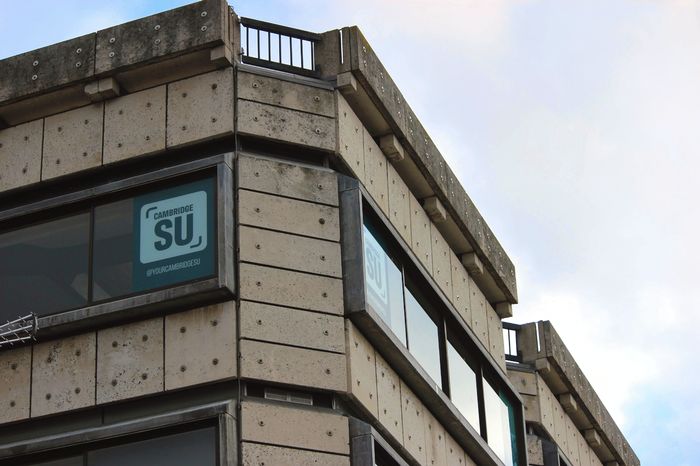
The Students’ Union (SU) is holding a referendum on whether to update its governing document, known as the Articles of Association.
Under SU rules, the University is required to review the Articles at least every five years. The trustees of the SU can propose changes to the document, but these must receive approval from the University Council, as well as from students in a referendum.
Only a simple majority of both undergraduate and postgraduate students is needed for the changes to pass. However, a minimum of 2000 students must vote for the results to be valid.
Voting is set to open at 9am on 23 February and close at 3pm on 26 February. During this time, students will also be able to choose next year’s sabbatical officers.
The new Articles make several changes to the board of trustees, including formalising the current situation in which two people can be chair and removing the requirement for the deputy chair to be an external trustee (not a student or employee of the SU).
While currently trustees can ignore a student vote if it would damage the SU materially or legally, the updated document lets the board prevent votes altogether. However, they would need to “reasonably consider” if the decision “has or is likely to” cause these harms – a slightly higher standard than exists at the moment.
The SU explained their reasoning for this change: “In a world of increasingly hostile rhetoric, it’s important that trustees are able to protect students in a situation where SU democratic processes are used to shield hateful and illegal speech. This is a provision we hope to never use, and would only use where the question being asked is itself abusive (e.g. racist rhetoric dressed up as a question). The threshold for exercising this power has also been raised to protect democracy in the union.”
Student trustees, who sit on the board but are not sabbatical officers, would be able to serve three instead of two consecutive or non-consecutive one-year terms, in order to allow “a greater long-term focus for the SU”.
External trustees would still only be able to serve two three-year terms. However, both types of trustee would no longer need approval from the Student Council (the body comprising sabbatical officers, JCR and MCR presidents, and academic representatives) when continuing for a consecutive term.
Any trustee – as opposed to just external trustees – could be removed by a unanimous vote of the other board members. However, the SU emphasises that “the threshold for this intervention is extremely high”.
The explicit requirement for an equal number of undergraduate and postgraduate trustees would also be abolished. However, the SU says it will “endeavour to retain generally balanced representation on the board”.
The new document allows more issues to be decided by referendum, and prevents these topics from being discussed in SU meetings for a year after the vote.
The Articles have also been updated to reflect the slashing of six sabbatical officer roles in October 2024. Currently, only the undergraduate and postgraduate presidents are guaranteed positions as trustees, while up to three other sabbatical officers can be elected to the board.
In 2024, the SU made its ‘liberation’ campaigns independent of the institution, and abolished their sabbatical officers. The roles of welfare officer – as well as access, education, and participation officer – were also abolished, and replaced with three vice-presidents.
The new Articles therefore remove the obsolete limit of five sabbatical trustees, making them all board members, as well as “major union office holders” for the purposes of the Education Act.
The amended document changes the name of Cambridge Students’ Union to The University of Cambridge Students’ Union, and explicitly includes intermitting students as members.
Before 2019, Cambridge’s undergraduate and postgraduate students’ unions were separate. The updated Articles remove passages detailing the temporary arrangements in place during the merger.
There are also numerous minor changes, including removing the current “rigid committee structure” from the Articles to enable greater flexibility; simplified processes for amending governing documents; and giving the trustees authority over certain rules currently in the SU bylaws.
This latest referendum follows two held last term: one on disaffiliating from the National Union of Students (NUS), and another about whether the SU should campaign for arms divestment. Both measures easily passed, albeit with low turnouts.
 Comment / The Cambridge drift1 June 2026
 News / Cambridge psychologist warns against blanket social media ban for under-16s1 June 2026
 News / News in Brief: Corpus climbing, climate cash, and commendable contributions1 June 2026
 News / University support staff strikes end after month of action2 June 2026
 Music / We need to talk about Kendrick2 June 2026
 Theatre / Bold beginnings in the Corpus Playroom 3 June 2026
- Music / We need to talk about Kendrick2 June 2026
- News / University support staff strikes end after month of action2 June 2026
 Arts / To the letter2 June 2026
- News / Cambridge psychologist warns against blanket social media ban for under-16s1 June 2026