Botanic Garden uses AI for interactive ‘Talking Plants’ exhibition
The Gardens described the exhibition as a ‘live experiment’
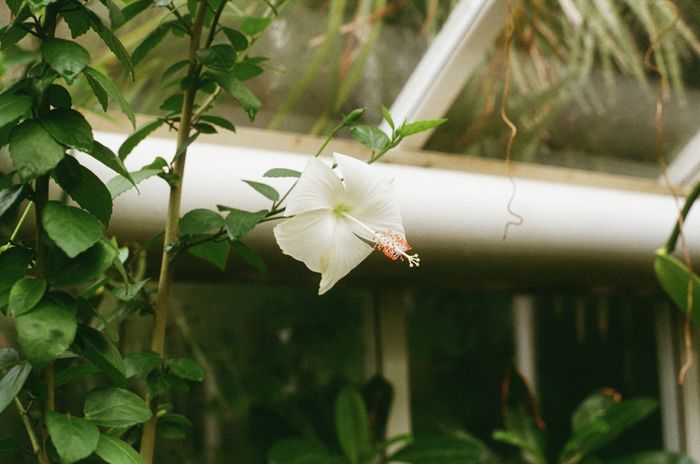
Cambridge University Botanic Garden has introduced generative AI chatbots to allow visitors to talk to twenty species of plants.
The ‘Talking Plants’ exhibition, which began on 11 February, involves QR codes placed throughout the glasshouses in the gardens, allowing visitors to interact with 20 generative AI chatbots, each representing its own plant. Each chatbot is tailored to answer specific questions about the flora on display, generating unique conversations with every visitor depending on how they wish to engage.
In a statement published on 10 February, the University said the exhibition was “designed to be playful and welcoming for all ages, while drawing directly on the vast expertise of the Garden’s staff and researchers.”
Each chatbot is designed to have its own personality, reflecting the biological aspects of its species. The exhibition features plants such as “Jade, the Vine, the sassy ceiling-swinger of the Tropics House,” or “St Helena Ebony, who is dignified, deeply tied to her home and a survivor against the odds.”
The Botanical Gardens described the exhibition as a “live experiment” to test how digital tools might support community engagement with conservation efforts, while also improving communication between the gardens and the wider community.
The exhibition has received a mixed reaction from the student body, with many questioning why the scheme has taken place.
Dylan Hughes, a first year English student at Trinity Hall, said: “I just don’t really understand it. The whole point of the Botanical Gardens is to celebrate the diversity of nature and I can’t see how anyone would need generative AI to do that. It seems like a waste of resources if nothing else.”
Similarly, a second year English student at St Catharine’s college stated: “At a time in which the most divisive figures are also those championing AI, the university should be aware that this decision is not arbitrary – it is political.
“A university of Cambridge’s calibre should be aware of the dubious ethics AI normalises, and should avoid it, for now at least,” they added.
However, others viewed the scheme as a unique and effective way to increase community engagement, particularly amongst younger visitors.
Land Economy student Myles O’Reilly told Varsity: “On the whole this could really help encourage more people to visit places like the Botanical Gardens, learn more about plants in general, and get people interested from younger ages. It sounds like a brilliant idea.”
The scheme has also received support from several Cambridge academics. Professor Sam Brockington, curator of the Botanic Garden and professor of evolution, said, “Talking Plants [uses] artificial intelligence to help visitors engage with the biology, ecology and culture of the plants in our Living Collections. It is not about replacing our human expertise, but about finding new ways to stimulate learning and wonder about the plant kingdom.”
He added: “this is an opportunity to engage with the AI debate and see if and how it works for us and our visitors”.

A spokesperson from the Botanical Gardens told Varsity: “our aim is not to replace direct engagement with plants, but to complement it - enabling us to share knowledge while allowing visitors to ask questions at their own pace, in any language, and to access a wide range of information curated by CUBG staff.”
They added, “environmental impact and accuracy are being carefully monitored throughout, and our partners’ data indicates that an average conversation uses the equivalent amount of carbon as driving 60 metres or sending one email newsletter, and less than 1 cup of water. Nature Perspectives is keenly aware of the environmental trade-offs and offset all carbon use”.
The ‘Talking Plants’ exhibition will run until 12th April.
 Comment / Top of the slops: the competitiveness of college dining4 June 2026
 Interviews / What’s the story behind Pages coffee house?8 June 2026
 News / News in Brief: Cambridge crowns, council confirmations, and competitive cricket8 June 2026
 Comment / The Cambridge drift1 June 2026
 News / Cambridge researchers produce ‘world-first’ AI vaccine6 June 2026
 Arts / Don’t rush me – I’m reading!9 June 2026
 Lifestyle / Don’t Cry at Me, Argentina – a next-year abroad story8 June 2026
- News / News in Brief: Cambridge crowns, council confirmations, and competitive cricket8 June 2026
 Science / Failure is the foundation of science8 June 2026
 Fashion / The hidden gems of formal fashion8 June 2026